Thu, Oct 1, 2026
[Archive]
Volume 19, Issue 1 (2026)
J Med Edu Dev 2026, 19(1): 56-65 |
Back to browse issues page


Ethics code: MREC#2860


Download citation:
BibTeX | RIS | EndNote | Medlars | ProCite | Reference Manager | RefWorks
Send citation to:


BibTeX | RIS | EndNote | Medlars | ProCite | Reference Manager | RefWorks
Send citation to:
Al Harthi A, Al Ghafri T, Al-Zidjali L, Roychoudhury S. VARK learning preferences in preclinical medical students and their theoretical implications within the BLOOM-AI framework. J Med Edu Dev 2026; 19 (1) :56-65
URL: http://edujournal.zums.ac.ir/article-1-2586-en.html
URL: http://edujournal.zums.ac.ir/article-1-2586-en.html

1- College of Medicine and Health Sciences, Sultan Qaboos University
2- Directorate general of health services, Muscat, Ministry of health, Oman ,thamra74@yahoo.com
3- Oman College of Health Sciences
4- Department of Human and Clinical Anatomy, College of Medicine and Health Sciences, Sultan Qaboos University
2- Directorate general of health services, Muscat, Ministry of health, Oman ,
3- Oman College of Health Sciences
4- Department of Human and Clinical Anatomy, College of Medicine and Health Sciences, Sultan Qaboos University
Keywords: medical students, education, medical, undergraduate, learning preferences, learning style, artificial intelligence, educational technology, VARK
Full-Text [PDF 470 kb]
(490 Downloads)
| Abstract (HTML) (915 Views)
Full-Text: (155 Views)
Abstract
Background & Objective: Medical education is a complex, multidisciplinary field that can be stressful for medical students. This study aimed to investigate learning style preferences among pre-clinical medical students using the Visual, Auditory, Read/Write, Kinesthetic (VARK) assessment and to explore, through a theoretical mapping exercise, the implications for artificial intelligence-enhanced educational frameworks using the BLOOM-AI model.
Materials & Methods: A cross-sectional study was conducted among pre-clinical students (Phase I and II) at Sultan Qaboos University between October and December 2022. Participants completed an anonymous online questionnaire including demographics and the validated VARK questionnaire version 8.01. The VARK model classifies learning preferences into four distinct modalities: visual (V), aural (A), read/write (R), and kinesthetic (K). Statistical analysis employed chi-square tests. Findings were conceptually aligned with the BLOOM-AI pedagogical framework, yielding implications for the design of a potential AI-supported adaptive learning system.
Results: Of 179 respondents (65.9% female, mean age 20.0 ± 1.4 years), 120 students (67.0%) demonstrated multimodal learning preferences versus 59 (33.0%) with unimodal preferences. Kinesthetic learning was the most prevalent modality (24.0% as a unimodal preference and present in 78.2% of the overall sample). Among multimodal learners, 48 students (26.8%) exhibited quadmodal preferences, 33 (18.4%) trimodal preferences, and 39 (21.8%) bimodal preferences. Phase I students showed significantly higher quadmodal learning rates than Phase II students (51.0% vs 32.4%, p = 0.02). Theoretical mapping of the results within the BLOOM-AI framework revealed conceptual alignment between observed learning preferences and the framework’s design principles, which emphasize comprehensive sensory accommodation. This narrative analysis supports the use of AI tools in visual anatomical models, audio explanations, textual annotations, and kinesthetic simulations within integrated learning experiences. However, empirical validation of this framework's effectiveness remains necessary.
Conclusion: Multimodal learning preferences predominated among pre-clinical medical students, with kinesthetic modalities being highly prevalent. These findings could inform the implementation of AI-enhanced educational frameworks emphasizing comprehensive, multisensory learning support. Future research should evaluate AI-enhanced interventions designed in accordance with BLOOM-AI principles.
Introduction
Medical education is widely recognized as a continuous learning process that begins during undergraduate training and extends throughout professional practice [1]. During the foundational pre-clinical years, students encounter complex anatomical, physiological, and pathological concepts that demand sophisticated cognitive processing and retention strategies. The integrated curriculum structure, where systems and clinical problems organize basic science knowledge, can appear fragmented to novice learners, necessitating personalized approaches to optimize learning outcomes [2].
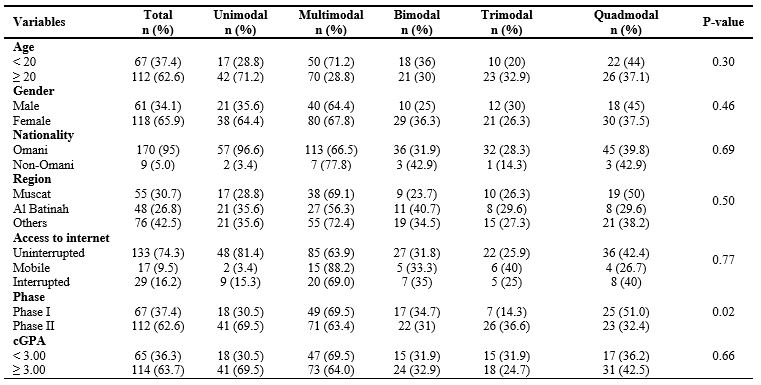
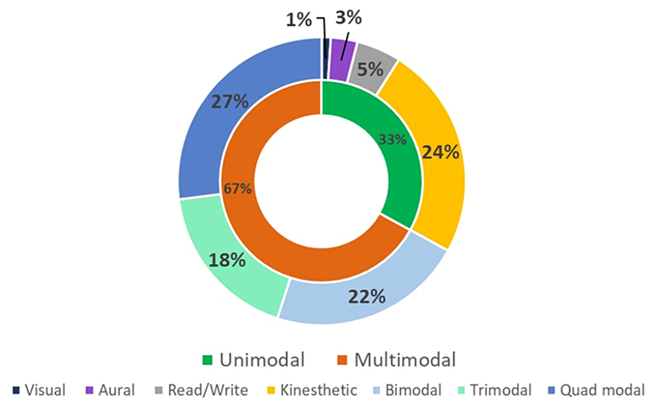
Figure 1. VARK learning preferences among pre-clinical medical students
This study demonstrates a clear predominance of multimodal learning preferences among preclinical medical students at SQU, with approximately two-thirds of students exhibiting preferences across multiple sensory modalities. These findings align with international research indicating a dominance of multimodal learning in medical education, while the specific prevalence of kinesthetic preferences reflects the hands-on nature of medical practice. Studies in India, Saudi Arabia, Oman, and Barbados report 60–87% of medical students as multimodal learners, with varying distributions across quadmodal, trimodal, and bimodal patterns [5, 27–29].
Research suggests that multimodal learners may have an advantage over unimodal learners because they can adjust their learning approach to different courses, thereby improving academic performance [30, 31]. The predominance of multimodal learning may be explained by the brain’s inherent capacity for processing information through multiple sensory channels [32, 33]. In this context, multimodal learners engage most effectively when they discuss their learning, write notes, connect new knowledge to prior experiences, and apply concepts in practice [5].
Both male and female students in this study preferred multimodal learning. While some studies report a higher preference among females [29, 34], others indicate a male preference [6]. Such inconsistencies likely reflect differences in socio-demographic characteristics, educational settings, and the self-reported nature of the VARK assessment. Among multimodal learners in this study, 27% preferred the quadmodal approach, with Phase I students showing significantly higher proportions than Phase II students (p = 0.02). This difference may reflect younger students’ transition from pre-university education, which emphasizes strategic learning, to university, which emphasizes instructor guidance and academic rigor [18, 35]. Phase I students may therefore rely on all learning modalities to adapt successfully to this transition.
The significant preference for kinesthetic learning modalities (24% of unimodal learners, present in 78.2% of all learners) supports previous research identifying tactile and experiential learning as fundamental to medical education [14–17]. This finding is particularly relevant for AI-enhanced learning system design. Virtual reality simulations, haptic feedback technologies, and interactive digital laboratories can effectively support kinesthetic learning. The predominance of multimodal preferences also suggests that AI-based adaptive learning platforms should deliver content across multiple sensory channels simultaneously rather than sequentially, aligning with the BLOOM-AI framework [17]. The higher prevalence of quadmodal learners among Phase I students indicates that introductory courses may particularly benefit from robust multimodal AI tools, integrating visual, auditory, textual, and kinesthetic learning experiences.
Contemporary AI technologies can support these preferences through virtual and augmented reality environments, simulation-based training, gesture-based interfaces, and interactive case-based learning [19, 20]. The existing preclinical curriculum at SQU, which includes lectures, interactive tutorials, practical and clinical skills labs, and case discussions, already accommodates multiple learning modalities [19]. Integrating AI could enhance this accommodation by enabling real-time adaptation to individual preferences and performance patterns. For example, AI-powered analytics can detect when students struggle and adjust content modality, difficulty, or pacing accordingly. Kinesthetic learners may benefit from simulation-based activities, while visual learners may receive enhanced graphical representations or mind-mapping tools. Practical considerations, such as interrupted internet access reported by 16.2% of students, should also be addressed to ensure effective AI-based learning.
Medical education in the preclinical years at SQU is delivered through lectures, interactive tutorials, practical laboratories (anatomy, physiology, microbiology, biochemistry), clinical skills labs, integrated case discussions, and interpretative exercises. Multimodal learners benefit from this blended approach because it allows them to apply diverse learning strategies across different contexts [27]. AI-enhanced learning should support multimodal content delivery, particularly for kinesthetic modalities. Faculty development programs should focus on understanding learning analytics and AI-human collaboration, while infrastructure planning should prioritize technologies that support virtual and augmented reality, especially for anatomy and clinical skills education [39]. This study focused exclusively on preclinical students, potentially limiting generalizability to clinical-phase learners, who may demonstrate different learning preferences due to greater practical experience. Although the VARK questionnaire is validated, reliance on self-reported preferences may not fully capture the complexity of learning style adaptation across various contexts. While the theoretical alignment with the BLOOM-AI framework provides useful insights, it does not constitute empirical evidence that implementing the framework will improve learning outcomes.
Future research should include prospective studies examining whether AI-enhanced interventions based on BLOOM-AI principles improve knowledge retention, skill acquisition, transfer, or student satisfaction compared with traditional approaches. Longitudinal studies tracking learning preferences throughout undergraduate and postgraduate medical training would provide additional guidance for adaptive system design. The study’s 37.1% response rate, although typical for online surveys, may limit representativeness. Nevertheless, the achieved sample exceeded the minimum estimated size and included a broad cross-section of the targeted population, providing valuable insights for the exploratory objectives of this research [36–38].
Conclusion
This study revealed a clear predominance of multimodal learning preferences among pre-clinical medical students, with kinesthetic modalities representing the most common single preference and appearing in the majority of multimodal combinations. The prevalence of kinesthetic preferences supports the development of AI technologies emphasizing simulation, virtual reality, and hands-on digital experiences.
The high rate of multimodal learning indicates that effective AI educational platforms should deliver content across multiple sensory channels simultaneously. Future research should evaluate the educational outcomes of AI systems designed according to VARK principles and examine the evolution of learning preferences throughout undergraduate and postgraduate medical training.
Ethical considerations
Ethical approval was obtained from the Medical Research and Ethics Committee (MREC) #2860 in August 2022 at the College of Medicine and Health Sciences, Sultan Qaboos University. Participation in this study was entirely voluntary, and confidentiality was maintained, with data access restricted to the research team. All participants received their individual VARK results upon completing the questionnaire.
Artificial intelligence utilization for article writing
The authors used ChatGPT (OpenAI, San Francisco, CA; GPT-4, accessed July 2025) solely to assist with language refinement and proofreading. No scientific content was generated by the AI; all interpretations, analyses, and conclusions were performed by the authors.
Acknowledgment
We sincerely thank all students who participated in this study and completed the questionnaire. We also appreciate the support of the Office of the Assistant Dean for Undergraduate Studies at the College of Medicine and Health Sciences, SQU.
Conflict of interest statement
The authors declare no competing interests.
Author contributions
All authors contributed significantly to the preparation of this manuscript.
AA was responsible for overall conceptualization, study design, and data collection. TA conducted the data analysis and interpretation, drafted the manuscript, and revised it critically. HM, LA, and SR provided final approval of the manuscript and ensured accountability for all aspects of the work.
Funding
No additional funds.
Data availability statement
The datasets generated and analyzed during the current study are not publicly available due to ethical constraints. However, data are available from the authors upon reasonable request and with permission of the corresponding author.
Background & Objective: Medical education is a complex, multidisciplinary field that can be stressful for medical students. This study aimed to investigate learning style preferences among pre-clinical medical students using the Visual, Auditory, Read/Write, Kinesthetic (VARK) assessment and to explore, through a theoretical mapping exercise, the implications for artificial intelligence-enhanced educational frameworks using the BLOOM-AI model.
Materials & Methods: A cross-sectional study was conducted among pre-clinical students (Phase I and II) at Sultan Qaboos University between October and December 2022. Participants completed an anonymous online questionnaire including demographics and the validated VARK questionnaire version 8.01. The VARK model classifies learning preferences into four distinct modalities: visual (V), aural (A), read/write (R), and kinesthetic (K). Statistical analysis employed chi-square tests. Findings were conceptually aligned with the BLOOM-AI pedagogical framework, yielding implications for the design of a potential AI-supported adaptive learning system.
Results: Of 179 respondents (65.9% female, mean age 20.0 ± 1.4 years), 120 students (67.0%) demonstrated multimodal learning preferences versus 59 (33.0%) with unimodal preferences. Kinesthetic learning was the most prevalent modality (24.0% as a unimodal preference and present in 78.2% of the overall sample). Among multimodal learners, 48 students (26.8%) exhibited quadmodal preferences, 33 (18.4%) trimodal preferences, and 39 (21.8%) bimodal preferences. Phase I students showed significantly higher quadmodal learning rates than Phase II students (51.0% vs 32.4%, p = 0.02). Theoretical mapping of the results within the BLOOM-AI framework revealed conceptual alignment between observed learning preferences and the framework’s design principles, which emphasize comprehensive sensory accommodation. This narrative analysis supports the use of AI tools in visual anatomical models, audio explanations, textual annotations, and kinesthetic simulations within integrated learning experiences. However, empirical validation of this framework's effectiveness remains necessary.
Conclusion: Multimodal learning preferences predominated among pre-clinical medical students, with kinesthetic modalities being highly prevalent. These findings could inform the implementation of AI-enhanced educational frameworks emphasizing comprehensive, multisensory learning support. Future research should evaluate AI-enhanced interventions designed in accordance with BLOOM-AI principles.
Introduction
Individual learning preferences significantly influence educational success, representing distinct cognitive pathways rather than inherent strengths or deficiencies [3]. The Visual, Auditory, Read/Write, Kinesthetic (VARK) model, developed by Neil Fleming, is a widely used tool for identifying learners’ sensory modality preferences [4]. This model categorizes learners into four primary types: visual learners who prefer graphical representations and spatial information; auditory learners who excel through verbal instruction and discussion; read/write learners who favor textual materials; and kinesthetic learners who benefit from hands-on experiences and practical application [3].
Recent educational studies suggest that many medical students prefer multimodal approaches to learning, with kinesthetic strategies frequently reported as dominant preferences [3, 5–7]. This preference aligns with the experiential nature of clinical practice, suggesting that early identification and accommodation of learning styles may enhance long-term professional clinical development.
Several studies among medical students reported various preferred learning styles worldwide. In 2014, a study by Sabitha Panambur reported that 35% of the studied students (n = 140) indicated their preferences for a particular mode of learning (visual [8%], auditory [9%], read/write [9%], or kinesthetic [9%]) [5, 8]. However, a similar study conducted in India, by IJ Prithishkumar, revealed that 86.8% of students preferred multimodal learning and, unexpectedly, there were no visual unimodal learners and no substantial difference in preference between the genders within the studied sample [8–12].
Recent studies demonstrated that multimodal VARK preferences, particularly kinesthetic, correlate significantly with learning gains [8]. Another report found 70.65% of medical students preferred multimodal learning, with kinesthetic being most prevalent among unimodal learners [10]. Moreover, kinesthetic learning was reported as the most common learning style among medical students (34%) [11–13].
The integration of Artificial Intelligence (AI) into medical education has created new possibilities for delivering more personalized learning experiences [13, 14]. AI-driven adaptive learning systems analyze learner behavior, performance patterns, and preferences to support real-time customization of educational content [10]. The BLOOM-AI pedagogical framework exemplifies this integration, combining Bloom's Taxonomy with VARK learning preferences through a three-component structure: Human-Led Instruction for higher-order thinking skills, AI-Supported Learning for foundational knowledge acquisition, and an AI Toolbox for personalized content adaptation [15–17].
While individual studies have examined VARK learning preferences among medical students in various settings, there is a paucity of research that systematically maps these preferences to emerging AI-enhanced pedagogical frameworks in the Middle Eastern context. The rapid integration of AI technologies in medical education necessitates understanding how students' sensory modality preferences align with AI-supported learning tools. Accordingly, this study aims to: (1) characterize VARK learning preferences among Omani pre-clinical medical students, and (2) theoretically map these findings onto the BLOOM-AI framework to generate hypotheses about how AI-enhanced educational interventions may support learning experiences [18–21].
Materials & Methods
Design and setting(s)
This study therefore seeks to: (1) examine VARK learning preferences among Omani pre-clinical medical students, and (2) relate these findings to the BLOOM-AI framework in order to consider how AI-enhanced educational interventions may support student learning [18–21]. Participants were pre-clinical medical students (Phases I and II) at the College of Medicine and Health Sciences, Sultan Qaboos University (SQU), Oman, between 15 October 2022 and 28 December 2022.
Participants and sampling
The medical program comprises two pre-clinical phases. Phase I focuses on foundational concepts and assessment of student readiness, whereas Phase II emphasizes the integration of basic sciences with clinical concepts, alongside courses in integrated modules, medical informatics, and research methodology.
Convenience sampling was employed, wherein all pre-clinical medical students (Phases I and II) enrolled during the study period were invited to participate via institutional email.
This non-probability sampling approach was chosen because of its feasibility and its widespread use in medical education research to describe learning preferences.
The target population consisted of 483 pre-clinical medical students. The minimum required sample size was calculated using the standard formula for cross-sectional studies (n = Z² × p(1 − p) ÷ d²), assuming a 95% confidence level (Z = 1.96), an expected proportion of 0.50 due to the absence of prior local data, and a margin of error of 8%, resulting in a required sample of 150 participants.
The achieved sample of 179 respondents (37.1% response rate) exceeded this threshold and was considered adequate for the study objectives [14–17]. Although convenience sampling limits generalizability, it is commonly used in educational research for hypothesis generation and for describing population characteristics [22].
Tools/Instruments
An anonymous online questionnaire was developed using Google Forms and consisted of four parts. Part 1 included informed consent to participate in the study. Part 2 collected sociodemographic information, including age, gender, internet access, nationality, and place of residence.
Part 3 focused on academic characteristics, including cohort year and cumulative Grade Point Average (cGPA) range. The VARK questionnaire (version 8.01, 2019) was administered in accordance with the instrument’s licensing requirements, following the purchase of an annual subscription [23]. Participants completed the questionnaire online via the VARK platform and received immediate feedback in the form of their VARK scores indicating their learning preferences.
The VARK assessment consists of 16 multiple-choice items, each offering four options corresponding to the four sensory modalities assessed: visual, aural/auditory, read/write, and kinesthetic.
Participants may select one or more options per item to reflect their preferred sensory modalities. The questionnaire does not employ a Likert scale and does not include correct or incorrect responses. Scores indicate the relative strength of each learning preference, ranging from 0 to 16 for each modality.
The psychometric properties of the VARK questionnaire have been evaluated in several studies, demonstrating adequate reliability and validity for educational assessments.
Leite, Svinicki, and Shi (2010) conducted a multimethod confirmatory factor analysis, providing preliminary support for the construct validity of the VARK, and reported reliability coefficients of 0.85, 0.82, 0.84, and 0.77 for the visual, aural, read/write, and kinesthetic subscales, respectively [24]. Similarly, Peyman et al. reported a Cronbach’s alpha of 0.86 and confirmed content validity through review by subject-matter experts. Zhu et al. also reported reliability coefficients of 0.85, 0.82, 0.84, and 0.77 for the four components, with an overall content validity index of 0.92 [24–26].
The BLOOM-AI framework, proposed by Schober, is a three-component pedagogical model that integrates Bloom's Taxonomy with VARK learning preferences to guide the intentional use of artificial intelligence in educational settings [21]. The framework consists of three interconnected components:
Human-Led Instruction: Educators facilitate learning experiences aimed at developing higher-order cognitive skills (applying, analyzing, evaluating, creating) according to Bloom's Taxonomy. In this phase, activities are designed to foster critical thinking, problem-solving, synthesis, and knowledge creation, supported by mentorship and real-time feedback.
AI-Supported Learning: AI-driven tools and platforms support foundational knowledge acquisition and lower-order cognitive tasks (remembering, understanding, applying) tailored to learner needs and VARK preferences.
These systems provide personalized content, adaptive pacing, formative feedback, and knowledge reinforcement across multiple sensory channels, including visual, auditory, text-based, and kinesthetic modalities.
AI Toolbox: A curated library of AI platforms and applications addresses diverse VARK modalities and Bloom’s cognitive levels.
For instance, visual learners might use AI-powered concept mapping or anatomical visualization tools; auditory learners, AI-generated podcasts or lecture summaries; read/write learners, AI-enhanced note-taking or document annotation platforms; and kinesthetic learners, virtual simulations, augmented reality, or interactive case-based modules [9, 17].
At the time of this study (October–December 2022), the BLOOM-AI framework had not been formally implemented at Sultan Qaboos University. Instead, it was used as a conceptual lens to interpret the observed distribution of VARK learning preferences and to generate hypotheses about how adopting BLOOM-AI principles could optimize learning experiences for this student population.
Data collection methods
Data collection was facilitated through the Office of the Assistant Dean for Undergraduate Studies at the College of Medicine and Health Sciences, Sultan Qaboos University.
Eligible pre-clinical medical students were invited to complete the questionnaire via their institutional email, and a follow-up reminder was sent two months later to improve response rates.
Data analysis
Data were analyzed using the Statistical Package for the Social Sciences (SPSS) version 21. Descriptive statistics, including frequencies, percentages, and measures of central tendency, were calculated. Associations between learning preferences and demographic or academic variables were examined using chi-square tests, with significance considered at p ≤ 0.05.
Theoretical framework mapping: Following the descriptive analysis of VARK learning preferences, a qualitative theoretical mapping exercise was conducted to explore how observed preferences align with the BLOOM-AI framework.
This exercise was conceptual rather than statistical and aimed to generate implications for future framework implementation.
First, the prevalence and distribution of unimodal versus multimodal learning preferences were described, with particular attention to kinesthetic and quadmodal patterns. Purely descriptive statistics are presented in tables and figures.
Next, observed preferences were compared with the assumptions underlying each BLOOM-AI component. The high prevalence of multimodal learners (67.0%) suggested that students could benefit most from the "AI Toolbox," which provides tools that address multiple sensory modalities simultaneously.
The predominance of kinesthetic learning (78.2% of learners) indicated that the "AI-Supported Learning" component should prioritize simulation-based, virtual, and augmented reality experiences. Furthermore, the significant difference in quadmodal preferences between Phase I (51.0%) and Phase II (32.4%, p = 0.02) suggested that early-phase students might require comprehensive, multisensory AI-supported scaffolding before progressing to more specialized learning strategies.
Finally, based on this conceptual alignment, theoretically informed recommendations were generated to guide the design, prioritization, and sequencing of AI-enhanced interventions in accordance with BLOOM-AI principles. This approach emphasizes using observed learning preferences to inform educational planning and optimize learning experiences for pre-clinical medical students.
Results
A total of 179 students completed the questionnaire, yielding a 37.1% response rate. The sample comprised 118 females (65.9%) and 61 males (34.1%), with a mean age of 20.0 years (SD = 1.4). Most participants (95.0%) were Omani nationals, 63.7% had a cumulative GPA ≥ 3.0, and 62.6% were in Phase II of their studies. Regarding geographic distribution, 30.7% resided in the Muscat region, 26.8% in Al Batinah, and 42.5% in other regions.
Most students (74.3%) reported uninterrupted internet access, while 16.2% experienced occasional interruptions and 9.5% relied solely on mobile internet. Table 1 presents the sociodemographic characteristics of the cohort and differences across learning modalities.
Analysis of VARK learning preferences revealed that multimodal learning was predominant, with 120 students (67.0%) preferring multiple sensory modalities, compared to 59 students (33.0%) with unimodal preferences.
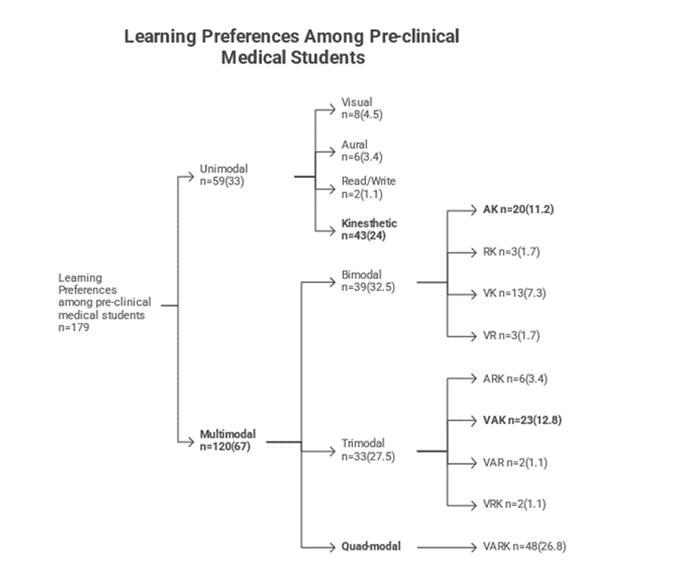
Among multimodal learners, quadmodal preferences were most common (48 students, 26.8%), followed by trimodal (33 students, 18.4%) and bimodal patterns (39 students, 21.8%). Within the unimodal group, kinesthetic learning was the most frequent preference (43 students, 24.0%), while visual, auditory, and read/write preferences were evenly distributed. The most common bimodal combination was Auditory-Kinesthetic (AK), and the dominant trimodal combination was Visual-Auditory-Kinesthetic (VAK) (Figure 1 and Figure 2). Chi-square analyses showed no significant associations between learning preferences and demographic variables, except for a statistically significant difference in quadmodal preferences between academic phases, with Phase I students showing higher rates than Phase II students (51.0% vs. 32.4%, p = 0.02) (Table 1).
Table 1. Distribution of VARK learning preferences (unimodal vs. multimodal) across demographic and academic characteristics of pre-clinical medical students (n = 179)Recent educational studies suggest that many medical students prefer multimodal approaches to learning, with kinesthetic strategies frequently reported as dominant preferences [3, 5–7]. This preference aligns with the experiential nature of clinical practice, suggesting that early identification and accommodation of learning styles may enhance long-term professional clinical development.
Several studies among medical students reported various preferred learning styles worldwide. In 2014, a study by Sabitha Panambur reported that 35% of the studied students (n = 140) indicated their preferences for a particular mode of learning (visual [8%], auditory [9%], read/write [9%], or kinesthetic [9%]) [5, 8]. However, a similar study conducted in India, by IJ Prithishkumar, revealed that 86.8% of students preferred multimodal learning and, unexpectedly, there were no visual unimodal learners and no substantial difference in preference between the genders within the studied sample [8–12].
Recent studies demonstrated that multimodal VARK preferences, particularly kinesthetic, correlate significantly with learning gains [8]. Another report found 70.65% of medical students preferred multimodal learning, with kinesthetic being most prevalent among unimodal learners [10]. Moreover, kinesthetic learning was reported as the most common learning style among medical students (34%) [11–13].
The integration of Artificial Intelligence (AI) into medical education has created new possibilities for delivering more personalized learning experiences [13, 14]. AI-driven adaptive learning systems analyze learner behavior, performance patterns, and preferences to support real-time customization of educational content [10]. The BLOOM-AI pedagogical framework exemplifies this integration, combining Bloom's Taxonomy with VARK learning preferences through a three-component structure: Human-Led Instruction for higher-order thinking skills, AI-Supported Learning for foundational knowledge acquisition, and an AI Toolbox for personalized content adaptation [15–17].
While individual studies have examined VARK learning preferences among medical students in various settings, there is a paucity of research that systematically maps these preferences to emerging AI-enhanced pedagogical frameworks in the Middle Eastern context. The rapid integration of AI technologies in medical education necessitates understanding how students' sensory modality preferences align with AI-supported learning tools. Accordingly, this study aims to: (1) characterize VARK learning preferences among Omani pre-clinical medical students, and (2) theoretically map these findings onto the BLOOM-AI framework to generate hypotheses about how AI-enhanced educational interventions may support learning experiences [18–21].
Materials & Methods
Design and setting(s)
This study therefore seeks to: (1) examine VARK learning preferences among Omani pre-clinical medical students, and (2) relate these findings to the BLOOM-AI framework in order to consider how AI-enhanced educational interventions may support student learning [18–21]. Participants were pre-clinical medical students (Phases I and II) at the College of Medicine and Health Sciences, Sultan Qaboos University (SQU), Oman, between 15 October 2022 and 28 December 2022.
Participants and sampling
The medical program comprises two pre-clinical phases. Phase I focuses on foundational concepts and assessment of student readiness, whereas Phase II emphasizes the integration of basic sciences with clinical concepts, alongside courses in integrated modules, medical informatics, and research methodology.
Convenience sampling was employed, wherein all pre-clinical medical students (Phases I and II) enrolled during the study period were invited to participate via institutional email.
This non-probability sampling approach was chosen because of its feasibility and its widespread use in medical education research to describe learning preferences.
The target population consisted of 483 pre-clinical medical students. The minimum required sample size was calculated using the standard formula for cross-sectional studies (n = Z² × p(1 − p) ÷ d²), assuming a 95% confidence level (Z = 1.96), an expected proportion of 0.50 due to the absence of prior local data, and a margin of error of 8%, resulting in a required sample of 150 participants.
The achieved sample of 179 respondents (37.1% response rate) exceeded this threshold and was considered adequate for the study objectives [14–17]. Although convenience sampling limits generalizability, it is commonly used in educational research for hypothesis generation and for describing population characteristics [22].
Tools/Instruments
An anonymous online questionnaire was developed using Google Forms and consisted of four parts. Part 1 included informed consent to participate in the study. Part 2 collected sociodemographic information, including age, gender, internet access, nationality, and place of residence.
Part 3 focused on academic characteristics, including cohort year and cumulative Grade Point Average (cGPA) range. The VARK questionnaire (version 8.01, 2019) was administered in accordance with the instrument’s licensing requirements, following the purchase of an annual subscription [23]. Participants completed the questionnaire online via the VARK platform and received immediate feedback in the form of their VARK scores indicating their learning preferences.
The VARK assessment consists of 16 multiple-choice items, each offering four options corresponding to the four sensory modalities assessed: visual, aural/auditory, read/write, and kinesthetic.
Participants may select one or more options per item to reflect their preferred sensory modalities. The questionnaire does not employ a Likert scale and does not include correct or incorrect responses. Scores indicate the relative strength of each learning preference, ranging from 0 to 16 for each modality.
The psychometric properties of the VARK questionnaire have been evaluated in several studies, demonstrating adequate reliability and validity for educational assessments.
Leite, Svinicki, and Shi (2010) conducted a multimethod confirmatory factor analysis, providing preliminary support for the construct validity of the VARK, and reported reliability coefficients of 0.85, 0.82, 0.84, and 0.77 for the visual, aural, read/write, and kinesthetic subscales, respectively [24]. Similarly, Peyman et al. reported a Cronbach’s alpha of 0.86 and confirmed content validity through review by subject-matter experts. Zhu et al. also reported reliability coefficients of 0.85, 0.82, 0.84, and 0.77 for the four components, with an overall content validity index of 0.92 [24–26].
The BLOOM-AI framework, proposed by Schober, is a three-component pedagogical model that integrates Bloom's Taxonomy with VARK learning preferences to guide the intentional use of artificial intelligence in educational settings [21]. The framework consists of three interconnected components:
Human-Led Instruction: Educators facilitate learning experiences aimed at developing higher-order cognitive skills (applying, analyzing, evaluating, creating) according to Bloom's Taxonomy. In this phase, activities are designed to foster critical thinking, problem-solving, synthesis, and knowledge creation, supported by mentorship and real-time feedback.
AI-Supported Learning: AI-driven tools and platforms support foundational knowledge acquisition and lower-order cognitive tasks (remembering, understanding, applying) tailored to learner needs and VARK preferences.
These systems provide personalized content, adaptive pacing, formative feedback, and knowledge reinforcement across multiple sensory channels, including visual, auditory, text-based, and kinesthetic modalities.
AI Toolbox: A curated library of AI platforms and applications addresses diverse VARK modalities and Bloom’s cognitive levels.
For instance, visual learners might use AI-powered concept mapping or anatomical visualization tools; auditory learners, AI-generated podcasts or lecture summaries; read/write learners, AI-enhanced note-taking or document annotation platforms; and kinesthetic learners, virtual simulations, augmented reality, or interactive case-based modules [9, 17].
At the time of this study (October–December 2022), the BLOOM-AI framework had not been formally implemented at Sultan Qaboos University. Instead, it was used as a conceptual lens to interpret the observed distribution of VARK learning preferences and to generate hypotheses about how adopting BLOOM-AI principles could optimize learning experiences for this student population.
Data collection methods
Data collection was facilitated through the Office of the Assistant Dean for Undergraduate Studies at the College of Medicine and Health Sciences, Sultan Qaboos University.
Eligible pre-clinical medical students were invited to complete the questionnaire via their institutional email, and a follow-up reminder was sent two months later to improve response rates.
Data analysis
Data were analyzed using the Statistical Package for the Social Sciences (SPSS) version 21. Descriptive statistics, including frequencies, percentages, and measures of central tendency, were calculated. Associations between learning preferences and demographic or academic variables were examined using chi-square tests, with significance considered at p ≤ 0.05.
Theoretical framework mapping: Following the descriptive analysis of VARK learning preferences, a qualitative theoretical mapping exercise was conducted to explore how observed preferences align with the BLOOM-AI framework.
This exercise was conceptual rather than statistical and aimed to generate implications for future framework implementation.
First, the prevalence and distribution of unimodal versus multimodal learning preferences were described, with particular attention to kinesthetic and quadmodal patterns. Purely descriptive statistics are presented in tables and figures.
Next, observed preferences were compared with the assumptions underlying each BLOOM-AI component. The high prevalence of multimodal learners (67.0%) suggested that students could benefit most from the "AI Toolbox," which provides tools that address multiple sensory modalities simultaneously.
The predominance of kinesthetic learning (78.2% of learners) indicated that the "AI-Supported Learning" component should prioritize simulation-based, virtual, and augmented reality experiences. Furthermore, the significant difference in quadmodal preferences between Phase I (51.0%) and Phase II (32.4%, p = 0.02) suggested that early-phase students might require comprehensive, multisensory AI-supported scaffolding before progressing to more specialized learning strategies.
Finally, based on this conceptual alignment, theoretically informed recommendations were generated to guide the design, prioritization, and sequencing of AI-enhanced interventions in accordance with BLOOM-AI principles. This approach emphasizes using observed learning preferences to inform educational planning and optimize learning experiences for pre-clinical medical students.
Results
A total of 179 students completed the questionnaire, yielding a 37.1% response rate. The sample comprised 118 females (65.9%) and 61 males (34.1%), with a mean age of 20.0 years (SD = 1.4). Most participants (95.0%) were Omani nationals, 63.7% had a cumulative GPA ≥ 3.0, and 62.6% were in Phase II of their studies. Regarding geographic distribution, 30.7% resided in the Muscat region, 26.8% in Al Batinah, and 42.5% in other regions.
Most students (74.3%) reported uninterrupted internet access, while 16.2% experienced occasional interruptions and 9.5% relied solely on mobile internet. Table 1 presents the sociodemographic characteristics of the cohort and differences across learning modalities.
Analysis of VARK learning preferences revealed that multimodal learning was predominant, with 120 students (67.0%) preferring multiple sensory modalities, compared to 59 students (33.0%) with unimodal preferences.
Among multimodal learners, quadmodal preferences were most common (48 students, 26.8%), followed by trimodal (33 students, 18.4%) and bimodal patterns (39 students, 21.8%). Within the unimodal group, kinesthetic learning was the most frequent preference (43 students, 24.0%), while visual, auditory, and read/write preferences were evenly distributed. The most common bimodal combination was Auditory-Kinesthetic (AK), and the dominant trimodal combination was Visual-Auditory-Kinesthetic (VAK) (Figure 1 and Figure 2). Chi-square analyses showed no significant associations between learning preferences and demographic variables, except for a statistically significant difference in quadmodal preferences between academic phases, with Phase I students showing higher rates than Phase II students (51.0% vs. 32.4%, p = 0.02) (Table 1).
Note: Chi-square test was used for categorical variables (e.g., Gender, Nationality, Region, Internet access, Phase). One-way ANOVA was used for quantitative variables (e.g., cGPA).
Abbreviations: n, number of participants; cGPA, cumulative grade point average; Sig, statistical significance; p, probability-value.
Theoretical mapping of these findings within the BLOOM-AI framework suggested several implications. The high prevalence of multimodal learners indicates that AI-enhanced educational technologies could effectively deliver content across multiple sensory channels. The prominence of kinesthetic learning (78.2% overall) highlights the potential benefit of simulation-based, virtual, and augmented reality activities, supported by the AI-Supported Learning component. Differences in quadmodal preferences between Phase I and Phase II students suggest that early-phase learners may benefit more from comprehensive, multisensory AI-supported scaffolding, whereas advanced students may respond better to targeted, modality-specific interventions. Overall, the distribution of VARK learning preferences among pre-clinical students at Sultan Qaboos University (SQU) provides a favorable conceptual foundation for implementing the BLOOM-AI framework, although formal empirical validation remains necessary.Abbreviations: n, number of participants; cGPA, cumulative grade point average; Sig, statistical significance; p, probability-value.
Figure 1. VARK learning preferences among pre-clinical medical students
Figure 2. Learning preferences arranged in a hierarchal diagram showing the predominance of the kinesthetic learning style
V= visual, A= aural, R= read/write, K= kinesthetic, texts in bold font signifies predominance
DiscussionV= visual, A= aural, R= read/write, K= kinesthetic, texts in bold font signifies predominance
This study demonstrates a clear predominance of multimodal learning preferences among preclinical medical students at SQU, with approximately two-thirds of students exhibiting preferences across multiple sensory modalities. These findings align with international research indicating a dominance of multimodal learning in medical education, while the specific prevalence of kinesthetic preferences reflects the hands-on nature of medical practice. Studies in India, Saudi Arabia, Oman, and Barbados report 60–87% of medical students as multimodal learners, with varying distributions across quadmodal, trimodal, and bimodal patterns [5, 27–29].
Research suggests that multimodal learners may have an advantage over unimodal learners because they can adjust their learning approach to different courses, thereby improving academic performance [30, 31]. The predominance of multimodal learning may be explained by the brain’s inherent capacity for processing information through multiple sensory channels [32, 33]. In this context, multimodal learners engage most effectively when they discuss their learning, write notes, connect new knowledge to prior experiences, and apply concepts in practice [5].
Both male and female students in this study preferred multimodal learning. While some studies report a higher preference among females [29, 34], others indicate a male preference [6]. Such inconsistencies likely reflect differences in socio-demographic characteristics, educational settings, and the self-reported nature of the VARK assessment. Among multimodal learners in this study, 27% preferred the quadmodal approach, with Phase I students showing significantly higher proportions than Phase II students (p = 0.02). This difference may reflect younger students’ transition from pre-university education, which emphasizes strategic learning, to university, which emphasizes instructor guidance and academic rigor [18, 35]. Phase I students may therefore rely on all learning modalities to adapt successfully to this transition.
The significant preference for kinesthetic learning modalities (24% of unimodal learners, present in 78.2% of all learners) supports previous research identifying tactile and experiential learning as fundamental to medical education [14–17]. This finding is particularly relevant for AI-enhanced learning system design. Virtual reality simulations, haptic feedback technologies, and interactive digital laboratories can effectively support kinesthetic learning. The predominance of multimodal preferences also suggests that AI-based adaptive learning platforms should deliver content across multiple sensory channels simultaneously rather than sequentially, aligning with the BLOOM-AI framework [17]. The higher prevalence of quadmodal learners among Phase I students indicates that introductory courses may particularly benefit from robust multimodal AI tools, integrating visual, auditory, textual, and kinesthetic learning experiences.
Contemporary AI technologies can support these preferences through virtual and augmented reality environments, simulation-based training, gesture-based interfaces, and interactive case-based learning [19, 20]. The existing preclinical curriculum at SQU, which includes lectures, interactive tutorials, practical and clinical skills labs, and case discussions, already accommodates multiple learning modalities [19]. Integrating AI could enhance this accommodation by enabling real-time adaptation to individual preferences and performance patterns. For example, AI-powered analytics can detect when students struggle and adjust content modality, difficulty, or pacing accordingly. Kinesthetic learners may benefit from simulation-based activities, while visual learners may receive enhanced graphical representations or mind-mapping tools. Practical considerations, such as interrupted internet access reported by 16.2% of students, should also be addressed to ensure effective AI-based learning.
Medical education in the preclinical years at SQU is delivered through lectures, interactive tutorials, practical laboratories (anatomy, physiology, microbiology, biochemistry), clinical skills labs, integrated case discussions, and interpretative exercises. Multimodal learners benefit from this blended approach because it allows them to apply diverse learning strategies across different contexts [27]. AI-enhanced learning should support multimodal content delivery, particularly for kinesthetic modalities. Faculty development programs should focus on understanding learning analytics and AI-human collaboration, while infrastructure planning should prioritize technologies that support virtual and augmented reality, especially for anatomy and clinical skills education [39]. This study focused exclusively on preclinical students, potentially limiting generalizability to clinical-phase learners, who may demonstrate different learning preferences due to greater practical experience. Although the VARK questionnaire is validated, reliance on self-reported preferences may not fully capture the complexity of learning style adaptation across various contexts. While the theoretical alignment with the BLOOM-AI framework provides useful insights, it does not constitute empirical evidence that implementing the framework will improve learning outcomes.
Future research should include prospective studies examining whether AI-enhanced interventions based on BLOOM-AI principles improve knowledge retention, skill acquisition, transfer, or student satisfaction compared with traditional approaches. Longitudinal studies tracking learning preferences throughout undergraduate and postgraduate medical training would provide additional guidance for adaptive system design. The study’s 37.1% response rate, although typical for online surveys, may limit representativeness. Nevertheless, the achieved sample exceeded the minimum estimated size and included a broad cross-section of the targeted population, providing valuable insights for the exploratory objectives of this research [36–38].
Conclusion
This study revealed a clear predominance of multimodal learning preferences among pre-clinical medical students, with kinesthetic modalities representing the most common single preference and appearing in the majority of multimodal combinations. The prevalence of kinesthetic preferences supports the development of AI technologies emphasizing simulation, virtual reality, and hands-on digital experiences.
The high rate of multimodal learning indicates that effective AI educational platforms should deliver content across multiple sensory channels simultaneously. Future research should evaluate the educational outcomes of AI systems designed according to VARK principles and examine the evolution of learning preferences throughout undergraduate and postgraduate medical training.
Ethical considerations
Ethical approval was obtained from the Medical Research and Ethics Committee (MREC) #2860 in August 2022 at the College of Medicine and Health Sciences, Sultan Qaboos University. Participation in this study was entirely voluntary, and confidentiality was maintained, with data access restricted to the research team. All participants received their individual VARK results upon completing the questionnaire.
Artificial intelligence utilization for article writing
The authors used ChatGPT (OpenAI, San Francisco, CA; GPT-4, accessed July 2025) solely to assist with language refinement and proofreading. No scientific content was generated by the AI; all interpretations, analyses, and conclusions were performed by the authors.
Acknowledgment
We sincerely thank all students who participated in this study and completed the questionnaire. We also appreciate the support of the Office of the Assistant Dean for Undergraduate Studies at the College of Medicine and Health Sciences, SQU.
Conflict of interest statement
The authors declare no competing interests.
Author contributions
All authors contributed significantly to the preparation of this manuscript.
AA was responsible for overall conceptualization, study design, and data collection. TA conducted the data analysis and interpretation, drafted the manuscript, and revised it critically. HM, LA, and SR provided final approval of the manuscript and ensured accountability for all aspects of the work.
Funding
No additional funds.
Data availability statement
The datasets generated and analyzed during the current study are not publicly available due to ethical constraints. However, data are available from the authors upon reasonable request and with permission of the corresponding author.
Article Type : Orginal Research |
Subject:
Medical Education
Received: 2025/09/11 | Accepted: 2025/12/2 | Published: 2026/01/1
Received: 2025/09/11 | Accepted: 2025/12/2 | Published: 2026/01/1
Send email to the article author
| Rights and permissions | |
 |
This work is licensed under a Creative Commons Attribution-NonCommercial 4.0 International License. |