Tue, Oct 13, 2026
[Archive]
Volume 18, Issue 4 (2025)
J Med Edu Dev 2025, 18(4): 30-38 |
Back to browse issues page


Ethics code: IR.NASRME.REC.1402.016


Download citation:
BibTeX | RIS | EndNote | Medlars | ProCite | Reference Manager | RefWorks
Send citation to:


BibTeX | RIS | EndNote | Medlars | ProCite | Reference Manager | RefWorks
Send citation to:
Rajabi M. Identifying the opportunities and challenges of educational accreditation in teaching hospitals: a qualitative study. J Med Edu Dev 2025; 18 (4) :30-38
URL: http://edujournal.zums.ac.ir/article-1-2477-en.html
URL: http://edujournal.zums.ac.ir/article-1-2477-en.html

Department of Health Services Management, School of Health, Arak University of Medical Sciences, Arak, Iran , rajabimohana68@gmail.com
Full-Text [PDF 478 kb]
(325 Downloads)
| Abstract (HTML) (1724 Views)
Full-Text: (113 Views)
Abstract
Background & Objective: The educational accreditation system at Iranian medical sciences university’s aims to promote continuous improvement in education. Successfully carrying out this program at any university needs identifying and attending to every university's opportunity and challenge. This study looked at the opportunities and challenges of educational accreditation in teaching hospitals.
Materials & Methods: The current qualitative-exploratory study was done from November 12, 2023, to October 22, 2024. The data were collected through 15 semi-structured interviews with heads and educational vice-chancellors of teaching hospitals and faculties, managers and experts of educational development offices, and educational accreditation experts. Conventional content analysis based on Graneheim and Lundman's approach was used to study the interview data.
Results: The opportunities and challenges of educational accreditation at the teaching hospitals fell into two main categories and nine subcategories. Educational accreditation faces different challenges including human and financial resources, facilities, accreditation standards, program implementation, and intra- and extra-organizational cooperation. The privilege of experienced and competent managers and employees, the promotion of educational processes, and the best use of internal capacities are opportunities to carry out this program.
Conclusion: Educational accreditation is a process that needs the commitment of managers, staff, and faculty members, sufficient resources, and internal and external cooperation and communication. Identifying and attending to the factors that affect the accreditation process will make this program more successful and ensure the quality of educational programs. On the other hand, using the experiences of different universities can help with future planning and decision-making.
Table1. Charactristics of the participants
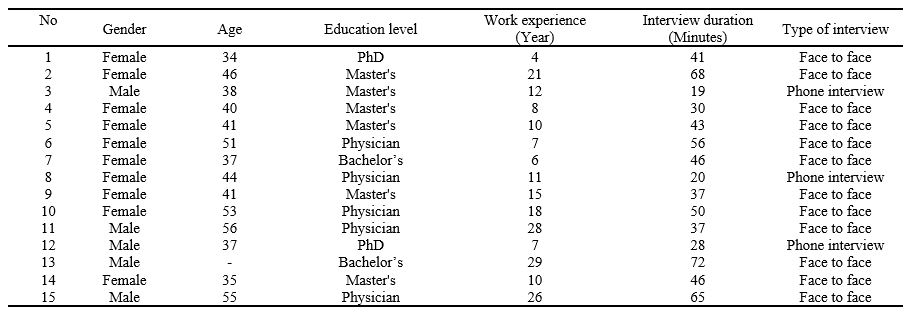
Table 2. An example of a category creation process
Results
According to the content analysis of the interviews, the opportunities and challenges of educational accreditation
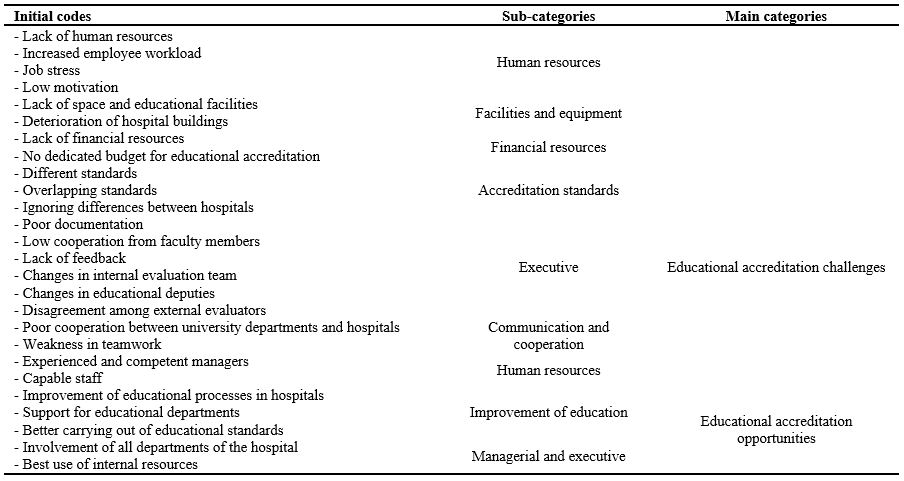
at the teaching hospitals fell into 27 initial codes, nine subcategories and two main categories (Table 3).
Table 3. Opportunities and challenges of educational accreditation in teaching hospitals at Arak University of Medical Sciences
Educational accreditation challenges
Human resources: Lack of human resources and increased employee workload were among the challenges addressed by many participants. Due to the lack of human resources at hospitals, educational accreditation experts often handle multiple roles and responsibilities. Engaging in different tasks will lead to confusion and fatigue and raise mental stress.
"Here, I am an expert in education, accreditation, and research. At any accreditation time, I stay late at the hospital and carry out three different tasks that month and last week, thus, I tolerate excessive workload and mental pressure." P2
One of the participants recognized the ineffectiveness of the accreditation process in employees' views and the non-allocation of monetary and non-monetary rewards to experts as the most important reasons for their lack of motivation for taking part in the accreditation program. He said:
"Accreditation experts are unmotivated, why? Because after internal and external evaluations, the experts do not receive feedback. They are not even given a letter of appreciation or financial rewards." P15
Facilities and equipment: Other challenges of educational accreditation included problems with physical spaces, educational facilities and equipment, and the deterioration of some hospital buildings.
"In the previous round of accreditation, we could not receive the complete score since we lacked adequate space according to accreditation standards. Our pavilions are problematic, and we don't have sufficient rooms and classes. If we are given a budget, the hospital building is old." P14
Financial resources: Problems related to the lack of financial resources were the other challenges and barriers to carrying out this program.
Lack of financial resources can cause problems by affecting the accreditation process directly and indirectly by affecting human resources, facilities, and equipment.
"Preparing infrastructure and running the program needs enough money and financial resources. Now, we are aware of all circumstances of hospitals that face shortages in human and financial resources, and this is one of the reasons for increased workload and occupational stress among accreditation executives." P7
Accreditation standards: The participants also discussed the variety and multidimensionality of the standards and the negligence of inter-hospital differences.
"Medical universities differ in our country, given the number of disciplines, human resources, faculty members, facilities, etc. Well! We accredit these universities similarly. Is it right?" P1
"Some standards overlap or need coordination among different units to collect their documents. It hardens our work to a large extent." P4
Executive: On the other hand, many of the processes and activities addressed by accreditation standards are fulfilled routinely in hospitals; however, their documents are not retained and recorded.
"At the time of accreditation, we found that we had followed all of them but lacked the documents. Our documentation is poor." P9
One of the participants considered administrative bureaucracy as a reason for poor documentation and stated:
"We want a document, but we should write to several units to give us what we request." P6
Getting the complete score of some standards needs the cooperation of hospital faculty members. Due to their high workload, these individuals cannot accomplish tasks according to the standards, bringing concerns and problems to accreditation experts.
On the other hand, the faculty member shortage in teaching hospitals is another underscored challenge.
"Our faculty members and professors should accept carrying out educational accreditation standards. They are busy and, sometimes, cannot cooperate as they should. Now, suppose we face a faculty member shortage in hospitals; especially in recent years, this constraint has worsened the conditions." P12
The shift and turnover of managers, vice-chancellors, and the internal evaluation team were highlighted by the participants as accreditation challenges.
"Changing the internal evaluation team is also another complexity. The members are replaced occasionally, and we face challenges with the new team until the work becomes routine." P10
"The former vice-chancellor of education in our hospital strongly agreed with and supported accreditation in all conditions. But, well! He was replaced, and it takes time for the new vice-chancellor to figure out what happens." P3
The disagreements and different viewpoints of external evaluators also make the educational accreditation program challenging.
Evaluators' personalized behaviors in reviewing documents and checking hospitals can lead to confusion and rework among accreditation experts.
"Several evaluators come to accredit our hospitals, and everyone checks one hospital. That is, every hospital is checked differently, and these triggers personalized behavior in reviewing documents." P15
"We had prepared the documents according to the standards. But, on the evaluation day, the evaluator said: We followed this format at our university, and you should prepare this document based on the format of our university and upload the new document in the second chance we give you." P12
Communication and cooperation: Although carrying out the accreditation program in hospitals is a multilateral activity and needs teamwork, cooperation, and intra- and extra-organizational relations, some individuals and units, either inside or outside hospitals, do not cooperate with educational accreditation experts as they should, do not provide the needed documents, or avoid helping them in carrying out standards.
"It has happened to me. I asked for some information from one of the university deputies. I wrote letters and made telephone calls several times. Lastly, I could get that document through my friendly relations with an employee in that deputy." P2
Educational accreditation opportunities
Human resources: Although human resources shortages are one challenge to carrying out the accreditation program, the presence of experienced and competent managers and educational accreditation experts is one of the strengths of educational accreditation program.
These individuals can ensure the success of this program by motivating and directing employees.
"One of the strengths of this program is its experienced individuals, who are aware of its depth and importance, persuade others to step into a certain direction, and show them the importance of this program." P11
"One of the colleagues has long been at our hospital and engaged in accreditation for several years. His support strongly motivates us." P14
Improvement of education: It is evident that improving educational processes and carrying out the standards of medical education more properly are among the opportunities for educational accreditation at medical universities. On the other hand, checking the conditions of educational hospitals according to accreditation standards paves the way for supporting academic units in decision-making and planning at the university level.
"We now attend sessions and say our accreditation declares these; this is our capacity; this is the status of our hospitals and universities, and education should be planned accordingly." P14
"I, myself, like standards very much. I wish I had no responsibilities and just pursued they're carrying out. Our education became more coherent after the announcement of standards." P8
Managerial and executive: Other educational accreditation opportunities include best internal resource use and the involvement of different teaching hospital units.
"The key to our success was teamwork. We were all together. By all, I mean the entire hospital, and we could promote the hospitals' rank compared to the previous round of accreditation." P5
Discussion
According to the results of this study, educational accreditation faces different challenges in terms of human and financial resources, facilities, accreditation standards, program implementation, and intra- and extra-organizational cooperation. Despite the differences among different medical sciences universities, comparing the results of the present study with the results of similar studies reveals that many universities are similarly challenged in carrying out the educational accreditation program.
In Bigdeli et al.'s study [16], the senior managers involved in the educational accreditation process in Iran University of Medical Sciences introduced the problems tied to standards and criteria, financial and educational infrastructures, and executive accreditation policies as the main challenges of educational accreditation at this university. The findings of Bigdeli et al's study confirm the results of the present study and highlight the challenges related to accreditation standards, financial and executive issues in carrying out educational accreditation programs in medical sciences universities.
Consistent with the findings of the present study, Salehi and Payravi identified inadequate and unsuitable standards, high cost, insufficient training, increased workload, lack of motivation, lack of time, inappropriate scoring methods, shortage of human and financial resources, and evaluators' subjective judgments as the primary accreditation challenges of Iranian hospitals [19]. In confirming the results of this study, the faculty members and managers of the Midwest University argued that the diversity of standards, manager shifts and turnovers, high costs, being time-consuming, and mental stress were the problems of educational accreditation at this university [21]. Chehrzad et al. investigated the views of the employees involved in the educational accreditation program at the Gilan University of Medical Sciences. They introduced organizational culture, individual culture, employee attitude, motivation, organizational structure, and resource allocation management as the main problems of this university in setting up educational accreditation [8]. The investigation and comparison of the findings of different studies uncover that the problems of human resources, financial resources, program implementation, and infrastructures are among the primary and common challenges of educational accreditation at different hospitals and universities.
Despite the challenges and problems of medical sciences universities in carrying out the educational accreditation program, the privilege of experienced and competent managers and employees, promotion of educational processes, support from educational units, strong cooperation between individuals and different sectors, and best use of internal capacities are the opportunities and strengths in carrying out this program at teaching hospitals.
The results of this study are confirmed by the research findings of Hailey et al., who found promoting university rank, improving the carrying out process of educational programs, recruiting more competent faculty members and students, and using valid criteria for checking educational programs as the advantages of educational accreditation in Midwest University [21].
In line with the results of this research, Yarmohammadian et al. identified institutional accreditation challenges and opportunities at the medical universities of Iran. They found that the lack of time, increased workload, unfitting standards and criteria, and different evaluation qualities made up the challenges while providing progress opportunities to universities, defendable opportunity-cost, reduced inequality between universities, and improvement strategies shaped the opportunities of this program at the medical sciences universities of Iran [15]. According to the results of the study by Abou Neel and Frick, lack of resources, ambiguous processes, communication problems, increased workload, leadership style, and work environment were the accreditation challenges in the College of Dental Medicine of Sharjah University. Providing resources, choosing the appropriate leadership style, and improving the work environment were recognized as solutions to overcome these challenges from the point of view of faculty members and managers involved in the accreditation process [22].
The results of Abou Neel and Frick's study also agree with and confirm the findings of the present study. Educational accreditation at teaching hospitals calls for the multilateral participation and cooperation of all university deputies.
Notably, all individuals' and deputies' involvement in teamwork is a prerequisite for the success of the educational accreditation process. In addition, supplying the necessary resources and infrastructures for carrying out this program is another component that affects accreditation.
All managers and employees engaged in educational accreditation should carefully look at different aspects associated with the challenges and opportunities of carrying out this program.
Considering the findings of this study and their comparison with other research findings, studies that study the internal and external environments of teaching hospitals using the SWOT method, estimate the cost of educational accreditation, develop resource management models to carry out educational accreditation, and identify medical universities' approaches to supporting educational accreditation program can help to carry out educational accreditation better.
Conclusion
According to the identified challenges and opportunities of educational accreditation in teaching hospitals, it can be said that educational accreditation is a process that needs the commitment of managers, staff, and faculty members, sufficient resources, and internal and external cooperation and communication.
Identifying and attending to the factors and dimensions that affect the accreditation process will make this program more successful and ensure the quality of educational programs and processes.
We cannot completely generalize the results of a study to all teaching hospitals since every medical sciences university faces certain challenges and opportunities. However, using the experiences of other universities can help future planning and decision-making.
Ethical considerations
This study was approved by Research Ethics Committees of National Agency for Strategic Research in Medical Education (NASR). Ethical Code: IR.NASRME.REC.1402.016.
The researcher complied with all ethical considerations, e.g., getting the ethics code, getting informed consent from the participants, allowing voluntary participation in the study, getting permission to record voices, ensuring the confidentiality of data, and not imposing the researcher's views in the research.
Artificial intelligence utilization for article writing
ChatGPT-4 (Open AI) was used to improve the grammatical accuracy of the text.
Acknowledgment
The author is deeply grateful to all individuals who contributed to this research.
Conflict of interest statement
The authors report no conflicts of interest.
Author contributions
MR proposed the idea, collected and studied the data, and wrote the paper.
Funding
This research was funded (Grant No: 4010082) by the National Agency for Strategic Research in Medical Education (NASR).
Data availability statement
The data that support the findings of this study are available on request from the corresponding author.
Background & Objective: The educational accreditation system at Iranian medical sciences university’s aims to promote continuous improvement in education. Successfully carrying out this program at any university needs identifying and attending to every university's opportunity and challenge. This study looked at the opportunities and challenges of educational accreditation in teaching hospitals.
Materials & Methods: The current qualitative-exploratory study was done from November 12, 2023, to October 22, 2024. The data were collected through 15 semi-structured interviews with heads and educational vice-chancellors of teaching hospitals and faculties, managers and experts of educational development offices, and educational accreditation experts. Conventional content analysis based on Graneheim and Lundman's approach was used to study the interview data.
Results: The opportunities and challenges of educational accreditation at the teaching hospitals fell into two main categories and nine subcategories. Educational accreditation faces different challenges including human and financial resources, facilities, accreditation standards, program implementation, and intra- and extra-organizational cooperation. The privilege of experienced and competent managers and employees, the promotion of educational processes, and the best use of internal capacities are opportunities to carry out this program.
Conclusion: Educational accreditation is a process that needs the commitment of managers, staff, and faculty members, sufficient resources, and internal and external cooperation and communication. Identifying and attending to the factors that affect the accreditation process will make this program more successful and ensure the quality of educational programs. On the other hand, using the experiences of different universities can help with future planning and decision-making.
Introduction
Accreditation, one of the formal evaluation models based on expert views, has been used in many countries in recent decades to check educational centers and universities [1, 2]. According to the definition of the Council for Higher Education Accreditation in the United States, accreditation is a process based on self-evaluation and peer evaluation. It seeks to promote quality and accountability and ensure the realization of predetermined standards [2, 3]. Different studies have mentioned the effect of educational accreditation on student performance, motivation, and learning outcomes [4-6]. Accreditation guarantees higher education centers' compliance with minimum predetermined standards and criteria and results in accrediting, realizing, and sometimes, issuing activity licenses that are valid for a limited time [7-9].
Accreditation is a process of designing and setting up a formal accreditation structure, creating and sharing accreditation standards and indices, having centers complete initial questionnaires and run internal evaluations, carrying out external evaluations, preparing reports, judging, making decisions about the circumstances of centers in a specialized committee, and, finally, issuing licenses that should be repeated periodically and affect the fate of examined centers [10-12] .Similar to other countries, applying approaches to checking the higher education system to improve academic quality continuously and attract faculty participation was considered in Iran in 1997. Its satisfactory outcomes underscored that internal evaluation and attention to the features and context of the Iranian higher education system could pave the way for improving the quality of the higher education system constantly [13]. The education accreditation system at the medical sciences universities of the Islamic Republic of Iran pursues continuous improvement of education, research, and service delivery. In 2013, the Innovative and Transformative Medical Education Plan was created by the Ministry of Health (MoH) based on the Vision Document 1404 of Iran, Complete Scientific Map of the country, Complete Scientific Map of Health, and Health System Transformation Program. One of the objectives of this plan was to accredit the teaching hospitals affiliated with medical sciences universities [11, 14]. As a key approach to ensuring and improving the quality of medical education, accreditation is a suitable means to guarantee the provision of sound education to students and assistants at different academic levels of medical sciences, improve the quality of medical education, create rules and regulations, reduce risks and damages, develop a learning and consultative reference for health service provision, strengthen public trust, and, finally, provide society-fit services [1, 15-17]. The last edition of the educational accreditation standards revolves around nine axes, including education management, monitoring and evaluation, faculty members, resource and facility management, learner training in emergency and paraclinical units, educational processes and programs, respecting patient rights, and clinical research. All teaching hospitals start self-evaluation based on these standards by cooperating with their affiliated medical sciences universities or faculties. Ultimately, these hospitals are externally checked by the Educational Deputy of the MoH [11, 15, 18]. Despite the positive impacts of educational accreditation on the quality improvement of medical education, its implementation faces several challenges, e.g., problems associated with unsuitable standards and criteria, accreditation process, poor educational infrastructures, inadequate education, lack of time, improper scoring methods, and lack of financial resources [3, 16, 19]. The successful carrying out of the educational accreditation program at any medical sciences university needs identifying and attending to every university's respective strength and weakness. Stressing these factors will lead to further success in the program and guarantee the quality of the educational programs and processes in the following accreditation steps.
Considering the few Iranian studies on educational accreditation at teaching hospitals, MoH's policies on qualitative and quantitative promotion of education at medical sciences universities, the objectives of the medical education transformation plan in educational accreditation, and the diversities and differences among the medical universities of Iran, this study aimed to identify the accreditation opportunities and challenges of teaching hospitals.
Materials & Methods
Design and setting(s)
The current qualitative-exploratory study, using conventional content analysis, was designed and carried out from November 12, 2023, to October 22, 2024, in Arak, Iran, aiming to identify the opportunities and challenges of educational accreditation in teaching hospitals at Arak University of Medical Sciences.
Participants and sampling
The participants of this study were 15 executives of the educational accreditation program. The participants selected by theoretical and purposeful sampling consisted of the heads and educational vice-chancellors of hospitals and faculties, managers and experts of educational development offices, and educational accreditation experts of the teaching hospitals. Having at least a Bachelor's degree, one year of experience in educational accreditation, and willingness to express experiences and take part in the study made up the inclusion criteria. The demographic characteristics of the participants are shown in Table 1.
Data saturation was reached after doing 13 interviews. To confirm saturation, two additional interviews were performed, with no new data emerging from these final interviews. As a result, a total of 15 participants were included in the study sample.
Accreditation is a process of designing and setting up a formal accreditation structure, creating and sharing accreditation standards and indices, having centers complete initial questionnaires and run internal evaluations, carrying out external evaluations, preparing reports, judging, making decisions about the circumstances of centers in a specialized committee, and, finally, issuing licenses that should be repeated periodically and affect the fate of examined centers [10-12] .Similar to other countries, applying approaches to checking the higher education system to improve academic quality continuously and attract faculty participation was considered in Iran in 1997. Its satisfactory outcomes underscored that internal evaluation and attention to the features and context of the Iranian higher education system could pave the way for improving the quality of the higher education system constantly [13]. The education accreditation system at the medical sciences universities of the Islamic Republic of Iran pursues continuous improvement of education, research, and service delivery. In 2013, the Innovative and Transformative Medical Education Plan was created by the Ministry of Health (MoH) based on the Vision Document 1404 of Iran, Complete Scientific Map of the country, Complete Scientific Map of Health, and Health System Transformation Program. One of the objectives of this plan was to accredit the teaching hospitals affiliated with medical sciences universities [11, 14]. As a key approach to ensuring and improving the quality of medical education, accreditation is a suitable means to guarantee the provision of sound education to students and assistants at different academic levels of medical sciences, improve the quality of medical education, create rules and regulations, reduce risks and damages, develop a learning and consultative reference for health service provision, strengthen public trust, and, finally, provide society-fit services [1, 15-17]. The last edition of the educational accreditation standards revolves around nine axes, including education management, monitoring and evaluation, faculty members, resource and facility management, learner training in emergency and paraclinical units, educational processes and programs, respecting patient rights, and clinical research. All teaching hospitals start self-evaluation based on these standards by cooperating with their affiliated medical sciences universities or faculties. Ultimately, these hospitals are externally checked by the Educational Deputy of the MoH [11, 15, 18]. Despite the positive impacts of educational accreditation on the quality improvement of medical education, its implementation faces several challenges, e.g., problems associated with unsuitable standards and criteria, accreditation process, poor educational infrastructures, inadequate education, lack of time, improper scoring methods, and lack of financial resources [3, 16, 19]. The successful carrying out of the educational accreditation program at any medical sciences university needs identifying and attending to every university's respective strength and weakness. Stressing these factors will lead to further success in the program and guarantee the quality of the educational programs and processes in the following accreditation steps.
Considering the few Iranian studies on educational accreditation at teaching hospitals, MoH's policies on qualitative and quantitative promotion of education at medical sciences universities, the objectives of the medical education transformation plan in educational accreditation, and the diversities and differences among the medical universities of Iran, this study aimed to identify the accreditation opportunities and challenges of teaching hospitals.
Materials & Methods
Design and setting(s)
The current qualitative-exploratory study, using conventional content analysis, was designed and carried out from November 12, 2023, to October 22, 2024, in Arak, Iran, aiming to identify the opportunities and challenges of educational accreditation in teaching hospitals at Arak University of Medical Sciences.
Participants and sampling
The participants of this study were 15 executives of the educational accreditation program. The participants selected by theoretical and purposeful sampling consisted of the heads and educational vice-chancellors of hospitals and faculties, managers and experts of educational development offices, and educational accreditation experts of the teaching hospitals. Having at least a Bachelor's degree, one year of experience in educational accreditation, and willingness to express experiences and take part in the study made up the inclusion criteria. The demographic characteristics of the participants are shown in Table 1.
Data saturation was reached after doing 13 interviews. To confirm saturation, two additional interviews were performed, with no new data emerging from these final interviews. As a result, a total of 15 participants were included in the study sample.
Table1. Charactristics of the participants
Tools/Instruments
The data were collected through 15 semi-structured interviews.
The interview questions included: “Briefly describe your professional experience with the implementation of educational accreditation,” “From your perspective, what are the key challenges facing educational accreditation?” and “What opportunities and strengths exist in the current educational accreditation program at this university?”
Likewise, follow-up questions, e.g., would you tell more about this issue? and do you mean that…? were asked in every interview if necessary.
Data collection methods
As the interviewer, the researcher coordinated the time and location of the interviews with the participants.
The interviews lacked any prejudgment questions.
Before starting each interview, the interviewer provided the participants with a brief review and objectives of the research, ensured the confidentiality of the data, recorded the interviews after getting the participants' permission, and took notes from the interviews as far as possible. Besides, the interviewer reviewed or retrieved important points or summarized the participants' responses during or at the end of every interview to confirm the validity of the data.
12 interviews were in person, and three were done through telephone calls. The average interview time was 44 minutes (minimally 19 and maximally 72 minutes). The interviews were transcribed and typed in the Word software maximally after 24 hours and code allocation to each.
To ensure the validity of the interviews, two pilot interviews were initially done. Interview protocols were reviewed and adjusted in collaboration with a qualitative research expert to ensure methodological rigor. To confirm the reliability of the study, Lincoln and Guba's criteria were applied, focusing on four key aspects: credibility, transferability, dependability, and confirmability. Credibility was reached by having three participants review and check both the interview transcripts and extracted codes. Transferability was ensured through clear descriptions of the study context, participant selection criteria, maximum variety of participants, participant characteristics, and data collection/analysis procedures. Dependability and confirmability were addressed by systematically documenting all research activities, including audio recordings, field notes, and raw data, while maintaining a complete audit trail of methodological decisions.
Data analysis
Conventional content analysis based on Graneheim and Lundman [20] approach was used to study the interview data. The content of the interviews was reviewed several times to get a complete picture of the provided data. Data analysis and coding began when the first interview ended.
After being developed and compared, the initial codes addressing the same concepts fell into subcategories. This process went on in other interviews until a set of subcategories emerged.
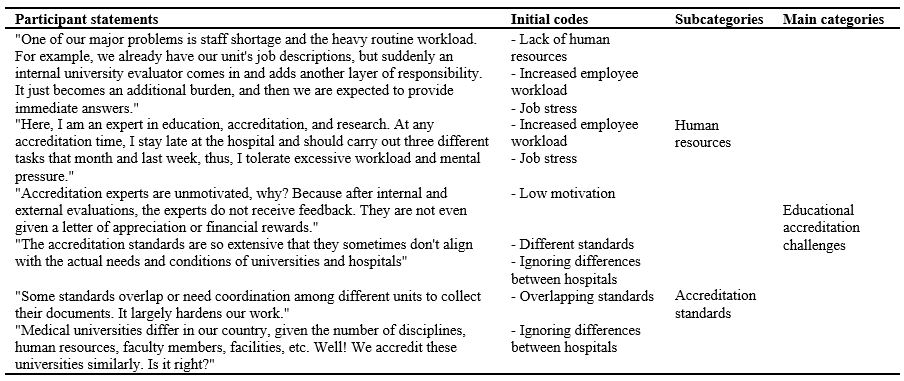
These subcategories were looked at and compared conceptually, and those tackling similar issues were put together and entered into main categories. The MAXQDA10 software was used for data management. To improve the rigor of data analysis, an example of a category creation process is presented in Table 2.
The data were collected through 15 semi-structured interviews.
The interview questions included: “Briefly describe your professional experience with the implementation of educational accreditation,” “From your perspective, what are the key challenges facing educational accreditation?” and “What opportunities and strengths exist in the current educational accreditation program at this university?”
Likewise, follow-up questions, e.g., would you tell more about this issue? and do you mean that…? were asked in every interview if necessary.
Data collection methods
As the interviewer, the researcher coordinated the time and location of the interviews with the participants.
The interviews lacked any prejudgment questions.
Before starting each interview, the interviewer provided the participants with a brief review and objectives of the research, ensured the confidentiality of the data, recorded the interviews after getting the participants' permission, and took notes from the interviews as far as possible. Besides, the interviewer reviewed or retrieved important points or summarized the participants' responses during or at the end of every interview to confirm the validity of the data.
12 interviews were in person, and three were done through telephone calls. The average interview time was 44 minutes (minimally 19 and maximally 72 minutes). The interviews were transcribed and typed in the Word software maximally after 24 hours and code allocation to each.
To ensure the validity of the interviews, two pilot interviews were initially done. Interview protocols were reviewed and adjusted in collaboration with a qualitative research expert to ensure methodological rigor. To confirm the reliability of the study, Lincoln and Guba's criteria were applied, focusing on four key aspects: credibility, transferability, dependability, and confirmability. Credibility was reached by having three participants review and check both the interview transcripts and extracted codes. Transferability was ensured through clear descriptions of the study context, participant selection criteria, maximum variety of participants, participant characteristics, and data collection/analysis procedures. Dependability and confirmability were addressed by systematically documenting all research activities, including audio recordings, field notes, and raw data, while maintaining a complete audit trail of methodological decisions.
Data analysis
Conventional content analysis based on Graneheim and Lundman [20] approach was used to study the interview data. The content of the interviews was reviewed several times to get a complete picture of the provided data. Data analysis and coding began when the first interview ended.
After being developed and compared, the initial codes addressing the same concepts fell into subcategories. This process went on in other interviews until a set of subcategories emerged.
These subcategories were looked at and compared conceptually, and those tackling similar issues were put together and entered into main categories. The MAXQDA10 software was used for data management. To improve the rigor of data analysis, an example of a category creation process is presented in Table 2.
Table 2. An example of a category creation process
Results
According to the content analysis of the interviews, the opportunities and challenges of educational accreditation
at the teaching hospitals fell into 27 initial codes, nine subcategories and two main categories (Table 3).
Table 3. Opportunities and challenges of educational accreditation in teaching hospitals at Arak University of Medical Sciences
Educational accreditation challenges
Human resources: Lack of human resources and increased employee workload were among the challenges addressed by many participants. Due to the lack of human resources at hospitals, educational accreditation experts often handle multiple roles and responsibilities. Engaging in different tasks will lead to confusion and fatigue and raise mental stress.
"Here, I am an expert in education, accreditation, and research. At any accreditation time, I stay late at the hospital and carry out three different tasks that month and last week, thus, I tolerate excessive workload and mental pressure." P2
One of the participants recognized the ineffectiveness of the accreditation process in employees' views and the non-allocation of monetary and non-monetary rewards to experts as the most important reasons for their lack of motivation for taking part in the accreditation program. He said:
"Accreditation experts are unmotivated, why? Because after internal and external evaluations, the experts do not receive feedback. They are not even given a letter of appreciation or financial rewards." P15
Facilities and equipment: Other challenges of educational accreditation included problems with physical spaces, educational facilities and equipment, and the deterioration of some hospital buildings.
"In the previous round of accreditation, we could not receive the complete score since we lacked adequate space according to accreditation standards. Our pavilions are problematic, and we don't have sufficient rooms and classes. If we are given a budget, the hospital building is old." P14
Financial resources: Problems related to the lack of financial resources were the other challenges and barriers to carrying out this program.
Lack of financial resources can cause problems by affecting the accreditation process directly and indirectly by affecting human resources, facilities, and equipment.
"Preparing infrastructure and running the program needs enough money and financial resources. Now, we are aware of all circumstances of hospitals that face shortages in human and financial resources, and this is one of the reasons for increased workload and occupational stress among accreditation executives." P7
Accreditation standards: The participants also discussed the variety and multidimensionality of the standards and the negligence of inter-hospital differences.
"Medical universities differ in our country, given the number of disciplines, human resources, faculty members, facilities, etc. Well! We accredit these universities similarly. Is it right?" P1
"Some standards overlap or need coordination among different units to collect their documents. It hardens our work to a large extent." P4
Executive: On the other hand, many of the processes and activities addressed by accreditation standards are fulfilled routinely in hospitals; however, their documents are not retained and recorded.
"At the time of accreditation, we found that we had followed all of them but lacked the documents. Our documentation is poor." P9
One of the participants considered administrative bureaucracy as a reason for poor documentation and stated:
"We want a document, but we should write to several units to give us what we request." P6
Getting the complete score of some standards needs the cooperation of hospital faculty members. Due to their high workload, these individuals cannot accomplish tasks according to the standards, bringing concerns and problems to accreditation experts.
On the other hand, the faculty member shortage in teaching hospitals is another underscored challenge.
"Our faculty members and professors should accept carrying out educational accreditation standards. They are busy and, sometimes, cannot cooperate as they should. Now, suppose we face a faculty member shortage in hospitals; especially in recent years, this constraint has worsened the conditions." P12
The shift and turnover of managers, vice-chancellors, and the internal evaluation team were highlighted by the participants as accreditation challenges.
"Changing the internal evaluation team is also another complexity. The members are replaced occasionally, and we face challenges with the new team until the work becomes routine." P10
"The former vice-chancellor of education in our hospital strongly agreed with and supported accreditation in all conditions. But, well! He was replaced, and it takes time for the new vice-chancellor to figure out what happens." P3
The disagreements and different viewpoints of external evaluators also make the educational accreditation program challenging.
Evaluators' personalized behaviors in reviewing documents and checking hospitals can lead to confusion and rework among accreditation experts.
"Several evaluators come to accredit our hospitals, and everyone checks one hospital. That is, every hospital is checked differently, and these triggers personalized behavior in reviewing documents." P15
"We had prepared the documents according to the standards. But, on the evaluation day, the evaluator said: We followed this format at our university, and you should prepare this document based on the format of our university and upload the new document in the second chance we give you." P12
Communication and cooperation: Although carrying out the accreditation program in hospitals is a multilateral activity and needs teamwork, cooperation, and intra- and extra-organizational relations, some individuals and units, either inside or outside hospitals, do not cooperate with educational accreditation experts as they should, do not provide the needed documents, or avoid helping them in carrying out standards.
"It has happened to me. I asked for some information from one of the university deputies. I wrote letters and made telephone calls several times. Lastly, I could get that document through my friendly relations with an employee in that deputy." P2
Educational accreditation opportunities
Human resources: Although human resources shortages are one challenge to carrying out the accreditation program, the presence of experienced and competent managers and educational accreditation experts is one of the strengths of educational accreditation program.
These individuals can ensure the success of this program by motivating and directing employees.
"One of the strengths of this program is its experienced individuals, who are aware of its depth and importance, persuade others to step into a certain direction, and show them the importance of this program." P11
"One of the colleagues has long been at our hospital and engaged in accreditation for several years. His support strongly motivates us." P14
Improvement of education: It is evident that improving educational processes and carrying out the standards of medical education more properly are among the opportunities for educational accreditation at medical universities. On the other hand, checking the conditions of educational hospitals according to accreditation standards paves the way for supporting academic units in decision-making and planning at the university level.
"We now attend sessions and say our accreditation declares these; this is our capacity; this is the status of our hospitals and universities, and education should be planned accordingly." P14
"I, myself, like standards very much. I wish I had no responsibilities and just pursued they're carrying out. Our education became more coherent after the announcement of standards." P8
Managerial and executive: Other educational accreditation opportunities include best internal resource use and the involvement of different teaching hospital units.
"The key to our success was teamwork. We were all together. By all, I mean the entire hospital, and we could promote the hospitals' rank compared to the previous round of accreditation." P5
Discussion
According to the results of this study, educational accreditation faces different challenges in terms of human and financial resources, facilities, accreditation standards, program implementation, and intra- and extra-organizational cooperation. Despite the differences among different medical sciences universities, comparing the results of the present study with the results of similar studies reveals that many universities are similarly challenged in carrying out the educational accreditation program.
In Bigdeli et al.'s study [16], the senior managers involved in the educational accreditation process in Iran University of Medical Sciences introduced the problems tied to standards and criteria, financial and educational infrastructures, and executive accreditation policies as the main challenges of educational accreditation at this university. The findings of Bigdeli et al's study confirm the results of the present study and highlight the challenges related to accreditation standards, financial and executive issues in carrying out educational accreditation programs in medical sciences universities.
Consistent with the findings of the present study, Salehi and Payravi identified inadequate and unsuitable standards, high cost, insufficient training, increased workload, lack of motivation, lack of time, inappropriate scoring methods, shortage of human and financial resources, and evaluators' subjective judgments as the primary accreditation challenges of Iranian hospitals [19]. In confirming the results of this study, the faculty members and managers of the Midwest University argued that the diversity of standards, manager shifts and turnovers, high costs, being time-consuming, and mental stress were the problems of educational accreditation at this university [21]. Chehrzad et al. investigated the views of the employees involved in the educational accreditation program at the Gilan University of Medical Sciences. They introduced organizational culture, individual culture, employee attitude, motivation, organizational structure, and resource allocation management as the main problems of this university in setting up educational accreditation [8]. The investigation and comparison of the findings of different studies uncover that the problems of human resources, financial resources, program implementation, and infrastructures are among the primary and common challenges of educational accreditation at different hospitals and universities.
Despite the challenges and problems of medical sciences universities in carrying out the educational accreditation program, the privilege of experienced and competent managers and employees, promotion of educational processes, support from educational units, strong cooperation between individuals and different sectors, and best use of internal capacities are the opportunities and strengths in carrying out this program at teaching hospitals.
The results of this study are confirmed by the research findings of Hailey et al., who found promoting university rank, improving the carrying out process of educational programs, recruiting more competent faculty members and students, and using valid criteria for checking educational programs as the advantages of educational accreditation in Midwest University [21].
In line with the results of this research, Yarmohammadian et al. identified institutional accreditation challenges and opportunities at the medical universities of Iran. They found that the lack of time, increased workload, unfitting standards and criteria, and different evaluation qualities made up the challenges while providing progress opportunities to universities, defendable opportunity-cost, reduced inequality between universities, and improvement strategies shaped the opportunities of this program at the medical sciences universities of Iran [15]. According to the results of the study by Abou Neel and Frick, lack of resources, ambiguous processes, communication problems, increased workload, leadership style, and work environment were the accreditation challenges in the College of Dental Medicine of Sharjah University. Providing resources, choosing the appropriate leadership style, and improving the work environment were recognized as solutions to overcome these challenges from the point of view of faculty members and managers involved in the accreditation process [22].
The results of Abou Neel and Frick's study also agree with and confirm the findings of the present study. Educational accreditation at teaching hospitals calls for the multilateral participation and cooperation of all university deputies.
Notably, all individuals' and deputies' involvement in teamwork is a prerequisite for the success of the educational accreditation process. In addition, supplying the necessary resources and infrastructures for carrying out this program is another component that affects accreditation.
All managers and employees engaged in educational accreditation should carefully look at different aspects associated with the challenges and opportunities of carrying out this program.
Considering the findings of this study and their comparison with other research findings, studies that study the internal and external environments of teaching hospitals using the SWOT method, estimate the cost of educational accreditation, develop resource management models to carry out educational accreditation, and identify medical universities' approaches to supporting educational accreditation program can help to carry out educational accreditation better.
Conclusion
According to the identified challenges and opportunities of educational accreditation in teaching hospitals, it can be said that educational accreditation is a process that needs the commitment of managers, staff, and faculty members, sufficient resources, and internal and external cooperation and communication.
Identifying and attending to the factors and dimensions that affect the accreditation process will make this program more successful and ensure the quality of educational programs and processes.
We cannot completely generalize the results of a study to all teaching hospitals since every medical sciences university faces certain challenges and opportunities. However, using the experiences of other universities can help future planning and decision-making.
Ethical considerations
This study was approved by Research Ethics Committees of National Agency for Strategic Research in Medical Education (NASR). Ethical Code: IR.NASRME.REC.1402.016.
The researcher complied with all ethical considerations, e.g., getting the ethics code, getting informed consent from the participants, allowing voluntary participation in the study, getting permission to record voices, ensuring the confidentiality of data, and not imposing the researcher's views in the research.
Artificial intelligence utilization for article writing
ChatGPT-4 (Open AI) was used to improve the grammatical accuracy of the text.
Acknowledgment
The author is deeply grateful to all individuals who contributed to this research.
Conflict of interest statement
The authors report no conflicts of interest.
Author contributions
MR proposed the idea, collected and studied the data, and wrote the paper.
Funding
This research was funded (Grant No: 4010082) by the National Agency for Strategic Research in Medical Education (NASR).
Data availability statement
The data that support the findings of this study are available on request from the corresponding author.
Editorial: Original Research |
Subject:
Medical Education
Received: 2025/05/11 | Accepted: 2025/10/21 | Published: 2025/11/19
Received: 2025/05/11 | Accepted: 2025/10/21 | Published: 2025/11/19
References
1. Hussein M, Pavlova M, Ghalwash M, Groot W. The impact of hospital accreditation on the quality of healthcare: a systematic literature review. BMC Health Serv Res. 2021;21(1):1057 [DOI:10.1186/s12913-021-07097-6] [PMID] []
2. West J, Ramirez B, Filerman G, Siow L. Global accreditation strategies in health management education. Front Public Health. 2019;7:12. [DOI:10.3389/fpubh.2019.00012] [PMID] []
3. Mirzadeh A, Tavakoli S, Yazdani K, Taj M. Accreditation: a way to quality assurance and improvement. Iran J Med Educ. 2004;4(2):105-116.
4. Almurayh A, Saeed S, Aldhafferi N, Alqahtani A, Saqib M. Sustainable education quality improvement using academic accreditation: findings from a university in Saudi Arabia. Sustainability. 2022;14(24):16968. [DOI:10.3390/su142416968]
5. Iqbal S, Taib CB, Razalli MR. Examining the effect of accreditation on higher education performance through motivation as a mediator. Particip Educ Res. 2023;10(3):89-105. [DOI:10.17275/per.23.46.10.3]
6. Garwe E, Zunguze M, Kanda M, editors. Beyond evaluation: Improving quality and impact through programme accreditation. Forum Educ Stud. 2024;2(3):522. [DOI:10.59400/fes.v2i3.522]
7. Chehrzad M, Mahmoodi AH, Fathivajargah K, Khorshidi A, Samimi-Ardestani S. Pathology the process of accreditation of educational institutions and therapeutic centers and presentation an appropriate model. Res Med Educ. 2019;11(1):37-49. [DOI:10.29252/rme.11.1.37]
8. Chehrzad M, Mahmoudi AH, FathiVajargah K, Khorshidi A, Samimi-Ardestani S. Pathology of universities' preparedness process to establish educational accreditation of medical education centers. Iran J Med Educ. 2019;19:305-315.
9. Duarte N, Vardasca R. Literature review of accreditation systems in higher education. Educ Sci. 2023;13(6):582. [DOI:10.3390/educsci13060582]
10. Mohammadi A, Mojtahedzadeh R, Asadzandi S, Ostad S. Designing and establishment of accreditation system for evaluation of virtual schools and centers. Teb Va Tazkiye. 2019;27(4):260-270.
11. Deputy of Education, Ministry of Health and Medical Education. Revised standards of accreditation of teaching hospitals in Iran [Internet]. Ministry of Health and Medical Education; 2021 [cited 2025 May 1]. Available from:
12. Ng K, Leung GK, Johnston JM, Cowling BJ. Factors affecting implementation of accreditation programs and the impact of the accreditation process on quality improvement in hospitals: a SWOT analysis. Hong Kong Med J. 2013;19(5):434-446. [DOI:10.12809/hkmj134063] [PMID]
13. Shahidi S, Sabri M, Avizhgan M. Development, implementation, monitoring and evaluation of performance improvement components of Isfahan medical school departments. Iran J Med Educ. 2020;20:1-11.
14. Arasteh H, Ghorbandoodt R, Abbasian H, Zeinabadi H. The pathology of transformational innovation packages in medical education: a qualitative study. Res Med Educ. 2019;11(4):1-12. [DOI:10.29252/rme.11.4.21]
15. Yarmohammadian MH, Khorsani E, Norouzinia R, Atashzadeh-Shoorideh F, Soltani A, Nasiri E. Institutional accreditation in medical education: the experience of the survey visit teams. J Educ Health Promot. 2020;9:1. [DOI:10.4103/jehp.jehp_518_19] [PMID] []
16. Bigdeli S, Arabshahi SK, Sohrabi Z, Zazoly AZ. Exploring the challenges of educational accreditation of teaching hospitals and providing the solutions. J Educ Health Promot. 2021;10:1. [DOI:10.4103/jehp.jehp_894_20] [PMID] []
17. Oladi S, Yahyapour Y, Rezapour Z, Sharifi S. Development and effectiveness of a comprehensive program for evaluating the performance of the educational system on the result of evaluation and educational accreditation of Shahid Beheshti hospital in Babol. Med Ed J. 2020;8(2):44-47.
18. Malekzadeh R, Amuei F, Mahmoudi E, Abedi G, Mohammadi H. The effect of inclusive quality management on the educational accreditation results of the educational centers of Mazandaran university of medical sciences in 2015-2018. Pharm Biomed Res. 2021;7(1):15-24. [DOI:10.18502/pbr.v7i1.7353]
19. Salehi Z, Payravi H. Challenges in the implementation accreditation process in the hospitals: a narrative review. Iran J Nurs. 2017;30(106):23-34. [DOI:10.29252/ijn.30.106.23]
20. Graneheim UH, Lundman B. Qualitative content analysis in nursing research: concepts, procedures and measures to achieve trustworthiness. Nurse Educ Today. 2004;24(2):105-112. [DOI:10.1016/j.nedt.2003.10.001] [PMID]
21. Wilson-Hail CK, Hurst B, Chang CW, Cooper W. Accreditation in education: one institution's examination of faculty perceptions. Crit Quest Educ. 2019;10(1):17-28.
22. Abou Neel EA, Frick WC. Addressing challenges, approaches, and outcomes of university accreditation: faculty and administrative insights from a college of dental medicine. J Infrastruct Policy Dev. 2024;8(8):5677. [DOI:10.24294/jipd.v8i8.5677]
Send email to the article author
| Rights and permissions | |
 |
This work is licensed under a Creative Commons Attribution-NonCommercial 4.0 International License. |