Thu, Oct 1, 2026
[Archive]
Volume 19, Issue 1 (2026)
J Med Edu Dev 2026, 19(1): 44-55 |
Back to browse issues page


Ethics code: 01/12/KEP-FKIKUAJ/2023


Download citation:
BibTeX | RIS | EndNote | Medlars | ProCite | Reference Manager | RefWorks
Send citation to:


BibTeX | RIS | EndNote | Medlars | ProCite | Reference Manager | RefWorks
Send citation to:
Nur Fauziyah A T, Jani Juliawati V D, David Kurniawan C, Rosari B P, Darmadi D, Surja S S. PAL-Jigsaw: a hybrid cooperative learning model in medical education. J Med Edu Dev 2026; 19 (1) :44-55
URL: http://edujournal.zums.ac.ir/article-1-2545-en.html
URL: http://edujournal.zums.ac.ir/article-1-2545-en.html
Amanda Tifanny Nur Fauziyah *1  , V Dwi Jani Juliawati2 , Christopher David Kurniawan2 , Bayu Perkasa Rosari3 , Darmadi Darmadi4 , Sem Samuel Surja5
, V Dwi Jani Juliawati2 , Christopher David Kurniawan2 , Bayu Perkasa Rosari3 , Darmadi Darmadi4 , Sem Samuel Surja5
1- School of Medicine and Health Sciences, Atma Jaya Catholic University of Indonesia, Jakarta, Indonesia , amandatifanny2003@gmail.com
2- Medical Education Unit, School of Medicine and Health Sciences, Atma Jaya Catholic University of Indonesia, Jakarta, Indonesia
3- Department of Anatomical Pathology, School of Medicine and Health Sciences, Atma Jaya Catholic University of Indonesia, Jakarta, Indonesia
4- Department of Internal Medicine, Faculty of Medicine, Universitas Sumatera Utara, Medan, Indonesia
5- Department of Parasitology, School of Medicine and Health Sciences, Atma Jaya Catholic University of Indonesia, Jakarta, Indonesia
2- Medical Education Unit, School of Medicine and Health Sciences, Atma Jaya Catholic University of Indonesia, Jakarta, Indonesia
3- Department of Anatomical Pathology, School of Medicine and Health Sciences, Atma Jaya Catholic University of Indonesia, Jakarta, Indonesia
4- Department of Internal Medicine, Faculty of Medicine, Universitas Sumatera Utara, Medan, Indonesia
5- Department of Parasitology, School of Medicine and Health Sciences, Atma Jaya Catholic University of Indonesia, Jakarta, Indonesia
Keywords: Jigsaw, peer-assisted learning, student-centered learning, collaborative learning, active learning strategies
Full-Text [PDF 596 kb]
(269 Downloads)
| Abstract (HTML) (767 Views)
Full-Text: (91 Views)
Abstract
Background & Objective: The rapid advances in medicine have led to changes in medical education, with a shift from teacher-centered to student-centered learning. This study combined Peer-Assisted Learning (PAL)—known for its comfortable learning environment—with the jigsaw method, which fosters cooperative learning. The aim of this study was to implement the PAL-jigsaw method and assess its effectiveness based on students’ perceptions.
Materials & Methods: This study employed a mixed-methods explanatory sequential design. The sample consisted of second-year undergraduate students who completed the infectious disease module. The learning session was conducted using the PAL-jigsaw method. Students' perceptions were evaluated quantitatively and qualitatively. Quantitative data were collected using a 5-point agreement Likert scale questionnaire. The level of agreement was presented descriptively, and the difference between groups was subsequently analyzed using the Kruskal-Wallis test. Qualitative data collection was conducted through Focus Group Discussions (FGD) and was analyzed thematically.
Results: This study involved 18 groups consisting of 178 medical students. The majority of students agreed with 19 of 21 questionnaire items, particularly regarding the learning environment. Most students agreed that PAL-jigsaw created a comfortable atmosphere for asking questions (n = 88, 49.4%), that the session was exciting (n = 75, 42.1%) and fun (n = 60, 33.7%), and allowed tutees to learn while teaching their peers (n = 87, 48.9%). There was no difference between groups (p > 0.05). In the qualitative findings, thematic analysis of the FGD data from tutees and tutors yielded two major themes: 1) Positive aspects and advantages of the PAL-jigsaw method, and 2) Challenges and limitations of the PAL-jigsaw method.
Conclusion: Most students had positive perceptions of the PAL-jigsaw method, such as learning with friends, a comfortable learning atmosphere, and the communication and language used during the sessions. Overall, students and tutors agreed that the PAL-jigsaw method has great potential and could be re-implemented in the following year with improvements on certain aspects, such as timing, tutor preparation, and assessment structure.
Introduction
Rapid advancements in medicine have prompted corresponding changes in medical education, characterized by a shift from teacher-centered to student-centered learning, an approach based on constructivist theory [1]. The Indonesian Doctor Competency Standards emphasized that curriculum implementation should adopt a Student-Centered, Problem-Based, Integrated, Community-Based, Elective, Systematic/Structured (SPICES) approach [2]. Examples of Student-Centered Learning (SCL) methods include Problem-Based Learning (PBL), Case-Based Learning (CBL), Peer-Assisted Learning (PAL), and the jigsaw method [3].
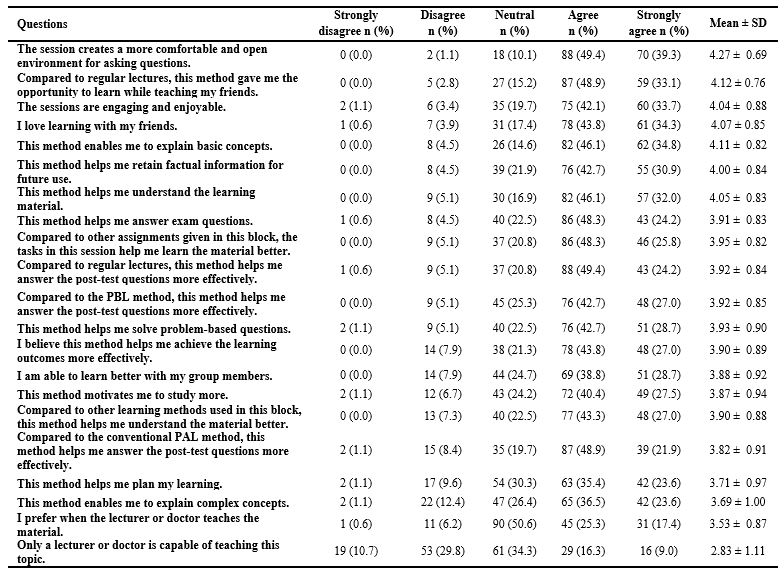
Table 2. Semi-structured interview guide for focus group discussions
Note: This guide was used to facilitate discussions in separate FGDs for tutees and tutors.
Abbreviations: FGD, focus group discussion; PAL, peer-assisted learning.
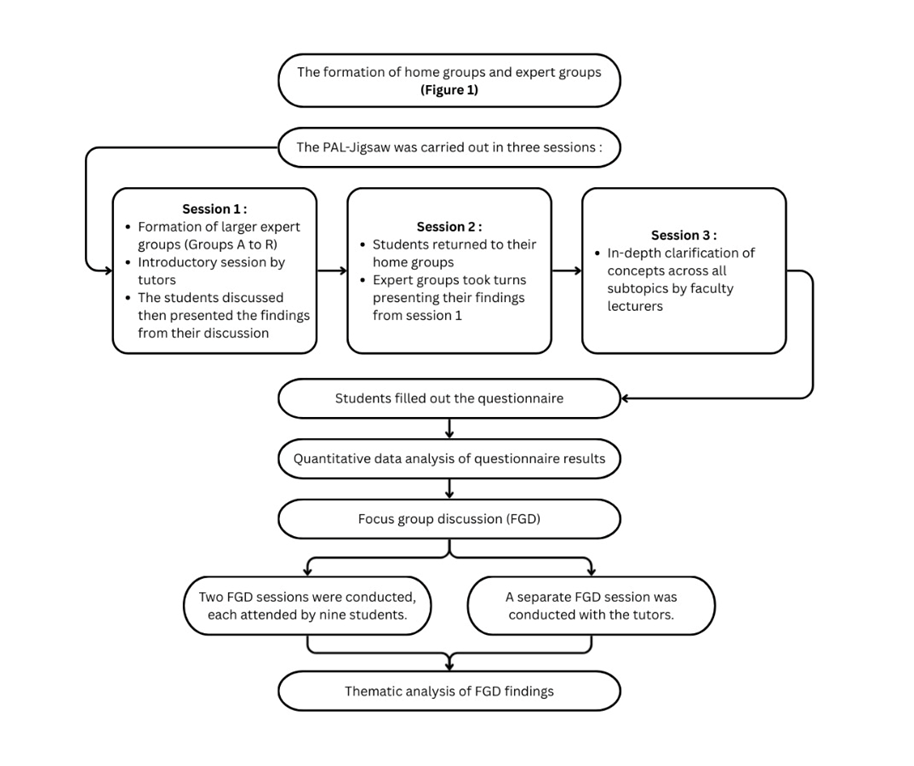
Figure 1. PAL-Jigsaw research workflow
Data collection methods
The sample was divided into eighteen "home" groups, each consisting of approximately twelve students. Each home group was further divided into three subgroups or “expert” groups of three to four students. Each expert group was assigned one of three available subtopics: superficial mycosis, deep mycosis I, or deep mycosis II.
Prior to the first session, the students studied their assigned subtopics. During the first session, expert groups working on the same subtopic from three different home groups were merged into a larger expert group of twelve students. For example, students from home Groups 1, 2, and 3 who studied superficial mycosis formed a larger expert group, Group A. This grouping pattern was also applied to the other three small expert groups for the superficial mycosis subtopic until Group F (the larger expert group) was formed. Deep mycosis I and II subtopics followed the same grouping pattern, forming Groups G to L and Groups M to R, respectively. This resulted in a total of eighteen larger expert groups (Groups A to R). The PAL-jigsaw grouping is shown in Figure 2.
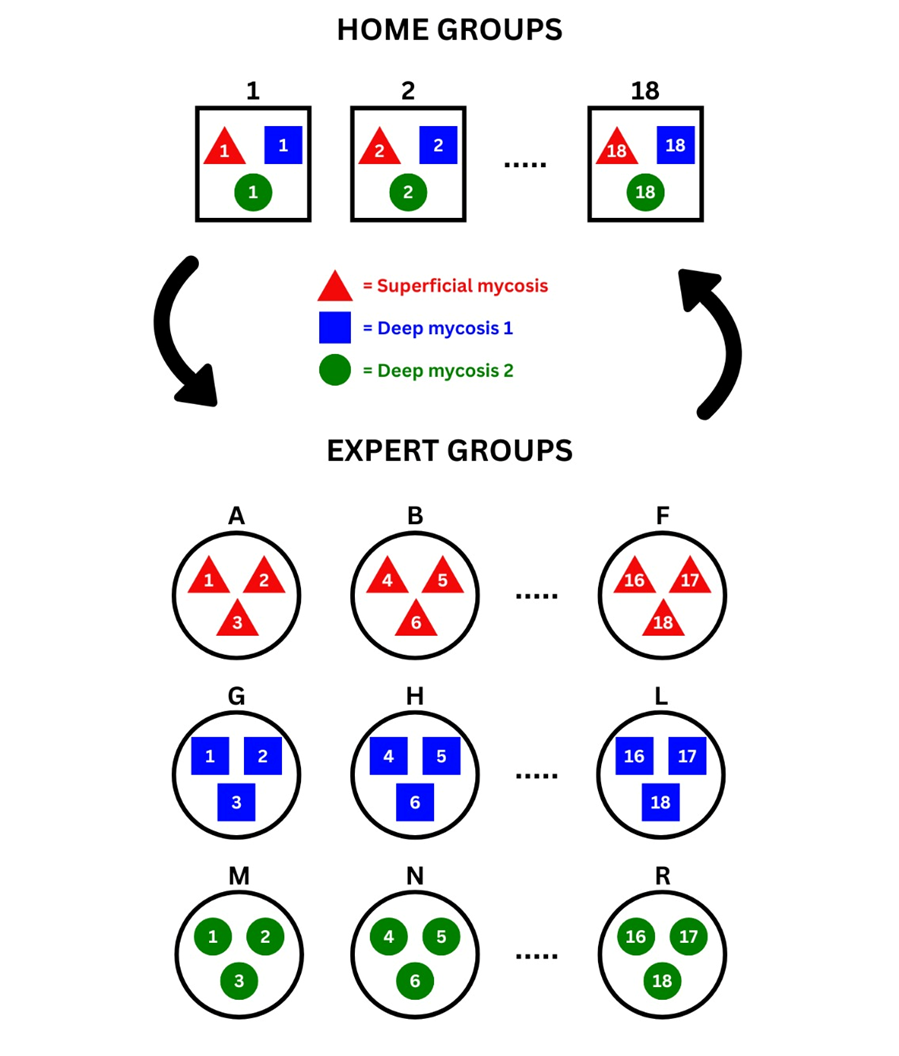
Figure 2. PAL-Jigsaw method
Each larger expert group was supervised by a trained senior student as a tutor. The tutor delivered an introductory session or provided essential background on the topic to equip students with a foundational understanding before the discussion phase. The students were then provided with discussion prompts with questions specific to each expert group’s subtopic. They discussed the questions and created a presentation about their findings. In the second session, all students returned to their home groups (Groups 1-18). Each expert group within the home group took turns presenting their subtopic findings to the other groups, under the supervision of a tutor. The final session was a comprehensive Q&A involving all students and faculty lecturers, allowing for in-depth clarification of concepts across all subtopics. The tutors were senior students chosen from the faculty’s existing PAL unit, independent of this study. The faculty coordinators and the medical education unit recruited PAL tutors through interviews. The PAL tutor applicants were also required to perform a teaching simulation. During the selection process, the tutor applicants were graded based on an assessment rubric and the expert judgement of the interviewers. The accepted applicants of the PAL unit will also undergo tutor training from the Faculty of Psychology. The expert faculty lecturer taught the tutors through tutorials and discussions lasting 4 hours. The lecturer would ensure that the tutors understood the material sufficiently by asking them questions. If the tutors could not give satisfying answers, then the materials would be re-explained.
Data analysis
Descriptive statistics were used to summarize quantitative data, including Likert-scale items, which will be presented in a table with mean, standard deviation, and frequency with percentage. Due to the non-normal distribution of the data, a Kruskal-Wallis’s test was used to compare perceptions between home groups. The data analysis was done using Statistical Package for the Social Sciences (SPSS) version 27.
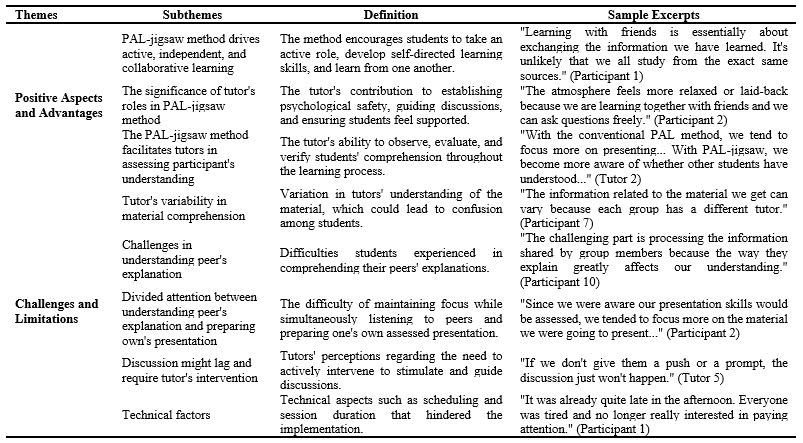
Verbatim transcripts of the FGD recordings were analyzed using data-driven thematic analysis and an inductive coding approach (Table 3) [12,13]. One of the authors developed an initial codebook from the recordings and grouped codes with similar nuances into themes. These results underwent a member-checking process by all the other authors individually to ensure inter-rater agreement and to ensure that the interpretations were truly rooted in participants' data. By the end of the review process, inter-rater agreement had been achieved among all the authors.
Table 3. Thematic analysis of focus group discussions on the PAL-jigsaw learning experience
ATNF was a fourth-year undergraduate medical student at the same medical school. DD was an assistant professor at another medical school in Indonesia who participated in this study. None of the authors had direct contact with the participants during the jigsaw and PAL sessions. In our attempts to minimize the bias introduced by these positionalities and ensure the robustness of our data and its interpretations, we have taken several approaches. First, a semi-structured approach with an interview protocol was used to reduce the interviewer’s subjectivity during data collection. Second, we held regular meetings involving all authors to discuss our progress in interpreting and analyzing the data and also any conflicting ideas we encountered. The validity of the qualitative results was ensured through peer review among the authors.
Results
Quantitative findings
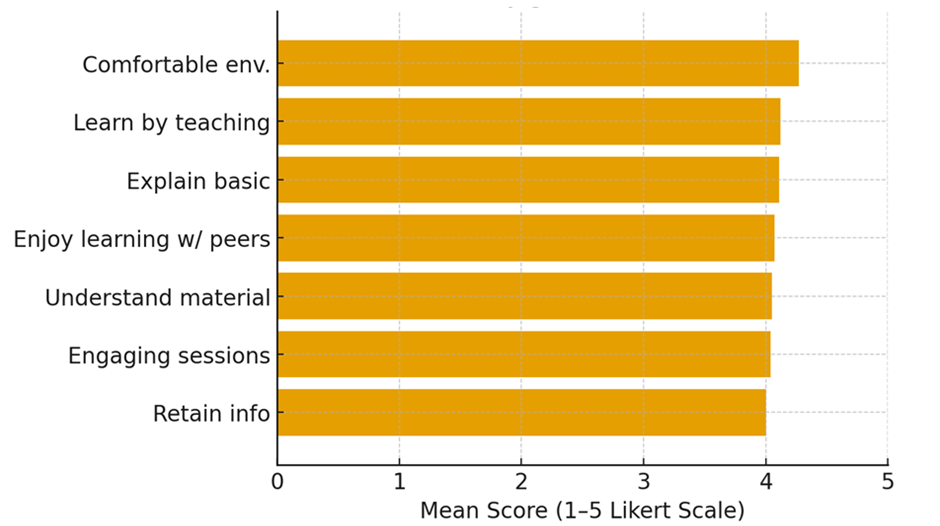
A total of 178 students completed the questionnaire, with the majority being female (70.8%) and the remaining male (29.2%). The average student’s age was 19. For 19 out of the 21 questionnaire items, between 61.4% and 88.7% of students expressed agreement or strong agreement (Table 1). Figure 3 illustrates the questionnaire items with mean scores above 4, indicating aspects of the PAL–Jigsaw method that received highly positive responses from students. Based on the corrected item–total correlation analysis, all items were valid (r > 0.30) except item “I prefer when the lecturer or doctor teaches the material” (r = 0.079) and “Only a lecturer or doctor is capable of teaching this topic” (r = 0.131). These items reflected students’ preference for lecturer-led instruction and were retained in the descriptive analysis, although their variability may have contributed to lower correlation values. The Cronbach’s alpha coefficient was 0.955, indicating excellent internal consistency of the questionnaire.
Qualitative findings
A total of 59 initial codes were generated from the transcripts. After reviewing and merging overlapping codes, 38 final codes remained. These were organized into two main themes and eight subthemes that reflected students’ and tutors' perceptions of the PAL-Jigsaw learning experience. Thematic analysis of the FGD data yielded two themes: 1) Positive aspects and advantages of the PAL-jigsaw method, and 2) Challenges and limitations of the PAL-jigsaw method.
Positive aspects and advantages of the PAL-Jigsaw method: This theme focused on the positive aspects and benefits experienced by students and tutors through the implementation of the PAL-Jigsaw method. From the first theme, we identified several subthemes: a) PAL-Jigsaw method drives active, independent, and collaborative learning, b) the significance of tutors’ roles in this method, and, from the tutors’ perspective, c) it facilitates them in assessing participants’ understanding.
PAL-Jigsaw method drives active, independent, and collaborative learning: The PAL-Jigsaw method drives active, independent, and collaborative learning, encouraging students to take an active role in their own learning, develop self-directed learning skills, and learn from one another. Participant Number 1 stated: “Learning with friends is essentially about exchanging the information we have learned. It’s unlikely that we all study from the exact same sources”.
This method also promoted open discussion and the discovery of new information, as described by Participant Number 12:
“The PAL-Jigsaw discussion questions motivate us more to study independently at home because we had to present the results of our discussion in the next session.” Tutor Number 1 added, “The PAL-Jigsaw method actively engages students. They are truly encouraged to seek information on their own, rather than just passively listening”.
The significance of the tutor’s roles in the PAL-Jigsaw method: This subtheme referred to the tutor’s contribution to establishing psychological safety, guiding discussions, and ensuring that students feel acknowledged and supported when seeking clarification. Some of the students said that the method created a relaxed and comfortable learning atmosphere, allowing them to ask questions more freely:
“The atmosphere feels more relaxed or laid-back because we are learning together with friends and we can ask questions freely” (Participant Number 2) and “We feel more at ease and relaxed around tutors” (Participant Number 3).
Some students also stated that the introductory session given by the tutor prior to the discussion was helpful, and that tutors responded positively to students' questions, providing appropriate answers and avoiding misinformation. Participant Number 7 described this as: “The introductory session given at the beginning, before the discussion, was quite helpful for understanding the material in general”.
Another participant added:
“If the tutor was unsure about the answers to the questions we ask, they’d first check with the other tutors to make sure they gave us accurate answers” (Participant Number 8).
The discussion materials in the PAL-Jigsaw session provided guidelines, boundaries, and clarity, helping students understand the depth of their studies and avoid confusion. The format of these materials ensured immediate understanding and prevented lengthy discussions, ultimately benefiting students' learning experiences. Some students mentioned:
“The discussion materials were helpful. We got to know the guidelines and understood how deep we needed to study” (Participant Number 4) and “The discussion materials were helpful because they were in the form of questions. So, we immediately got to the point, and the discussion didn’t go off track” (Participant Number 5).
The PAL-Jigsaw method helps tutors assess participants’ understanding: This subtheme was defined as the tutor’s ability to observe, evaluate, and verify students’ comprehension throughout the learning process. The PAL-Jigsaw method also made it easier for tutors to assess which students truly understood their assigned subtopics and which did not, compared to the conventional PAL method commonly used in our medical school. Tutor Number 2 described, “With the conventional PAL method, we tend to focus more on presenting our own material to the students. In contrast, with the PAL-Jigsaw method, we become more aware of whether other students have understood the material or not—it becomes more apparent who has grasped the content and who hasn't”.
Challenges and limitations of the PAL-Jigsaw method: This theme addressed the challenges and limitations faced by students and tutors during the implementation of the PAL-Jigsaw method. We had identified five subthemes revolving around the challenges and limitations of this method: a) tutor's variability in material comprehension, b) challenges in understanding peers' explanation, c) divided attention between understanding peers' explanation and preparing one's own presentation, d) discussion might lag at times and needed tutor’s intervention, and e) technical factors.
Tutor's variability in material comprehension: This subtheme referred to the variation in tutors’ understanding of the material, which could lead to confusion or uncertainty among students. Some students stated: “The information related to the material we get can vary because each group has a different tutor. Their teaching methods can also differ” (Participant Number 7) and “The level of understanding of the tutors about the material can also vary” (Participant Number 13).
Challenges in understanding a peer's explanation: This subtheme concerned the difficulties students had in comprehending their peers’ explanations. Some students described how understanding group friends' material can be challenging: “The challenging part is processing the information shared by group members because the way they explain greatly affects our understanding. Not all students necessarily have the skill to explain things well” (Participant Number 10).
Divided attention between understanding the peer's explanation and preparing one's own presentation: This subtheme referred to the difficulty of maintaining focus while simultaneously listening to peers’ explanations and preparing one’s own presentation. Students felt that their focus was split between listening to their group members’ presentations and preparing their own. This was because their presentation performance was being evaluated. It made them prioritize preparing their own presentation, over paying attention to the material presented by other group members. Participant Number 2 stated: “Since we were aware our presentation skills would be assessed, we tended to focus more on the material we were going to present rather than listening to other group members’ presentations”.
Discussion might lag at times and need a tutor’s intervention: This subtheme concerned tutors’ perceptions of the need to intervene during discussions. From the tutor’s perspective, the discussion seemed to be optimal. Tutors still needed to actively encourage students to start sharing their opinions and engage in discussion. The students’ lack of preparedness also hindered the smooth flow of the discussion. Some tutors mentioned: “I noticed a similar pattern across several groups. If we don’t give them a push or a prompt, the discussion just won’t happen” (Tutor Number 5) and “They weren’t prepared enough in terms of understanding the subtopic. They were given time to study their assigned subtopics, but many of them seemed confused and were quite passive during the discussion” (Tutor Number 2).
Technical factors: Technical factors encompassed all aspects that sometimes-hindered implementation. The students perceived the PAL-jigsaw session as scheduled too late in the day, when they were already exhausted from a tightly packed schedule earlier that day. The session's duration was also considered too long. The students stated: “It was already quite late in the afternoon. Everyone was tired and no longer really interested in paying attention” (Participant Number 1) and “I think the two-hour duration was too long. One hour might be more effective in stimulating our thinking process” (Participant Number 6).
Nevertheless, the students agreed that the PAL-jigsaw method could continue to be implemented in the following years, with improvements in certain aspects. The tutors shared a similar view, stating that the method holds strong potential and would work better with a few adjustments.
Discussion
In this study, the PAL-jigsaw method effectively increased students' learning motivation through peer interaction. Based on students’ perceptions, learning with friends allowed them to share information, complement understanding, and enrich knowledge. In addition, this PAL-jigsaw method motivated students to learn independently, as they were responsible for delivering the discussion results to their home group at the next session, a role that served as an extrinsic motivator. The qualitative findings in this study also showed that tutees found the learning atmosphere during PAL-jigsaw sessions to be more comfortable and relaxed, with tutors providing support. The introductory session and discussion questions led by peer tutors facilitated understanding of the materials, helped students stay focused, and reduced confusion, with tutors being responsive to questions. The PAL-jigsaw method in this study allowed students to take responsibility not only for their learning but also for helping others in small groups.
However, this study also found that some students still found it difficult to understand other expert groups' material, due to variations in students' ability to explain the material and their focus on preparing their assessed presentations. Only a few students were actively discussing in groups, and technical issues, such as unsuitable timing and duration, reduced overall effectiveness.
The findings of this study are supported by Jeppu et al., who showed that the jigsaw method improved interpersonal skills and interdependence in preclinical medical students in Malaysia [14]. Elshami et al. also reported that students in the PAL learning method were motivated to learn and better prepared for sessions [4]. In this study, Loda et al.
found that social and cognitive congruence between student and tutor in the PAL method encouraged familiar, informal communication. This helps to create a relaxed and enjoyable learning environment and fosters students to ask for help or discuss more freely, which rarely happens in conventional lecture sessions [14–16]. Moin et al. reinforced that imperfect explanations from group members could create confusion, in line with the comprehension difficulties found in this study [17]. Kumar et al. also supported the idea that students with different information processing speeds could slow down the success of group learning [18]. However, unlike the findings of Moin et al., who reported that jigsaw sessions were practical and interactive with motivated students [17], this study observed passive engagement among many students.
According to Vygotsky's theory of social constructivism, social interaction plays a crucial role in strengthening cognitive development [19, 20].
The PAL-jigsaw method used in this study applies social constructivist theory by positioning students at a similar level of cognitive and social congruence, thereby facilitating the enhancement of students’ cognitive development through peer interaction and collaboration [14–16].
However, passive student engagement may occur due to the traditional teacher-centred culture and education system in Asian countries, including Indonesia [21, 22]. From primary to secondary school, students in Indonesia are accustomed to teacher-centred learning methods, which place the teacher as the primary source of knowledge.
As a result, many students are unfamiliar with collaborative learning models that encourage active participation without direct guidance. Matsuyama et al. noted that transitioning to a learner-centred approach in medical education requires time, guidance, and gradual adaptation [21]. In addition, hesitation to speak freely, concerns about being rude, and fear of criticism, mistakes, or lack of preparation often limit students' confidence to engage actively in discussions, as noted by Grieve et al. [23, 24].
The findings suggest that the PAL-jigsaw method can enhance motivation, support peer learning, and create a more relaxed learning atmosphere. Implementing this method may benefit from stronger tutor guidance, especially to clarify and reinforce information shared within groups.
Structured introductory sessions and focused discussion questions should continue to be used to reduce confusion and support comprehension. According to Loda et al., empathetic tutors in the PAL method can provide explanations that are easier to understand than those of lecturers, who are often considered too complicated [15, 16]. Future implementation should also consider designing assessment methods that focus on individual cognitive understanding rather than performance, thereby encouraging students to engage fully with the material. Additionally, better scheduling at more suitable times may facilitate adequate preparation and discussion time.
The jigsaw method itself requires more time and preparation than traditional methods [17, 18], and scheduling sessions at unsuitable times may reduce student focus during implementation. The limitations of this study include the absence of cognitive assessment before and after the implementation of PAL-jigsaw. In addition, conducting a cognitive rather than a performance-based assessment would provide clearer insight into the learning outcomes achieved through this method. Another limitation is the potential Hawthorne effect, in which students may improve their performance simply because they know they are being observed; a more rigorous study design in the future may help reduce this effect.
The use of qualitative data based on self-reported responses also carries the risk of recall bias. Furthermore, this study did not assess participants' ethnic and cultural backgrounds, which may influence learning behavior and peer interaction. Finally, the questionnaire validation process in this study was insufficient and warrants further improvement in future research.
Conclusion
Our analysis revealed that most students held positive perceptions of various aspects of the PAL-Jigsaw method, such as learning with friends, a comfortable learning atmosphere, and the communication and language used during the sessions. However, some aspects still need to be considered, such as students’ understanding of the overall subtopics and the optimization of the discussion process.
Both students and tutors felt there was room for improvement in implementing PAL-jigsaw, particularly in preparation time, scheduling, tutor preparation, and assessment structure. Overall, students and tutors agreed that the PAL-jigsaw method has great potential and should be re-implemented in the following year with these improvements.
As this was a single-center study conducted on a one-time basis, conclusions regarding the broader applicability of this method cannot yet be drawn. Further research is needed to explore the implementation of this method across other medical topics, such as biomedical sciences or organ-based modules, and in different educational settings, including online and hybrid learning. Moreover, cognitive development could also be assessed.
Ethical considerations
Ethical approval for this study was obtained from the Ethics Committee of the Faculty of Medicine and Health Sciences, Atma Jaya Catholic University of Indonesia, with approval number 01/12/KEP-FKIKUAJ/2023.
Artificial intelligence utilization for article writing
Artificial intelligence was used solely as a language support tool. All academic ideas, interpretations, and conclusions presented in this article are the authors’ original work.
Acknowledgment
The authors have no acknowledgements to declare.
Conflict of interest statement
The authors declare no conflict of interest.
Author contributions
Conceptualization: ATNF, VDJJ, SSS; Methodology: VDJJ, SSS; Data collection: ATNF, CDK, BPR, SSS; Formal Analysis: ATNF, VDJJ, CDK, BPR, DD, SSS; Writing – Original Draft: ATNF, SSS; Writing – Review & Editing: VDJJ, CDK, BPR, DD, SSS; all authors approved the final manuscript.
Funding
This research received no specific funding.
Data availability statement
Data is available on request.
Background & Objective: The rapid advances in medicine have led to changes in medical education, with a shift from teacher-centered to student-centered learning. This study combined Peer-Assisted Learning (PAL)—known for its comfortable learning environment—with the jigsaw method, which fosters cooperative learning. The aim of this study was to implement the PAL-jigsaw method and assess its effectiveness based on students’ perceptions.
Materials & Methods: This study employed a mixed-methods explanatory sequential design. The sample consisted of second-year undergraduate students who completed the infectious disease module. The learning session was conducted using the PAL-jigsaw method. Students' perceptions were evaluated quantitatively and qualitatively. Quantitative data were collected using a 5-point agreement Likert scale questionnaire. The level of agreement was presented descriptively, and the difference between groups was subsequently analyzed using the Kruskal-Wallis test. Qualitative data collection was conducted through Focus Group Discussions (FGD) and was analyzed thematically.
Results: This study involved 18 groups consisting of 178 medical students. The majority of students agreed with 19 of 21 questionnaire items, particularly regarding the learning environment. Most students agreed that PAL-jigsaw created a comfortable atmosphere for asking questions (n = 88, 49.4%), that the session was exciting (n = 75, 42.1%) and fun (n = 60, 33.7%), and allowed tutees to learn while teaching their peers (n = 87, 48.9%). There was no difference between groups (p > 0.05). In the qualitative findings, thematic analysis of the FGD data from tutees and tutors yielded two major themes: 1) Positive aspects and advantages of the PAL-jigsaw method, and 2) Challenges and limitations of the PAL-jigsaw method.
Conclusion: Most students had positive perceptions of the PAL-jigsaw method, such as learning with friends, a comfortable learning atmosphere, and the communication and language used during the sessions. Overall, students and tutors agreed that the PAL-jigsaw method has great potential and could be re-implemented in the following year with improvements on certain aspects, such as timing, tutor preparation, and assessment structure.
Introduction
PAL is one of the most commonly used SCL methods in our medical school alongside PBL and CBL. It is a collaborative learning approach in which two or more students learn from and with each other. The students involved do not necessarily have to be from the same program, course, or discipline. There are several forms of PAL: 1) peer learning among students of the same academic level or discipline, where they teach and learn from one another; 2) near-peer teaching, in which senior students teach their juniors within the same institution; and 3) cross-level peer teaching, which involves students from different levels or institutions [4]. A study conducted by Jawhari et al. reported that 97.5% (n = 118) of students perceived PAL as an effective learning strategy. In the same study, 89.3% (n = 108) of students expressed greater confidence when learning through PAL than with teacher-centered methods, and 97.5% (n = 118) agreed that PAL created a welcoming learning environment, contributing to improved post-test performance [5].
Another SCL method, jigsaw, encourages students to take responsibility for mastering a specific subtopic and teaching it to their peers, thereby creating an interdependent learning environment [6]. The jigsaw method involves dividing a broad topic into several subtopics, with students initially assigned to “home” groups and subsequently to “expert” groups based on their subtopics. After discussing their assigned subtopics within expert groups, students return to their home groups to share and teach what they have learned to their peers [7]. A previous study by Tarhan et al. found that 83% of students believed the jigsaw helped them achieve the expected learning outcomes [8]. Srivijayan et al. further demonstrated that this approach improved communication skills, clinical reasoning, and self-confidence [9]. Woods suggested that the jigsaw method effectively aided in understanding theoretical knowledge through active learning in tandem with independent reading and reflection [10]. Considering that both the PAL and jigsaw methods possess distinct advantages, their integration may enhance the overall benefits of student-centered learning. To date, the combination of PAL and the jigsaw method as a hybrid model has not been extensively studied. This study aims to evaluate preclinical medical students’ perceptions of the PAL-Jigsaw method, hypothesizing that it fosters a collaborative, engaging learning environment and enhances communication skills.
Materials & Methods
Design and setting(s)
This study employed a mixed-methods explanatory sequential research design, which allowed us to obtain quantitative measures of students’ perceptions before exploring, in greater detail, the reasons behind those results, thereby clarifying the “why” underlying the initial quantitative findings. A quantitative method was used to collect data on students' perceptions of the PAL-jigsaw method. The qualitative method was used to gain a more comprehensive understanding of students' experiences with the PAL-jigsaw method. This study was conducted at the School of Medicine and Health Sciences, Atma Jaya Catholic University of Indonesia, during the infectious disease pathology module from November 13 to December 22, 2023. The undergraduate medical program at Atma Jaya Catholic University of Indonesia consists of a 3.5-year preclinical phase followed by a 2-year clinical phase. Around 180-200 students are enrolled in the program every year. A module-based curriculum is implemented during the preclinical phase. During the second year, students underwent a disease pathology module, including infectious disease pathology, in which this study was conducted.
Participants and sampling
This study used a census sampling method, which included all 178 second-year preclinical students (with an average age of 19 years; 52 male and 126 female) who underwent the infectious disease pathology module, which was subsequently divided into 18 PAL-Jigsaw groups.
All participants completed a questionnaire to assess their perception of the PAL-jigsaw learning method. For the qualitative exploration, one tutee was randomly selected from each group using a free online random number generator (available at https://pickerwheel.com/) to participate in an FGD. Two FGDs for tutees were conducted, each consisting of 9 tutees. In a separate session, all nine tutors participated in an FGD session conducted specifically for tutors.
The inclusion criteria for respondents were preclinical students actively participating in the module and willing to sign an informed consent. Exclusion criteria included students who were absent during the study, students who did not complete the questionnaire or did so incompletely, and students who did not respond after the follow-up.
Tools/Instruments
A questionnaire employing a 5-point agreement Likert scale (1 = strongly disagree to 5 = strongly agree) was administered after the PAL-jigsaw session to assess students’ perceptions of the combined learning method. The questionnaire was developed by integrating selected items from previously published instruments by Elshami et al. [4] and Soriano-Moreno et al. [11]. Five items regarding comparisons with regular lectures, the conventional PAL method, and the PBL method were added to provide a better understanding of the new method. Items related to these methods were included to compare students’ perceptions of the PAL-Jigsaw method with those of another learning method commonly used at Atma Jaya Catholic University of Indonesia. The final questionnaire consists of 21 items (Table 1), assessing students’ perceptions of learning together with friends, the effectiveness of the method, the learning environment, and comparisons with other methods. The total questionnaire score ranged from a minimum of 21 to a maximum of 105. The validity of each item was assessed using the corrected item–total correlation; items with coefficients above 0.30 were considered valid. Cronbach’s alpha was used to assess the questionnaire's reliability, yielding a value of 0.955.
Table 1. Medical students' perceptions of the PAL-jigsaw learning method (n = 178)Another SCL method, jigsaw, encourages students to take responsibility for mastering a specific subtopic and teaching it to their peers, thereby creating an interdependent learning environment [6]. The jigsaw method involves dividing a broad topic into several subtopics, with students initially assigned to “home” groups and subsequently to “expert” groups based on their subtopics. After discussing their assigned subtopics within expert groups, students return to their home groups to share and teach what they have learned to their peers [7]. A previous study by Tarhan et al. found that 83% of students believed the jigsaw helped them achieve the expected learning outcomes [8]. Srivijayan et al. further demonstrated that this approach improved communication skills, clinical reasoning, and self-confidence [9]. Woods suggested that the jigsaw method effectively aided in understanding theoretical knowledge through active learning in tandem with independent reading and reflection [10]. Considering that both the PAL and jigsaw methods possess distinct advantages, their integration may enhance the overall benefits of student-centered learning. To date, the combination of PAL and the jigsaw method as a hybrid model has not been extensively studied. This study aims to evaluate preclinical medical students’ perceptions of the PAL-Jigsaw method, hypothesizing that it fosters a collaborative, engaging learning environment and enhances communication skills.
Materials & Methods
Design and setting(s)
This study employed a mixed-methods explanatory sequential research design, which allowed us to obtain quantitative measures of students’ perceptions before exploring, in greater detail, the reasons behind those results, thereby clarifying the “why” underlying the initial quantitative findings. A quantitative method was used to collect data on students' perceptions of the PAL-jigsaw method. The qualitative method was used to gain a more comprehensive understanding of students' experiences with the PAL-jigsaw method. This study was conducted at the School of Medicine and Health Sciences, Atma Jaya Catholic University of Indonesia, during the infectious disease pathology module from November 13 to December 22, 2023. The undergraduate medical program at Atma Jaya Catholic University of Indonesia consists of a 3.5-year preclinical phase followed by a 2-year clinical phase. Around 180-200 students are enrolled in the program every year. A module-based curriculum is implemented during the preclinical phase. During the second year, students underwent a disease pathology module, including infectious disease pathology, in which this study was conducted.
Participants and sampling
This study used a census sampling method, which included all 178 second-year preclinical students (with an average age of 19 years; 52 male and 126 female) who underwent the infectious disease pathology module, which was subsequently divided into 18 PAL-Jigsaw groups.
All participants completed a questionnaire to assess their perception of the PAL-jigsaw learning method. For the qualitative exploration, one tutee was randomly selected from each group using a free online random number generator (available at https://pickerwheel.com/) to participate in an FGD. Two FGDs for tutees were conducted, each consisting of 9 tutees. In a separate session, all nine tutors participated in an FGD session conducted specifically for tutors.
The inclusion criteria for respondents were preclinical students actively participating in the module and willing to sign an informed consent. Exclusion criteria included students who were absent during the study, students who did not complete the questionnaire or did so incompletely, and students who did not respond after the follow-up.
Tools/Instruments
A questionnaire employing a 5-point agreement Likert scale (1 = strongly disagree to 5 = strongly agree) was administered after the PAL-jigsaw session to assess students’ perceptions of the combined learning method. The questionnaire was developed by integrating selected items from previously published instruments by Elshami et al. [4] and Soriano-Moreno et al. [11]. Five items regarding comparisons with regular lectures, the conventional PAL method, and the PBL method were added to provide a better understanding of the new method. Items related to these methods were included to compare students’ perceptions of the PAL-Jigsaw method with those of another learning method commonly used at Atma Jaya Catholic University of Indonesia. The final questionnaire consists of 21 items (Table 1), assessing students’ perceptions of learning together with friends, the effectiveness of the method, the learning environment, and comparisons with other methods. The total questionnaire score ranged from a minimum of 21 to a maximum of 105. The validity of each item was assessed using the corrected item–total correlation; items with coefficients above 0.30 were considered valid. Cronbach’s alpha was used to assess the questionnaire's reliability, yielding a value of 0.955.
Note: Data are presented as frequency (percentage) for each Likert-scale response. The 5-point scale ranged from 1 (Strongly Disagree) to 5 (Strongly Agree). Items are ordered from highest to lowest mean score. Two items regarding preference for lecturer-led teaching showed neutral to negative perceptions.
Abbreviations: SD, standard deviation; PBL, problem-based learning; PAL, peer-assisted learning.
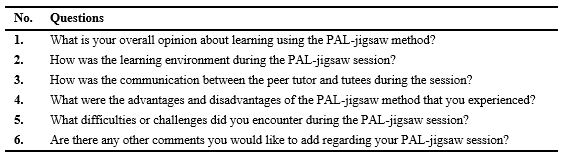
Following quantitative analysis of questionnaire responses, this study employed FGD as a qualitative follow-up to further explore students’ perceptions of the PAL-jigsaw method. One FGD session was conducted with the students who participated as tutees and another session with the tutors who facilitated the learning sessions. Two FGD sessions were held, each attended by 9 tutees. Every session was facilitated by a researcher from this study, and the process was audio-recorded by a secretary with participants’ consent. The session discussions were guided by a semi-structured interview protocol that began with a broad question about participants’ opinions on the PAL-jigsaw method (Table 2). Follow-up questions were then asked to clarify specific areas, including the learning atmosphere, communication dynamics, and students perceived strengths, weaknesses, and challenges during the PAL-jigsaw session. The research workflow, including the quantitative and qualitative data collection procedures, is summarized in Figure 1.Abbreviations: SD, standard deviation; PBL, problem-based learning; PAL, peer-assisted learning.
Table 2. Semi-structured interview guide for focus group discussions
Note: This guide was used to facilitate discussions in separate FGDs for tutees and tutors.
Abbreviations: FGD, focus group discussion; PAL, peer-assisted learning.
Figure 1. PAL-Jigsaw research workflow
Data collection methods
The sample was divided into eighteen "home" groups, each consisting of approximately twelve students. Each home group was further divided into three subgroups or “expert” groups of three to four students. Each expert group was assigned one of three available subtopics: superficial mycosis, deep mycosis I, or deep mycosis II.
Prior to the first session, the students studied their assigned subtopics. During the first session, expert groups working on the same subtopic from three different home groups were merged into a larger expert group of twelve students. For example, students from home Groups 1, 2, and 3 who studied superficial mycosis formed a larger expert group, Group A. This grouping pattern was also applied to the other three small expert groups for the superficial mycosis subtopic until Group F (the larger expert group) was formed. Deep mycosis I and II subtopics followed the same grouping pattern, forming Groups G to L and Groups M to R, respectively. This resulted in a total of eighteen larger expert groups (Groups A to R). The PAL-jigsaw grouping is shown in Figure 2.
Figure 2. PAL-Jigsaw method
Each larger expert group was supervised by a trained senior student as a tutor. The tutor delivered an introductory session or provided essential background on the topic to equip students with a foundational understanding before the discussion phase. The students were then provided with discussion prompts with questions specific to each expert group’s subtopic. They discussed the questions and created a presentation about their findings. In the second session, all students returned to their home groups (Groups 1-18). Each expert group within the home group took turns presenting their subtopic findings to the other groups, under the supervision of a tutor. The final session was a comprehensive Q&A involving all students and faculty lecturers, allowing for in-depth clarification of concepts across all subtopics. The tutors were senior students chosen from the faculty’s existing PAL unit, independent of this study. The faculty coordinators and the medical education unit recruited PAL tutors through interviews. The PAL tutor applicants were also required to perform a teaching simulation. During the selection process, the tutor applicants were graded based on an assessment rubric and the expert judgement of the interviewers. The accepted applicants of the PAL unit will also undergo tutor training from the Faculty of Psychology. The expert faculty lecturer taught the tutors through tutorials and discussions lasting 4 hours. The lecturer would ensure that the tutors understood the material sufficiently by asking them questions. If the tutors could not give satisfying answers, then the materials would be re-explained.
Data analysis
Descriptive statistics were used to summarize quantitative data, including Likert-scale items, which will be presented in a table with mean, standard deviation, and frequency with percentage. Due to the non-normal distribution of the data, a Kruskal-Wallis’s test was used to compare perceptions between home groups. The data analysis was done using Statistical Package for the Social Sciences (SPSS) version 27.
Verbatim transcripts of the FGD recordings were analyzed using data-driven thematic analysis and an inductive coding approach (Table 3) [12,13]. One of the authors developed an initial codebook from the recordings and grouped codes with similar nuances into themes. These results underwent a member-checking process by all the other authors individually to ensure inter-rater agreement and to ensure that the interpretations were truly rooted in participants' data. By the end of the review process, inter-rater agreement had been achieved among all the authors.
Note: Data were derived from focus group discussions with tutees (n = 18) and tutors (n = 9). Thematic analysis was conducted using an inductive approach.
Abbreviations: PAL, peer-assisted learning.
In conducting a qualitative study, the authors' positionality significantly impacts data interpretation. SSS, BPR, and VDJJ were assistant professors at the medical school in which this study was held. CDK was a faculty member of the medical education unit of the same institution.Abbreviations: PAL, peer-assisted learning.
ATNF was a fourth-year undergraduate medical student at the same medical school. DD was an assistant professor at another medical school in Indonesia who participated in this study. None of the authors had direct contact with the participants during the jigsaw and PAL sessions. In our attempts to minimize the bias introduced by these positionalities and ensure the robustness of our data and its interpretations, we have taken several approaches. First, a semi-structured approach with an interview protocol was used to reduce the interviewer’s subjectivity during data collection. Second, we held regular meetings involving all authors to discuss our progress in interpreting and analyzing the data and also any conflicting ideas we encountered. The validity of the qualitative results was ensured through peer review among the authors.
Results
Quantitative findings
A total of 178 students completed the questionnaire, with the majority being female (70.8%) and the remaining male (29.2%). The average student’s age was 19. For 19 out of the 21 questionnaire items, between 61.4% and 88.7% of students expressed agreement or strong agreement (Table 1). Figure 3 illustrates the questionnaire items with mean scores above 4, indicating aspects of the PAL–Jigsaw method that received highly positive responses from students. Based on the corrected item–total correlation analysis, all items were valid (r > 0.30) except item “I prefer when the lecturer or doctor teaches the material” (r = 0.079) and “Only a lecturer or doctor is capable of teaching this topic” (r = 0.131). These items reflected students’ preference for lecturer-led instruction and were retained in the descriptive analysis, although their variability may have contributed to lower correlation values. The Cronbach’s alpha coefficient was 0.955, indicating excellent internal consistency of the questionnaire.
Figure 3. Questionnaire items with mean scores above 4 on the PAL–Jigsaw method (Likert scale 1–5).
A total of 49.4% (n = 88) of students agreed, and 39.3% (n = 70) strongly agreed that PAL-jigsaw created a comfortable atmosphere for asking questions. Similarly, 42.1% (n = 75) agreed, and 33.7% (n = 60) strongly agreed that the session was engaging and enjoyable. Furthermore, 48.9% (n = 87) agreed, and 33.1% (n = 59) strongly agreed that PAL-jigsaw allowed tutees to learn while teaching their peers, while 43.8% (n = 78) agreed, and 34.3% (n = 61) strongly agreed that they enjoyed learning with friends. The method was also found to be effective in explaining fundamental concepts and helping students understand the material. However, 50.6% (n = 90) and 34.3% (n = 61) of tutees were neutral towards the statements "I prefer if a lecturer/doctor teaches" and "Only a lecturer/doctor can teach this topic/material". The results of the quantitative findings were summarized in Table 1. For each statement, the Kruskal-Wallis test yielded a p-value>0.05, indicating no significant difference in perception of the PAL-jigsaw method between home groups.Qualitative findings
A total of 59 initial codes were generated from the transcripts. After reviewing and merging overlapping codes, 38 final codes remained. These were organized into two main themes and eight subthemes that reflected students’ and tutors' perceptions of the PAL-Jigsaw learning experience. Thematic analysis of the FGD data yielded two themes: 1) Positive aspects and advantages of the PAL-jigsaw method, and 2) Challenges and limitations of the PAL-jigsaw method.
Positive aspects and advantages of the PAL-Jigsaw method: This theme focused on the positive aspects and benefits experienced by students and tutors through the implementation of the PAL-Jigsaw method. From the first theme, we identified several subthemes: a) PAL-Jigsaw method drives active, independent, and collaborative learning, b) the significance of tutors’ roles in this method, and, from the tutors’ perspective, c) it facilitates them in assessing participants’ understanding.
PAL-Jigsaw method drives active, independent, and collaborative learning: The PAL-Jigsaw method drives active, independent, and collaborative learning, encouraging students to take an active role in their own learning, develop self-directed learning skills, and learn from one another. Participant Number 1 stated: “Learning with friends is essentially about exchanging the information we have learned. It’s unlikely that we all study from the exact same sources”.
This method also promoted open discussion and the discovery of new information, as described by Participant Number 12:
“The PAL-Jigsaw discussion questions motivate us more to study independently at home because we had to present the results of our discussion in the next session.” Tutor Number 1 added, “The PAL-Jigsaw method actively engages students. They are truly encouraged to seek information on their own, rather than just passively listening”.
The significance of the tutor’s roles in the PAL-Jigsaw method: This subtheme referred to the tutor’s contribution to establishing psychological safety, guiding discussions, and ensuring that students feel acknowledged and supported when seeking clarification. Some of the students said that the method created a relaxed and comfortable learning atmosphere, allowing them to ask questions more freely:
“The atmosphere feels more relaxed or laid-back because we are learning together with friends and we can ask questions freely” (Participant Number 2) and “We feel more at ease and relaxed around tutors” (Participant Number 3).
Some students also stated that the introductory session given by the tutor prior to the discussion was helpful, and that tutors responded positively to students' questions, providing appropriate answers and avoiding misinformation. Participant Number 7 described this as: “The introductory session given at the beginning, before the discussion, was quite helpful for understanding the material in general”.
Another participant added:
“If the tutor was unsure about the answers to the questions we ask, they’d first check with the other tutors to make sure they gave us accurate answers” (Participant Number 8).
The discussion materials in the PAL-Jigsaw session provided guidelines, boundaries, and clarity, helping students understand the depth of their studies and avoid confusion. The format of these materials ensured immediate understanding and prevented lengthy discussions, ultimately benefiting students' learning experiences. Some students mentioned:
“The discussion materials were helpful. We got to know the guidelines and understood how deep we needed to study” (Participant Number 4) and “The discussion materials were helpful because they were in the form of questions. So, we immediately got to the point, and the discussion didn’t go off track” (Participant Number 5).
The PAL-Jigsaw method helps tutors assess participants’ understanding: This subtheme was defined as the tutor’s ability to observe, evaluate, and verify students’ comprehension throughout the learning process. The PAL-Jigsaw method also made it easier for tutors to assess which students truly understood their assigned subtopics and which did not, compared to the conventional PAL method commonly used in our medical school. Tutor Number 2 described, “With the conventional PAL method, we tend to focus more on presenting our own material to the students. In contrast, with the PAL-Jigsaw method, we become more aware of whether other students have understood the material or not—it becomes more apparent who has grasped the content and who hasn't”.
Challenges and limitations of the PAL-Jigsaw method: This theme addressed the challenges and limitations faced by students and tutors during the implementation of the PAL-Jigsaw method. We had identified five subthemes revolving around the challenges and limitations of this method: a) tutor's variability in material comprehension, b) challenges in understanding peers' explanation, c) divided attention between understanding peers' explanation and preparing one's own presentation, d) discussion might lag at times and needed tutor’s intervention, and e) technical factors.
Tutor's variability in material comprehension: This subtheme referred to the variation in tutors’ understanding of the material, which could lead to confusion or uncertainty among students. Some students stated: “The information related to the material we get can vary because each group has a different tutor. Their teaching methods can also differ” (Participant Number 7) and “The level of understanding of the tutors about the material can also vary” (Participant Number 13).
Challenges in understanding a peer's explanation: This subtheme concerned the difficulties students had in comprehending their peers’ explanations. Some students described how understanding group friends' material can be challenging: “The challenging part is processing the information shared by group members because the way they explain greatly affects our understanding. Not all students necessarily have the skill to explain things well” (Participant Number 10).
Divided attention between understanding the peer's explanation and preparing one's own presentation: This subtheme referred to the difficulty of maintaining focus while simultaneously listening to peers’ explanations and preparing one’s own presentation. Students felt that their focus was split between listening to their group members’ presentations and preparing their own. This was because their presentation performance was being evaluated. It made them prioritize preparing their own presentation, over paying attention to the material presented by other group members. Participant Number 2 stated: “Since we were aware our presentation skills would be assessed, we tended to focus more on the material we were going to present rather than listening to other group members’ presentations”.
Discussion might lag at times and need a tutor’s intervention: This subtheme concerned tutors’ perceptions of the need to intervene during discussions. From the tutor’s perspective, the discussion seemed to be optimal. Tutors still needed to actively encourage students to start sharing their opinions and engage in discussion. The students’ lack of preparedness also hindered the smooth flow of the discussion. Some tutors mentioned: “I noticed a similar pattern across several groups. If we don’t give them a push or a prompt, the discussion just won’t happen” (Tutor Number 5) and “They weren’t prepared enough in terms of understanding the subtopic. They were given time to study their assigned subtopics, but many of them seemed confused and were quite passive during the discussion” (Tutor Number 2).
Technical factors: Technical factors encompassed all aspects that sometimes-hindered implementation. The students perceived the PAL-jigsaw session as scheduled too late in the day, when they were already exhausted from a tightly packed schedule earlier that day. The session's duration was also considered too long. The students stated: “It was already quite late in the afternoon. Everyone was tired and no longer really interested in paying attention” (Participant Number 1) and “I think the two-hour duration was too long. One hour might be more effective in stimulating our thinking process” (Participant Number 6).
Nevertheless, the students agreed that the PAL-jigsaw method could continue to be implemented in the following years, with improvements in certain aspects. The tutors shared a similar view, stating that the method holds strong potential and would work better with a few adjustments.
Discussion
In this study, the PAL-jigsaw method effectively increased students' learning motivation through peer interaction. Based on students’ perceptions, learning with friends allowed them to share information, complement understanding, and enrich knowledge. In addition, this PAL-jigsaw method motivated students to learn independently, as they were responsible for delivering the discussion results to their home group at the next session, a role that served as an extrinsic motivator. The qualitative findings in this study also showed that tutees found the learning atmosphere during PAL-jigsaw sessions to be more comfortable and relaxed, with tutors providing support. The introductory session and discussion questions led by peer tutors facilitated understanding of the materials, helped students stay focused, and reduced confusion, with tutors being responsive to questions. The PAL-jigsaw method in this study allowed students to take responsibility not only for their learning but also for helping others in small groups.
However, this study also found that some students still found it difficult to understand other expert groups' material, due to variations in students' ability to explain the material and their focus on preparing their assessed presentations. Only a few students were actively discussing in groups, and technical issues, such as unsuitable timing and duration, reduced overall effectiveness.
The findings of this study are supported by Jeppu et al., who showed that the jigsaw method improved interpersonal skills and interdependence in preclinical medical students in Malaysia [14]. Elshami et al. also reported that students in the PAL learning method were motivated to learn and better prepared for sessions [4]. In this study, Loda et al.
found that social and cognitive congruence between student and tutor in the PAL method encouraged familiar, informal communication. This helps to create a relaxed and enjoyable learning environment and fosters students to ask for help or discuss more freely, which rarely happens in conventional lecture sessions [14–16]. Moin et al. reinforced that imperfect explanations from group members could create confusion, in line with the comprehension difficulties found in this study [17]. Kumar et al. also supported the idea that students with different information processing speeds could slow down the success of group learning [18]. However, unlike the findings of Moin et al., who reported that jigsaw sessions were practical and interactive with motivated students [17], this study observed passive engagement among many students.
According to Vygotsky's theory of social constructivism, social interaction plays a crucial role in strengthening cognitive development [19, 20].
The PAL-jigsaw method used in this study applies social constructivist theory by positioning students at a similar level of cognitive and social congruence, thereby facilitating the enhancement of students’ cognitive development through peer interaction and collaboration [14–16].
However, passive student engagement may occur due to the traditional teacher-centred culture and education system in Asian countries, including Indonesia [21, 22]. From primary to secondary school, students in Indonesia are accustomed to teacher-centred learning methods, which place the teacher as the primary source of knowledge.
As a result, many students are unfamiliar with collaborative learning models that encourage active participation without direct guidance. Matsuyama et al. noted that transitioning to a learner-centred approach in medical education requires time, guidance, and gradual adaptation [21]. In addition, hesitation to speak freely, concerns about being rude, and fear of criticism, mistakes, or lack of preparation often limit students' confidence to engage actively in discussions, as noted by Grieve et al. [23, 24].
The findings suggest that the PAL-jigsaw method can enhance motivation, support peer learning, and create a more relaxed learning atmosphere. Implementing this method may benefit from stronger tutor guidance, especially to clarify and reinforce information shared within groups.
Structured introductory sessions and focused discussion questions should continue to be used to reduce confusion and support comprehension. According to Loda et al., empathetic tutors in the PAL method can provide explanations that are easier to understand than those of lecturers, who are often considered too complicated [15, 16]. Future implementation should also consider designing assessment methods that focus on individual cognitive understanding rather than performance, thereby encouraging students to engage fully with the material. Additionally, better scheduling at more suitable times may facilitate adequate preparation and discussion time.
The jigsaw method itself requires more time and preparation than traditional methods [17, 18], and scheduling sessions at unsuitable times may reduce student focus during implementation. The limitations of this study include the absence of cognitive assessment before and after the implementation of PAL-jigsaw. In addition, conducting a cognitive rather than a performance-based assessment would provide clearer insight into the learning outcomes achieved through this method. Another limitation is the potential Hawthorne effect, in which students may improve their performance simply because they know they are being observed; a more rigorous study design in the future may help reduce this effect.
The use of qualitative data based on self-reported responses also carries the risk of recall bias. Furthermore, this study did not assess participants' ethnic and cultural backgrounds, which may influence learning behavior and peer interaction. Finally, the questionnaire validation process in this study was insufficient and warrants further improvement in future research.
Conclusion
Our analysis revealed that most students held positive perceptions of various aspects of the PAL-Jigsaw method, such as learning with friends, a comfortable learning atmosphere, and the communication and language used during the sessions. However, some aspects still need to be considered, such as students’ understanding of the overall subtopics and the optimization of the discussion process.
Both students and tutors felt there was room for improvement in implementing PAL-jigsaw, particularly in preparation time, scheduling, tutor preparation, and assessment structure. Overall, students and tutors agreed that the PAL-jigsaw method has great potential and should be re-implemented in the following year with these improvements.
As this was a single-center study conducted on a one-time basis, conclusions regarding the broader applicability of this method cannot yet be drawn. Further research is needed to explore the implementation of this method across other medical topics, such as biomedical sciences or organ-based modules, and in different educational settings, including online and hybrid learning. Moreover, cognitive development could also be assessed.
Ethical considerations
Ethical approval for this study was obtained from the Ethics Committee of the Faculty of Medicine and Health Sciences, Atma Jaya Catholic University of Indonesia, with approval number 01/12/KEP-FKIKUAJ/2023.
Artificial intelligence utilization for article writing
Artificial intelligence was used solely as a language support tool. All academic ideas, interpretations, and conclusions presented in this article are the authors’ original work.
Acknowledgment
The authors have no acknowledgements to declare.
Conflict of interest statement
The authors declare no conflict of interest.
Author contributions
Conceptualization: ATNF, VDJJ, SSS; Methodology: VDJJ, SSS; Data collection: ATNF, CDK, BPR, SSS; Formal Analysis: ATNF, VDJJ, CDK, BPR, DD, SSS; Writing – Original Draft: ATNF, SSS; Writing – Review & Editing: VDJJ, CDK, BPR, DD, SSS; all authors approved the final manuscript.
Funding
This research received no specific funding.
Data availability statement
Data is available on request.
Article Type : Orginal Research |
Subject:
Medical Education
Received: 2025/07/26 | Accepted: 2025/11/29 | Published: 2026/01/1
Received: 2025/07/26 | Accepted: 2025/11/29 | Published: 2026/01/1
Send email to the article author
| Rights and permissions | |
 |
This work is licensed under a Creative Commons Attribution-NonCommercial 4.0 International License. |