Tue, Oct 13, 2026
[Archive]
Volume 18, Issue 4 (2025)
J Med Edu Dev 2025, 18(4): 102-110 |
Back to browse issues page


Ethics code: IR.ZUMS.REC.1403.213


Download citation:
BibTeX | RIS | EndNote | Medlars | ProCite | Reference Manager | RefWorks
Send citation to:


BibTeX | RIS | EndNote | Medlars | ProCite | Reference Manager | RefWorks
Send citation to:
Nezhadhoseini P, Amini K, Ramezani-Badr F, Abdi M. Relationship between fear of negative evaluation and clinical decision-making among nursing students: a cross-sectional study. J Med Edu Dev 2025; 18 (4) :102-110
URL: http://edujournal.zums.ac.ir/article-1-2511-en.html
URL: http://edujournal.zums.ac.ir/article-1-2511-en.html

1- Department of Medical-Surgical Nursing, School of Nursing and Midwifery, Zanjan University of Medical Sciences, Zanjan, Iran
2- Department of Psychiatric Nursing, School of Nursing and Midwifery, Zanjan University of Medical Sciences, Zanjan, Iran ,korosh@zums.ac.ir
3- Department of Critical Care Nursing, School of Nursing and Midwifery, Zanjan University of Medical Sciences, Zanjan, Iran
2- Department of Psychiatric Nursing, School of Nursing and Midwifery, Zanjan University of Medical Sciences, Zanjan, Iran ,
3- Department of Critical Care Nursing, School of Nursing and Midwifery, Zanjan University of Medical Sciences, Zanjan, Iran
Keywords: fear of negative evaluation, clinical decision-making, nursing students, cross-sectional studies, education, nursing, baccalaureate
Full-Text [PDF 494 kb]
(439 Downloads)
| Abstract (HTML) (2153 Views)
Full-Text: (112 Views)
Abstract
Background & Objective: Many nursing students feel worried or afraid of being judged badly, and this worry can hurt how well they do their clinical work. This study wanted to understand how this fear connects to how well nursing students can make decisions in clinical situations.
Materials & Methods: This study was a cross-sectional design. information was collected at one point in time. The researchers chose 216 nursing students who were in their third and fourth years of study using simple random selection method. Three instruments were used to collect data: the Clinical Decision-Making Scale in Nursing, the Brief Fear of Negative Evaluation Scale, and the Demographic Form. SPSS version 26 was used to analyze the data. Descriptive and inferential statistics, including the nonparametric Mann-Whitney U test, Kruskal-Wallis test, and Spearman correlation, were used to analyze the data.
Results: The mean score of clinical decision-making was 84.39 ± 7.48 out of 145 and the mean score of fear of negative evaluation was 28.24 ± 10.65 out of 60. A statistically significant relationship was found between fear of negative evaluation and only one specific aspect of decision-making - the "Canvasing of Objectives and Values" subscale (p < 0.001). On the other hand, only gender among the demographic variables was significantly associated with fear of negative evaluation (p < 0.001).
Conclusion: Overall, the results of the study showed no relationship between clinical decision-making of undergraduate nursing students and their fear of receiving a poor grade. However, fear of negative evaluation and the ability to make clinical decisions among the students studied were both at an average level. Therefore, it is recommended that methods be used to improve clinical decision-making while reducing students' fear of evaluation. One of the important results of this study was that the subscale of "Canvasing of Objectives and Values" in Clinical Decision Making was significantly correlated with fear of negative evaluation, even in the absence of an overall relationship. This suggests that some aspects of the decision-making process, particularly those dealing with professional and personal values, may be more susceptible to psychological elements such as fear of others' opinions.
Introduction
There are many complicated issues facing the healthcare industry today, and nursing in particular. These days, nurses have to deal with the emergence of new diseases, the demands of an aging society, the integration of advanced new technologies, a patient population that is better informed, and changing cultural contexts [1]. Nurses must possess a robust set of fundamental skills and the capacity for problem-solving in order to succeed in this demanding environment [2]. Sound decision-making is a critical component of the problem-solving process in nursing [3]. In the end, a nurse's ability to make decisions that are both efficient and effective determines the quality of patient care [1].
Clinical decision-making: what is it? It involves closely examining a patient's health and medical history while fusing classroom learning with practical experience. A key component of providing high-quality care is this procedure [4]. The pace is unrelenting; for example, nurses in intensive care units may need to make crucial clinical decisions as frequently as once every 30 seconds [5]. When these choices are wise, they advance a patient's recuperation while enhancing care quality, reducing hospital stays, and saving money. However, making the incorrect choice can have major, occasionally irreversible consequences [6]. The stakes are extremely high; approximately 98,000 patient deaths occur annually as a result of poor decision-making in healthcare facilities [7]. Even more concerning is the fact that timely and appropriate decisions could have avoided almost half of these tragedies [8]. Studies reveal a notable disparity, demonstrating that nursing students' clinical decision-making skills are significantly inferior to those of their registered nurse counterparts [9]. Given that students frequently give direct patient care and routinely assume independent responsibility for patient management, this isa a crucial issue that requires greater attention and strategic planning [8].
Fear of receiving a poor grade is a common psychological barrier that can impair a nursing student's performance in clinical settings [10]. Deep concern about what other people think, extreme distress over criticism, a propensity to avoid situations where one is being judged, and the ongoing expectation of receiving a negative evaluation are all examples of this fear [11]. Students' self-confidence can be undermined by this evaluation anxiety, especially in high-stakes clinical settings where prompt and precise decisions are crucial [12].
According to one study, high-anxiety nursing students frequently find it difficult to demonstrate their full potential when they worry about being negatively judged, particularly when performing clinical tasks [13]. It's crucial to keep in mind that over half of a nursing student's education takes place in a clinical setting, which is frequently a noisy, tense, and anxious place. Here, teachers, classmates, staff nurses, physicians, patients, and family members are all watching students closely [14]. The majority of studies indicate that nursing students have a moderate to high fear of receiving a poor evaluation, which is explained by this ongoing scrutiny [10, 15, 16]. The patients' lives will be guarded by these students in the future. Ignoring this phenomenon could jeopardize the future of public health and patient care by lowering the quality of their education [16].
According to research, a student's path toward clinical competence—the ultimate goal of nursing education—requires both the capacity for sound clinical judgment and the fear of receiving a poor evaluation [17]. Although previous research has examined these ideas independently in nursing students, little is known about how they relate to one another. We can better understand each component and the factors that influence it by looking at clinical decision-making and fear of a negative evaluation together. Better planning and management will result from this deeper comprehension, which will raise the standard of nursing education in measurable ways. This knowledge gap inspired the researchers to plan and conduct the current study, which aims to investigate the connection between nursing students' clinical decision-making and their fear of receiving a poor evaluation.
Materials & Methods
Design and setting(s)
From September 1 to November 27, 2024, undergraduate nursing students at Zanjan University of Medical Sciences in Zanjan, Iran, participated in this cross-sectional study to examine the connection between clinical decision-making and fear of a negative evaluation.
Participants and sampling
Nursing students in their fifth through eighth semesters (N = 375) were the target population. The Cochran's adjusted formula for finite populations with Z = 1.96, d = 0.05, and S = 0.51, was used to determine the sample size, which came out to be 216 participants plus an extra 10% for possible dropouts. Using a random number table, a straightforward random sampling technique was used [18]. Initially, the random number table's columns were filled with the population's names. After that, a starting point was chosen at random, and units were selected continuously until the required sample size was obtained. The inclusion criteria were: willingness to participate, full-time enrollment in the nursing program, and no self-reported history of mental illness or use of psychotropic medications. Incomplete questionnaires were also regarded as a reason for study exclusion. Due to incomplete questionnaires, seven out of the 216 participants were not allowed to continue with the study. Consequently, information from 209 participants was incorporated into the data analysis process. During their class sessions, the participants were given the questionnaires in person.
Tools/Instruments
Three questionnaires were employed in this study to gather data: (a) Questionnaire on Demographics: These included work experience, interest in nursing, age, gender, marital status, academic semester, and grade point average. (b) Leary created the Brief Fear of Negative Evaluation Scale (BFNES), which has 12 items evaluated on a five-point Likert scale from "not at all characteristic of me" (1) to "extremely characteristic of me" (5). The scale's scores range from 12 to 60. A greater fear of receiving a poor grade is indicated by higher scores [19]. Shokri et al. conducted psychometric testing on this questionnaire in Iran, and construct and convergent validity techniques were used to verify its validity. According to Cronbach's alpha, the instrument's reliability was 0.80; when evaluated with a two-week test-retest interval, it was 0.77 to 0.79 [20]. The Cronbach's alpha method was used in this study to determine the reliability value of the questionnaire, which came out to be 0.95. (c) Jenkins created the Clinical Decision-Making in Nursing Scale (CDMNS) in the United States [21], and Iran has conducted psychometric testing on the Persian version of this scale [22]. "Searching for Alternatives or Options," "Canvasing of Objectives and Values," "Evaluation and Reevaluation of Consequences," and "Search for Information and Unbiased Assimilation of New Information" are the four subscales that comprise its 29 items.
This scale's five-point Likert scale ranges from never (1) to frequently (5). Thus, the overall score falls between 29 and 145, where a higher score denotes a better comprehension of decision-making. According to Kouravand et al., its reliability was between 0.84 and 0.87 using the Cronbach's alpha method, and its face and content validity were deemed satisfactory [1]. Additionally, the Cronbach's alpha method was used to determine the reliability value of this questionnaire in the current study, which came out to be 0.84.
Data collection methods
To carry out this study, the researcher received permission from Zanjan University of Medical Sciences' research permit and ethics committee. After visiting the pertinent faculties, the researcher gave an introduction, went over the objectives and methodology of the study, and gave participants the reassurance that their information would be kept private.
The researcher invited qualified people to take part in the study after getting approval from the managers of these units. Questionnaires were then given to study participants in accordance with demographics, clinical decision-making, fear of a negative evaluation, and ethical considerations.
The researcher was present during questionnaire completion to provide clarification if needed and to ensure that no items were missed.
The researcher thanked the managers and participants after they finished the questionnaires and assured them that the results would be kept private. If they showed interest, the results would be shared with them.
Data analysis
Descriptive and inferential statistics were used to analyze the data, and SPSS version 26.0 was used for all analyses. To guarantee methodological rigor and transparency, the analytical approach adhered to STROBE guidelines for observational studies.
Descriptive statistics were used to summarize clinical and demographic features. While means and standard deviations were used to describe continuous variables (such as age, clinical decision-making scores, and fear of negative evaluation scores), frequencies and percentages were used to summarize categorical variables (such as gender, marital status, academic term, work experience, grade point average, and interest in nursing).
The study population was described based on the distribution of scores across the various questionnaire scales.
The Kolmogorov-Smirnov test was used to assess the normality of the data distribution for all continuous variables (fear of negative evaluation total score and clinical decision-making total score and subscales) before choosing the proper inferential statistical tests. For this test, the significance level was set at p < 0.05. When appropriate, Levene's test was used to evaluate the homogeneity of variance among the groups. For all subsequent analyses, nonparametric tests were used instead of parametric ones since the Kolmogorov-Smirnov test revealed a non-normal distribution of data (p < 0.05).
The relationship between the overall clinical decision-making score and each of its four subscales— searching
for alternatives or options, Canvasing of Objectives and Values, evaluation and reevaluation of consequences, and search for information and unbiased assimilation of new information—was investigated using Spearman's rank correlation coefficient.
The Mann-Whitney Two categorical groups—gender (male vs. female) and marital status (single vs. married)—were compared using the U test for clinical decision-making scores and fear of negative evaluation. These outcome variables were compared across three or more categorical groups using the Kruskal-Wallis test: academic term (fifth, sixth, seventh, and eighth semesters), work experience (none, 0–1 year, >1 year), grade point average (< 14, 14–15.99, 16–18, > 18), and interest in nursing (no interest, low, moderate, high). In order to account for multiple comparisons and preserve the familywise error rate, post-hoc pairwise comparisons were carried out when necessary using Dunn's test with Bonferroni correction.
All analyses were statistically significant at a two-tailed significance level of α = 0.05.
To make it easier to interpret the clinical and practical significance, effect sizes (r for correlations) are given with p-values. Because demographic subgroup comparisons are exploratory, no adjustments were made for multiple comparisons in the primary analyses.
However, in order to minimize Type I error, Bonferroni correction was used in post-hoc pairwise comparisons. Since the sample size (n = 209) was still sufficient, the missing data were small (<5%) and dealt with using listwise deletion for analyses involving particular variables with missing values.
Results
Based on the results, the students' average age was 22.08 ± 1.58; 197 (94.3%) were unmarried, and 112 (53.6%) were female. Additionally, 188 (90%) of the students had no prior work experience, 72 (34.4%) were enrolled in the sixth semester, and 139 (66.5%) had a grade point average in the 16–18 range (Table 1).
Table 1. Demographic and educational characteristics of nursing students (n = 209)
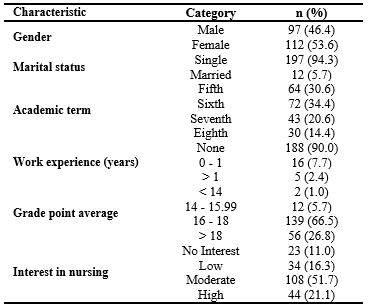
Table 2. Scores for fear of negative evaluation and clinical decision-making among nursing students (n = 209)

Table 3. Correlation between fear of negative evaluation and clinical decision-making scores (n = 209)
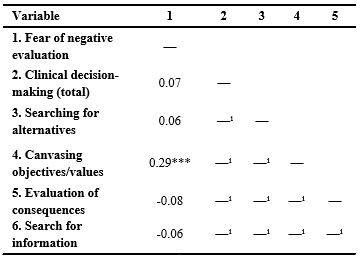
Notes: Values are Spearman’s rank correlation coefficients (ρ).
*** p < 0.001
¹ This subscale is part of the Clinical Decision-Making total score; correlations between subscales and the total score are not independent and are therefore omitted for clarity.
Abbreviations: ρ, Spearman's rho coefficient.
Students' clinical decision-making and fear of a poor evaluation were examined in relation to demographic factors. Nonparametric Kruskal-Wallis and Mann-Whitney U tests were employed for this purpose. The findings showed that the only demographic factor that was statistically associated with fear of a negative evaluation was gender (p < 0.001, Table 4).
Table 4. Relationship between demographic variables and scores for fear of negative evaluation and clinical decision-making (n = 209)

Notes:
† Mann-Whitney U test was used for variables with two categories (Gender, Marital Status).
‡ Kruskal-Wallis H test was used for variables with more than two categories (Academic Term, Work Experience, Grade Point Average, Interest in Nursing).
* p < 0.001
Abbreviations: U, Mann-Whitney U test statistic; H, Kruskal-Wallis H test statistic; p, probability value.
Discussion
This study examined the connection between undergraduate nursing students' clinical decision-making and their fear of receiving a poor evaluation. The moderate mean score for fear of a negative evaluation is consistent with research conducted in Iran and other nations [10, 15, 16, 23].
In line with findings from several international studies, nursing students' average clinical decision-making score was also moderate [8, 24-28]. The study's most important finding is that there was no discernible link between participants' clinical decision-making and their fear of receiving a poor evaluation. This result is in line with the Turkish study conducted by Doğan and Serpici [29].
The impact of sociocultural and economic circumstances is reflected in the differences in fear of a negative evaluation among studies [16, 23].
For instance, fear of a negative evaluation was found to be lower in Nigeria [30] and higher in China [15], where there is fierce competition for educational and career opportunities.
This illustrates how the social environment greatly influences psychological problems like the fear of receiving a poor grade.
The only demographic factor that significantly correlated with fear of a negative evaluation was gender, with female students reporting higher levels. This discrepancy has been linked to women's increased self-awareness and anxiety about unfavorable opinions and social assessments [31].
Fear of a negative evaluation did not significantly correlate with other demographic variables, indicating that this construct reflects personal feelings and personality traits more than background characteristics [15, 16].
Differences in environmental factors can be the reason for variations in reported levels across studies with regard to clinical decision-making.
Five important factors affecting clinical decision-making were found by a grounded theory study: professional self-confidence, a supportive clinical education environment, clinical experience, practical knowledge acquisition, and effective clinical instructors [32]. Levels of clinical decision-making are expected to vary according to the significant differences in these factors between educational settings [25, 26, 29].
Individual traits, organizational elements, and environmental circumstances all influence how each person makes decisions [5].
Several semesters of clinical experience seem to have strengthened the self-confidence and professional competence of the undergraduate nursing students in this study (fifth to eighth semesters). Nursing students' self-confidence is directly impacted by their clinical experience and theoretical knowledge, according to research [33].
Students can enter clinical settings with more assurance thanks to their increased confidence, which lessens the impact of their fear of receiving a poor grade on their decision-making.
By improving work attitudes and job satisfaction, a favorable organizational atmosphere and positive work environment also enhance clinical decision-making [34]. On the other hand, a hostile work environment can undermine people's self-esteem and hinder their capacity to make wise choices in trying circumstances [35]. The impact of fear of a negative evaluation on clinical decision-making seems to be overshadowed by these contextual factors.
Among all the different parts of clinical decision-making that were measured, only one showed a real connection with fear of bad grades.
This part is about looking at choices and thinking about personal values. It describes an important step in making decisions, where people think about different options, consider what is right and wrong, and make sure their choices match their professional beliefs. Nursing students who worry more about bad grades might be extra careful and thorough when they make decisions based on their values [36].
In decision-making situations, research indicates that people who are more afraid of receiving a poor evaluation frequently engage in excessive deliberation, second-guessing, and heightened sensitivity to approval from others [37, 38].
Nursing students may feel particularly vulnerable when making decisions that call for explicit value alignment because they are often observed by peers and faculty.
This increased consciousness might help them concentrate more on impartial evaluation and moral issues.
Opportunities for focused educational interventions are indicated by the study's moderate levels of clinical decision-making and fear of a negative evaluation. To improve nursing students' competency and resilience, a number of tactics are suggested.
Regular workshops and training sessions can help students who worry about getting bad grades. Using methods like group work, learning through practice, and behavior techniques can help them feel more confident during exams and less stressed.
To improve how students make decisions in clinical settings, they need to learn in hands-on environments. These environments should include real case studies, solving practical problems, and working with people from different fields.
When teachers guide them and give them clear steps for making decisions, students can manage their worries better.
Since there is a strong connection between students' worry about bad grades and their personal values, teachers should focus on teaching students to make decisions based on what they believe is right.
Activities where students think deeply, focus on patient needs, and discuss difficult ethical situations can all help students learn how to use their own values when making medical decisions.
If schools use these methods in nursing programs, they can create better learning spaces where students make better clinical decisions, which means better patient care.
However, this study has some limitations. The information came from only one university in one area, so the results may not work everywhere else. Different cultures and different schools might affect how worried students feel and how they make decisions. Also, researchers only studied students in their third and fourth years of study. Future research could include advanced students or nurses with real work experience to understand this topic better.
Another problem is that the study did not look at some important factors, like students' past experience, their mental health, or the quality of their clinical training. Additionally, researchers did not measure students' emotional states, such as anxiety or depression. Future studies should check both students' mental health and their decision-making skills to get a clearer picture of what is happening. The data in this study did not follow a normal pattern, which meant researchers could not use standard statistical methods. Instead, they had to use different methods that work with unusual data. In the future, if researchers collect data that follows normal patterns, they can use more advanced statistical techniques.
These advanced methods can help them understand the connections between different factors more clearly, even though they are more complex to use.
Conclusion
This study found that clinical decision-making and fear of a poor evaluation were moderately present in nursing students. It is advised that nursing students' levels be regularly assessed throughout their education because both ideas are essential to achieving clinical competence. Schools should create and use practical strategies to help students make better decisions in clinical work and reduce their worry about getting bad grades. However, the study found something surprising: there was no clear connection between how well students make clinical decisions and their fear of bad grades.
This means these two things may not be directly related. Researchers suggest that future studies should look more deeply into what affects both of these ideas.
To do this, they could use interviews and conversations with students, or mix different research methods together. This would help explain these complex ideas better, since many different personal and environmental factors influence them.These kinds of studies would offer deep insights into the processes that underlie clinical judgment and nursing students' anxiety about receiving a poor grade.
Ethical considerations
The Zanjan University of Medical Sciences' Research Department and Ethics Committee granted permission to carry out the current study (IR.ZUMS.REC.1403.213; accessible at: https://ethics.research.ac.ir). The goals of the study, the confidentiality of their data, and the fact that participation was entirely voluntary were explained to each participant. Every student gave their informed consent.
Artificial intelligence utilization for article writing
We confirm that no generative artificial intelligence tools (such as large language models) were used at any stage in the process of the research (including study design, data collection, and statistical analysis) or in the writing of the present manuscript. All intellectual content is solely the product of the authors' own work and critical thinking. However, Grammarly was used for grammar correction.
Acknowledgment
We appreciate all the students who cooperated with us in conducting this research.
Conflict of interest statement
The authors declare no competing interests.
Author contributions
All authors contributed to the study design. PN collected the data, while KA, FRB, and MA analyzed and interpreted the data.
All authors participated in writing the manuscript and reviewed and approved the final version.
Funding
Zanjan University of Medical Sciences, Zanjan, Iran (Grant No. A-11-86-32).
Data availability statement
All data generated or analyzed during this study are included in the published article.
Background & Objective: Many nursing students feel worried or afraid of being judged badly, and this worry can hurt how well they do their clinical work. This study wanted to understand how this fear connects to how well nursing students can make decisions in clinical situations.
Materials & Methods: This study was a cross-sectional design. information was collected at one point in time. The researchers chose 216 nursing students who were in their third and fourth years of study using simple random selection method. Three instruments were used to collect data: the Clinical Decision-Making Scale in Nursing, the Brief Fear of Negative Evaluation Scale, and the Demographic Form. SPSS version 26 was used to analyze the data. Descriptive and inferential statistics, including the nonparametric Mann-Whitney U test, Kruskal-Wallis test, and Spearman correlation, were used to analyze the data.
Results: The mean score of clinical decision-making was 84.39 ± 7.48 out of 145 and the mean score of fear of negative evaluation was 28.24 ± 10.65 out of 60. A statistically significant relationship was found between fear of negative evaluation and only one specific aspect of decision-making - the "Canvasing of Objectives and Values" subscale (p < 0.001). On the other hand, only gender among the demographic variables was significantly associated with fear of negative evaluation (p < 0.001).
Conclusion: Overall, the results of the study showed no relationship between clinical decision-making of undergraduate nursing students and their fear of receiving a poor grade. However, fear of negative evaluation and the ability to make clinical decisions among the students studied were both at an average level. Therefore, it is recommended that methods be used to improve clinical decision-making while reducing students' fear of evaluation. One of the important results of this study was that the subscale of "Canvasing of Objectives and Values" in Clinical Decision Making was significantly correlated with fear of negative evaluation, even in the absence of an overall relationship. This suggests that some aspects of the decision-making process, particularly those dealing with professional and personal values, may be more susceptible to psychological elements such as fear of others' opinions.
Introduction
Clinical decision-making: what is it? It involves closely examining a patient's health and medical history while fusing classroom learning with practical experience. A key component of providing high-quality care is this procedure [4]. The pace is unrelenting; for example, nurses in intensive care units may need to make crucial clinical decisions as frequently as once every 30 seconds [5]. When these choices are wise, they advance a patient's recuperation while enhancing care quality, reducing hospital stays, and saving money. However, making the incorrect choice can have major, occasionally irreversible consequences [6]. The stakes are extremely high; approximately 98,000 patient deaths occur annually as a result of poor decision-making in healthcare facilities [7]. Even more concerning is the fact that timely and appropriate decisions could have avoided almost half of these tragedies [8]. Studies reveal a notable disparity, demonstrating that nursing students' clinical decision-making skills are significantly inferior to those of their registered nurse counterparts [9]. Given that students frequently give direct patient care and routinely assume independent responsibility for patient management, this isa a crucial issue that requires greater attention and strategic planning [8].
Fear of receiving a poor grade is a common psychological barrier that can impair a nursing student's performance in clinical settings [10]. Deep concern about what other people think, extreme distress over criticism, a propensity to avoid situations where one is being judged, and the ongoing expectation of receiving a negative evaluation are all examples of this fear [11]. Students' self-confidence can be undermined by this evaluation anxiety, especially in high-stakes clinical settings where prompt and precise decisions are crucial [12].
According to one study, high-anxiety nursing students frequently find it difficult to demonstrate their full potential when they worry about being negatively judged, particularly when performing clinical tasks [13]. It's crucial to keep in mind that over half of a nursing student's education takes place in a clinical setting, which is frequently a noisy, tense, and anxious place. Here, teachers, classmates, staff nurses, physicians, patients, and family members are all watching students closely [14]. The majority of studies indicate that nursing students have a moderate to high fear of receiving a poor evaluation, which is explained by this ongoing scrutiny [10, 15, 16]. The patients' lives will be guarded by these students in the future. Ignoring this phenomenon could jeopardize the future of public health and patient care by lowering the quality of their education [16].
According to research, a student's path toward clinical competence—the ultimate goal of nursing education—requires both the capacity for sound clinical judgment and the fear of receiving a poor evaluation [17]. Although previous research has examined these ideas independently in nursing students, little is known about how they relate to one another. We can better understand each component and the factors that influence it by looking at clinical decision-making and fear of a negative evaluation together. Better planning and management will result from this deeper comprehension, which will raise the standard of nursing education in measurable ways. This knowledge gap inspired the researchers to plan and conduct the current study, which aims to investigate the connection between nursing students' clinical decision-making and their fear of receiving a poor evaluation.
Materials & Methods
Design and setting(s)
From September 1 to November 27, 2024, undergraduate nursing students at Zanjan University of Medical Sciences in Zanjan, Iran, participated in this cross-sectional study to examine the connection between clinical decision-making and fear of a negative evaluation.
Participants and sampling
Nursing students in their fifth through eighth semesters (N = 375) were the target population. The Cochran's adjusted formula for finite populations with Z = 1.96, d = 0.05, and S = 0.51, was used to determine the sample size, which came out to be 216 participants plus an extra 10% for possible dropouts. Using a random number table, a straightforward random sampling technique was used [18]. Initially, the random number table's columns were filled with the population's names. After that, a starting point was chosen at random, and units were selected continuously until the required sample size was obtained. The inclusion criteria were: willingness to participate, full-time enrollment in the nursing program, and no self-reported history of mental illness or use of psychotropic medications. Incomplete questionnaires were also regarded as a reason for study exclusion. Due to incomplete questionnaires, seven out of the 216 participants were not allowed to continue with the study. Consequently, information from 209 participants was incorporated into the data analysis process. During their class sessions, the participants were given the questionnaires in person.
Tools/Instruments
Three questionnaires were employed in this study to gather data: (a) Questionnaire on Demographics: These included work experience, interest in nursing, age, gender, marital status, academic semester, and grade point average. (b) Leary created the Brief Fear of Negative Evaluation Scale (BFNES), which has 12 items evaluated on a five-point Likert scale from "not at all characteristic of me" (1) to "extremely characteristic of me" (5). The scale's scores range from 12 to 60. A greater fear of receiving a poor grade is indicated by higher scores [19]. Shokri et al. conducted psychometric testing on this questionnaire in Iran, and construct and convergent validity techniques were used to verify its validity. According to Cronbach's alpha, the instrument's reliability was 0.80; when evaluated with a two-week test-retest interval, it was 0.77 to 0.79 [20]. The Cronbach's alpha method was used in this study to determine the reliability value of the questionnaire, which came out to be 0.95. (c) Jenkins created the Clinical Decision-Making in Nursing Scale (CDMNS) in the United States [21], and Iran has conducted psychometric testing on the Persian version of this scale [22]. "Searching for Alternatives or Options," "Canvasing of Objectives and Values," "Evaluation and Reevaluation of Consequences," and "Search for Information and Unbiased Assimilation of New Information" are the four subscales that comprise its 29 items.
This scale's five-point Likert scale ranges from never (1) to frequently (5). Thus, the overall score falls between 29 and 145, where a higher score denotes a better comprehension of decision-making. According to Kouravand et al., its reliability was between 0.84 and 0.87 using the Cronbach's alpha method, and its face and content validity were deemed satisfactory [1]. Additionally, the Cronbach's alpha method was used to determine the reliability value of this questionnaire in the current study, which came out to be 0.84.
Data collection methods
To carry out this study, the researcher received permission from Zanjan University of Medical Sciences' research permit and ethics committee. After visiting the pertinent faculties, the researcher gave an introduction, went over the objectives and methodology of the study, and gave participants the reassurance that their information would be kept private.
The researcher invited qualified people to take part in the study after getting approval from the managers of these units. Questionnaires were then given to study participants in accordance with demographics, clinical decision-making, fear of a negative evaluation, and ethical considerations.
The researcher was present during questionnaire completion to provide clarification if needed and to ensure that no items were missed.
The researcher thanked the managers and participants after they finished the questionnaires and assured them that the results would be kept private. If they showed interest, the results would be shared with them.
Data analysis
Descriptive and inferential statistics were used to analyze the data, and SPSS version 26.0 was used for all analyses. To guarantee methodological rigor and transparency, the analytical approach adhered to STROBE guidelines for observational studies.
Descriptive statistics were used to summarize clinical and demographic features. While means and standard deviations were used to describe continuous variables (such as age, clinical decision-making scores, and fear of negative evaluation scores), frequencies and percentages were used to summarize categorical variables (such as gender, marital status, academic term, work experience, grade point average, and interest in nursing).
The study population was described based on the distribution of scores across the various questionnaire scales.
The Kolmogorov-Smirnov test was used to assess the normality of the data distribution for all continuous variables (fear of negative evaluation total score and clinical decision-making total score and subscales) before choosing the proper inferential statistical tests. For this test, the significance level was set at p < 0.05. When appropriate, Levene's test was used to evaluate the homogeneity of variance among the groups. For all subsequent analyses, nonparametric tests were used instead of parametric ones since the Kolmogorov-Smirnov test revealed a non-normal distribution of data (p < 0.05).
The relationship between the overall clinical decision-making score and each of its four subscales— searching
for alternatives or options, Canvasing of Objectives and Values, evaluation and reevaluation of consequences, and search for information and unbiased assimilation of new information—was investigated using Spearman's rank correlation coefficient.
The Mann-Whitney Two categorical groups—gender (male vs. female) and marital status (single vs. married)—were compared using the U test for clinical decision-making scores and fear of negative evaluation. These outcome variables were compared across three or more categorical groups using the Kruskal-Wallis test: academic term (fifth, sixth, seventh, and eighth semesters), work experience (none, 0–1 year, >1 year), grade point average (< 14, 14–15.99, 16–18, > 18), and interest in nursing (no interest, low, moderate, high). In order to account for multiple comparisons and preserve the familywise error rate, post-hoc pairwise comparisons were carried out when necessary using Dunn's test with Bonferroni correction.
All analyses were statistically significant at a two-tailed significance level of α = 0.05.
To make it easier to interpret the clinical and practical significance, effect sizes (r for correlations) are given with p-values. Because demographic subgroup comparisons are exploratory, no adjustments were made for multiple comparisons in the primary analyses.
However, in order to minimize Type I error, Bonferroni correction was used in post-hoc pairwise comparisons. Since the sample size (n = 209) was still sufficient, the missing data were small (<5%) and dealt with using listwise deletion for analyses involving particular variables with missing values.
Results
Based on the results, the students' average age was 22.08 ± 1.58; 197 (94.3%) were unmarried, and 112 (53.6%) were female. Additionally, 188 (90%) of the students had no prior work experience, 72 (34.4%) were enrolled in the sixth semester, and 139 (66.5%) had a grade point average in the 16–18 range (Table 1).
Table 1. Demographic and educational characteristics of nursing students (n = 209)
Abbreviation: n, number of participants.
For clinical decision-making and fear of a negative evaluation, the mean and standard deviation of the total scores were 84.39 ± 7.48 and 28.24 ± 10.65, respectively. Both scores are in the moderate range according to the respective questionnaires' cut-off points. Table 2 displays the average scores for the clinical decision-making subscales.
For clinical decision-making and fear of a negative evaluation, the mean and standard deviation of the total scores were 84.39 ± 7.48 and 28.24 ± 10.65, respectively. Both scores are in the moderate range according to the respective questionnaires' cut-off points. Table 2 displays the average scores for the clinical decision-making subscales.
Table 2. Scores for fear of negative evaluation and clinical decision-making among nursing students (n = 209)
Note: Data are presented as the range (Min-Max) and mean with standard deviation (Mean ± SD).
Abbreviation: SD, standard deviation.
In the following phase of the study, we looked at the connection between participants' clinical decision-making and their fear of receiving a poor evaluation. For this analysis, Spearman's correlation coefficient was used. The results showed no correlation between nursing students' overall clinical decision-making scale score and their fear of receiving a poor grade. However, we discovered a positive and significant relationship with the "canvasing of objectives and values" subscale (p < 0.001, Table 3) when examining the correlations between the clinical decision-making subscales and the fear of negative evaluation scores.Abbreviation: SD, standard deviation.
Table 3. Correlation between fear of negative evaluation and clinical decision-making scores (n = 209)
Notes: Values are Spearman’s rank correlation coefficients (ρ).
*** p < 0.001
¹ This subscale is part of the Clinical Decision-Making total score; correlations between subscales and the total score are not independent and are therefore omitted for clarity.
Abbreviations: ρ, Spearman's rho coefficient.
Students' clinical decision-making and fear of a poor evaluation were examined in relation to demographic factors. Nonparametric Kruskal-Wallis and Mann-Whitney U tests were employed for this purpose. The findings showed that the only demographic factor that was statistically associated with fear of a negative evaluation was gender (p < 0.001, Table 4).
Table 4. Relationship between demographic variables and scores for fear of negative evaluation and clinical decision-making (n = 209)
Notes:
† Mann-Whitney U test was used for variables with two categories (Gender, Marital Status).
‡ Kruskal-Wallis H test was used for variables with more than two categories (Academic Term, Work Experience, Grade Point Average, Interest in Nursing).
* p < 0.001
Abbreviations: U, Mann-Whitney U test statistic; H, Kruskal-Wallis H test statistic; p, probability value.
Discussion
This study examined the connection between undergraduate nursing students' clinical decision-making and their fear of receiving a poor evaluation. The moderate mean score for fear of a negative evaluation is consistent with research conducted in Iran and other nations [10, 15, 16, 23].
In line with findings from several international studies, nursing students' average clinical decision-making score was also moderate [8, 24-28]. The study's most important finding is that there was no discernible link between participants' clinical decision-making and their fear of receiving a poor evaluation. This result is in line with the Turkish study conducted by Doğan and Serpici [29].
The impact of sociocultural and economic circumstances is reflected in the differences in fear of a negative evaluation among studies [16, 23].
For instance, fear of a negative evaluation was found to be lower in Nigeria [30] and higher in China [15], where there is fierce competition for educational and career opportunities.
This illustrates how the social environment greatly influences psychological problems like the fear of receiving a poor grade.
The only demographic factor that significantly correlated with fear of a negative evaluation was gender, with female students reporting higher levels. This discrepancy has been linked to women's increased self-awareness and anxiety about unfavorable opinions and social assessments [31].
Fear of a negative evaluation did not significantly correlate with other demographic variables, indicating that this construct reflects personal feelings and personality traits more than background characteristics [15, 16].
Differences in environmental factors can be the reason for variations in reported levels across studies with regard to clinical decision-making.
Five important factors affecting clinical decision-making were found by a grounded theory study: professional self-confidence, a supportive clinical education environment, clinical experience, practical knowledge acquisition, and effective clinical instructors [32]. Levels of clinical decision-making are expected to vary according to the significant differences in these factors between educational settings [25, 26, 29].
Individual traits, organizational elements, and environmental circumstances all influence how each person makes decisions [5].
Several semesters of clinical experience seem to have strengthened the self-confidence and professional competence of the undergraduate nursing students in this study (fifth to eighth semesters). Nursing students' self-confidence is directly impacted by their clinical experience and theoretical knowledge, according to research [33].
Students can enter clinical settings with more assurance thanks to their increased confidence, which lessens the impact of their fear of receiving a poor grade on their decision-making.
By improving work attitudes and job satisfaction, a favorable organizational atmosphere and positive work environment also enhance clinical decision-making [34]. On the other hand, a hostile work environment can undermine people's self-esteem and hinder their capacity to make wise choices in trying circumstances [35]. The impact of fear of a negative evaluation on clinical decision-making seems to be overshadowed by these contextual factors.
Among all the different parts of clinical decision-making that were measured, only one showed a real connection with fear of bad grades.
This part is about looking at choices and thinking about personal values. It describes an important step in making decisions, where people think about different options, consider what is right and wrong, and make sure their choices match their professional beliefs. Nursing students who worry more about bad grades might be extra careful and thorough when they make decisions based on their values [36].
In decision-making situations, research indicates that people who are more afraid of receiving a poor evaluation frequently engage in excessive deliberation, second-guessing, and heightened sensitivity to approval from others [37, 38].
Nursing students may feel particularly vulnerable when making decisions that call for explicit value alignment because they are often observed by peers and faculty.
This increased consciousness might help them concentrate more on impartial evaluation and moral issues.
Opportunities for focused educational interventions are indicated by the study's moderate levels of clinical decision-making and fear of a negative evaluation. To improve nursing students' competency and resilience, a number of tactics are suggested.
Regular workshops and training sessions can help students who worry about getting bad grades. Using methods like group work, learning through practice, and behavior techniques can help them feel more confident during exams and less stressed.
To improve how students make decisions in clinical settings, they need to learn in hands-on environments. These environments should include real case studies, solving practical problems, and working with people from different fields.
When teachers guide them and give them clear steps for making decisions, students can manage their worries better.
Since there is a strong connection between students' worry about bad grades and their personal values, teachers should focus on teaching students to make decisions based on what they believe is right.
Activities where students think deeply, focus on patient needs, and discuss difficult ethical situations can all help students learn how to use their own values when making medical decisions.
If schools use these methods in nursing programs, they can create better learning spaces where students make better clinical decisions, which means better patient care.
However, this study has some limitations. The information came from only one university in one area, so the results may not work everywhere else. Different cultures and different schools might affect how worried students feel and how they make decisions. Also, researchers only studied students in their third and fourth years of study. Future research could include advanced students or nurses with real work experience to understand this topic better.
Another problem is that the study did not look at some important factors, like students' past experience, their mental health, or the quality of their clinical training. Additionally, researchers did not measure students' emotional states, such as anxiety or depression. Future studies should check both students' mental health and their decision-making skills to get a clearer picture of what is happening. The data in this study did not follow a normal pattern, which meant researchers could not use standard statistical methods. Instead, they had to use different methods that work with unusual data. In the future, if researchers collect data that follows normal patterns, they can use more advanced statistical techniques.
These advanced methods can help them understand the connections between different factors more clearly, even though they are more complex to use.
Conclusion
This study found that clinical decision-making and fear of a poor evaluation were moderately present in nursing students. It is advised that nursing students' levels be regularly assessed throughout their education because both ideas are essential to achieving clinical competence. Schools should create and use practical strategies to help students make better decisions in clinical work and reduce their worry about getting bad grades. However, the study found something surprising: there was no clear connection between how well students make clinical decisions and their fear of bad grades.
This means these two things may not be directly related. Researchers suggest that future studies should look more deeply into what affects both of these ideas.
To do this, they could use interviews and conversations with students, or mix different research methods together. This would help explain these complex ideas better, since many different personal and environmental factors influence them.These kinds of studies would offer deep insights into the processes that underlie clinical judgment and nursing students' anxiety about receiving a poor grade.
Ethical considerations
The Zanjan University of Medical Sciences' Research Department and Ethics Committee granted permission to carry out the current study (IR.ZUMS.REC.1403.213; accessible at: https://ethics.research.ac.ir). The goals of the study, the confidentiality of their data, and the fact that participation was entirely voluntary were explained to each participant. Every student gave their informed consent.
Artificial intelligence utilization for article writing
We confirm that no generative artificial intelligence tools (such as large language models) were used at any stage in the process of the research (including study design, data collection, and statistical analysis) or in the writing of the present manuscript. All intellectual content is solely the product of the authors' own work and critical thinking. However, Grammarly was used for grammar correction.
Acknowledgment
We appreciate all the students who cooperated with us in conducting this research.
Conflict of interest statement
The authors declare no competing interests.
Author contributions
All authors contributed to the study design. PN collected the data, while KA, FRB, and MA analyzed and interpreted the data.
All authors participated in writing the manuscript and reviewed and approved the final version.
Funding
Zanjan University of Medical Sciences, Zanjan, Iran (Grant No. A-11-86-32).
Data availability statement
All data generated or analyzed during this study are included in the published article.
Editorial: Original Research |
Subject:
Medical Education
Received: 2025/06/17 | Accepted: 2025/10/27 | Published: 2025/11/19
Received: 2025/06/17 | Accepted: 2025/10/27 | Published: 2025/11/19
References
1. Kouravand Z, Aein F, Ebadi A, Yadegarfar G. Nurses' perception of clinical decision making in hospitals of Shahrekord university of medical sciences in 2019. J Clin Nurs Midwifery. 2019;8(3):446-54.
2. Ahmady S, Shahbazi S. Impact of social problem-solving training on critical thinking and decision making of nursing students. BMC Nurs. 2020;19(1):1-8. [DOI:10.1186/s12912-020-00487-x] [PMID] []
3. El-Demerdash AMS, Ibrahim SA, Elhosany WA. Problem solving skills and clinical decision making among nursing interns. J Nurs Health Sci. 2021;8(1):304-9.
4. Yang Z, Zhu B, Ke J, Yu L, Zhao H. The effect of nomophobic behaviors among nurses on their clinical decision-making perceptions. Nurse Educ Pract. 2024;77:103978. [DOI:10.1016/j.nepr.2024.103978] [PMID]
5. Moradi T, Sharifi K. Clinical decision making in Iranian nurses: a systematic review. Nurs Manag (Harrow). 2022;11(2):1-13.
6. Moshtaghi Khozani N, Hosseini A, Farzi S, Tarrahi MJ. Investigating the relationship between critical thinking and clinical decision-making with the quality of nursing care: a cross-sectional study. J Nurs Educ. 2023;12(4):67-76.
7. Nibbelink CW, Brewer BB. Decision-making in nursing practice: an integrative literature review. J Clin Nurs. 2018;27(5-6):917-28. [DOI:10.1111/jocn.14151] [PMID] []
8. Ghanbari-Afra L, Ghanbari-Afra M. Clinical decision-making and its related factors in Iranian nurses and nursing students: a systematic review. Qom Univ Med Sci J. 2022;16(2):94-105. [DOI:10.32598/qums.16.1.949.4]
9. Novalia A, Rachmi SF, Yetti K. Clinical decision-making of bachelor and clinical internship (professional) nursing students in Indonesia. J Public Health Res. 2021;11(2):1-6. [DOI:10.4081/jphr.2021.2735] [PMID] []
10. Yue Y, Jia Y. Fear of negative evaluation: a cross-sectional study among undergraduate nursing students. Nurse Educ Today. 2023;121:1-11. [DOI:10.1016/j.nedt.2022.105678] [PMID]
11. Moterased L, Esmaeilkhani F. The relationship between job stress, fear of negative evaluation and responsibility with job performance in hospital nurses in Behbahan city. Nurs Midwifery J. 2020;18(2):95-106.
12. Taheri-Ezbarami Z, Rafie-Papkiadeh S, Mirzaie Takmili M, Kazemnejad-Leili E. Knowledge and clinical decision-making of nursing students of Guilan university of medical sciences in use of blood transfusion in pediatric nursing. Sci J Iran Blood Transfus Organ. 2020;17(3):188-99.
13. Bibi A, Iqbal J, Bibi J, Sultan A, Thapur MB, Jamil Y, et al. Nursing students' anxiety and self-confidence in clinical decision-making. J Popul Ther Clin Pharmacol. 2023;30(18):2955-60. [DOI:10.53555/jptcp.v30i18.3554]
14. Aliafsari Mamaghani E, Rahmani A. Stress and fear resources of nursing students in clinical settings: a review study. Nurs Midwifery J. 2019;17(6):473-84.
15. Mabrouk SM, Diab GM. Impact of fear of negative evaluation among undergraduate nursing students on quality of life. Int J Curr Res. 2015;7(6):16944-50.
16. Mahdaviseresht R, Parvan K, Olyapur M, Ebrahimi H. Evaluating the relationship between emotional intelligence and nursing students' tension in clinical setting of teaching and treatment centers of Tabriz. Educ Strategy Med Sci. 2020;13(3):162-71.
17. Alkhelaiwi WA, Traynor M, Rogers K, Wilson I. Assessing the competence of nursing students in clinical practice: the clinical preceptors' perspective. Healthcare (Basel). 2024;12(10):1-24. [DOI:10.3390/healthcare12101031] [PMID] []
18. Cochran WG. Sampling Techniques. 3rd ed. New York: John Wiley & Sons; 1977.
19. Leary MR. A brief version of the Fear of Negative Evaluation Scale. Pers Soc Psychol Bull. 1983;9(3):371-5. Shokri O, Geravand F, Naghsh Z, Tarkhan RA, Paeizi M. The psychometric properties of the brief fear of negative evaluation scale. Iran J Psychiatry Clin Psychol. 2008;14(54):316-25. [DOI:10.1177/0146167283093007]
20. Jenkins HM. A research tool for measuring perceptions of clinical decision making. J Prof Nurs. 1985;1(4):221-9. [DOI:10.1016/S8755-7223(85)80159-9] [PMID]
21. Kouravand Z, Aein F, Ebadi A, Yadegarfar G. Cross-cultural adaptation and psychometric evaluation of the Persian version of the Clinical Decision-Making in Nursing Scale. J Nurs Meas. 2021;29(3):391-407. [DOI:10.1891/JNM-D-20-00052] [PMID]
22. Shomali Ahmadabadi M, Zabihi M, Khodarahmi A, Barkhordari Ahmadabadi A. The mediating role of self-criticism in the relationship between fear of negative evaluation and social anxiety in medical science students. TB. 2024;23(4):44-56. [DOI:10.18502/ssu.v32i8.16856]
23. Doustinouri M, Sadeghy F, Hatefi F, Mallahigar F, Khastar SM. Effect of concept mapping education on clinical decision-making in nursing students: a randomized controlled trial. J Nurs Adv Clin Sci. 2024;1(4):205-10. [DOI:10.32598/JNACS.2408.1054]
24. Phillips BC, Morin K, Valiga TMT. Clinical decision making in undergraduate nursing students: a mixed methods multisite study. Nurse Educ Today. 2021;97(1):104676. [DOI:10.1016/j.nedt.2020.104676] [PMID]
25. Abou Ramadan AH, El-Demerdash SM. The relationship between professional values and clinical decision making among nursing student. Environment. 2017;6(6):19-26.
26. Sözen KK, Karabulut N. Determining the relation between critical thinking tendencies and clinical decision-making skills of nursing students. Health Sci J Adıyaman Univ. 2021;7(1):71-9. [DOI:10.30569/adiyamansaglik.814122]
27. Farčić N, Barać I, Lovrić R, Pačarić S, Gvozdanović Z, Ilakovac V. The influence of self-concept on clinical decision-making in nurses and nursing students: a cross-sectional study. Int J Environ Res Public Health. 2020;17(9):1-13.Doğan D, Serpici A. Nursing students' fear of negative evaluation and perceptions of clinical [DOI:10.3390/ijerph17093059] [PMID] []
28. decision-making. Nurse Educ Today. 2022;105(1):1-7.
29. Aroyewun BA, Karatu BA, Onyegesi G. Anxiety and fear of negative evaluation as predictors of hypomanic activity among freshly admitted university students in Lagos Nigeria. Kabale Univ Interdiscip Res J. 2023;2(1):41-50.
30. Naseem Z, Afzaal A. Fear of negative evaluation, appearance distress and inferiority complex among university women having acne problem. Qlantic J Soc Sci. 2024;5(1):105-13. [DOI:10.55737/qjss.915349311]
31. Jahanpor F, Salsali M, Kaveh MH, Sharif F. Clinical decision making process in last year nursing students: a qualitative study. IJNR. 2010;5(16):21-31. [DOI:10.1111/j.1440-172X.2010.01886.x] [PMID]
32. Ramezanzade Tabriz E, Sadeghi M, Tavana E, Heidarian Miri H, Heshmati Nabavi F. Approaches for boosting self-confidence of clinical nursing students: a systematic review and meta-analysis. Heliyon. 2024;10(6):e27347. [DOI:10.1016/j.heliyon.2024.e27347] [PMID] []
33. Wang F, Liu D, Zhang M. Metacognitive processes, situational factors, and clinical decision-making in nursing education: a quantitative longitudinal study. BMC Med Educ. 2024;24(1):1530. [DOI:10.1186/s12909-024-06467-y] [PMID] []
Send email to the article author
| Rights and permissions | |
 |
This work is licensed under a Creative Commons Attribution-NonCommercial 4.0 International License. |