Wed, Oct 14, 2026
[Archive]
Volume 18, Issue 3 (2025)
J Med Edu Dev 2025, 18(3): 67-77 |
Back to browse issues page

Ethics code: IR.ABZUMS.REC.1400.092


Download citation:
BibTeX | RIS | EndNote | Medlars | ProCite | Reference Manager | RefWorks
Send citation to:


BibTeX | RIS | EndNote | Medlars | ProCite | Reference Manager | RefWorks
Send citation to:
Saeedi N, Rezanejad-Asl P, Masoumian Hosseini S T, Aghabarary M. Medical sciences students’ exposure to cyber incivility in academic settings: a cross-sectional study. J Med Edu Dev 2025; 18 (3) :67-77
URL: http://edujournal.zums.ac.ir/article-1-2497-en.html
URL: http://edujournal.zums.ac.ir/article-1-2497-en.html
Nastaran Saeedi1  , Parisa Rezanejad-Asl2 , Seyedeh Toktam Masoumian Hosseini3 , Maryam Aghabarary *4
, Parisa Rezanejad-Asl2 , Seyedeh Toktam Masoumian Hosseini3 , Maryam Aghabarary *4
1- Department of Nursing, Student Research Committee, Alborz University of Medical Sciences, Karaj, Iran
2- Department of Biostatistics and Epidemiology, School of Health, Non-Communicable Diseases Research Center, Alborz University of Medical Sciences, Karaj, Iran
3- Department of Nursing, School of Nursing and Midwifery, Torbat Heydariyeh University of Medical Sciences, Torbat Heydariyeh, Iran
4- Department of Nursing, Social Determinants of Health Research Center, Alborz University of Medical Sciences, Karaj, Iran ,aghabararym@gmail.com
2- Department of Biostatistics and Epidemiology, School of Health, Non-Communicable Diseases Research Center, Alborz University of Medical Sciences, Karaj, Iran
3- Department of Nursing, School of Nursing and Midwifery, Torbat Heydariyeh University of Medical Sciences, Torbat Heydariyeh, Iran
4- Department of Nursing, Social Determinants of Health Research Center, Alborz University of Medical Sciences, Karaj, Iran ,
Full-Text [PDF 506 kb]
(684 Downloads)
| Abstract (HTML) (1366 Views)
Full-Text: (110 Views)
Abstract
Background & Objective: Cyber incivility is a form of deviant social behavior that mainly happens on digital communication platforms such as emails, social media, and online learning systems. These behaviors can come from both students and instructors and may seriously disrupt the educational environment. This study aimed to find out the extent of medical sciences students’ exposure to cyber incivility in academic settings.
Materials & Methods: In this cross-sectional study, 700 medical sciences students were chosen using convenience sampling between 1 February and 1 June 2022. A 68-item researcher-made questionnaire with two sections was used for data collection. To study the data, descriptive and inferential statistics, including Mann-Whitney and Kruskal-Wallis tests, were used to compare the mean exposure-to-cyber-incivility scores across different demographic variables using SPSS software version 21.
Results: The mean students’ exposure to cyber incivility was 134.5 ± 34.64 (range: 62–310). Most participants reported a low to moderate level of exposure to cyber incivility, while less than 1% reported a high level. There were also important differences in the mean score for cyber incivility exposure based on gender (p = 0.015), age (p < 0.001), academic major (p < 0.001), education level (p = 0.001), and academic semester (p < 0.001).
Conclusion: The results showed a generally low level of student exposure to cyber incivility. Future research using a mixed-methods approach with both students and instructors could give deeper insights into cyber incivility and its related factors.
Introduction
Table 1. Demographic characteristics of medical sciences students participating in this study (n = 700)
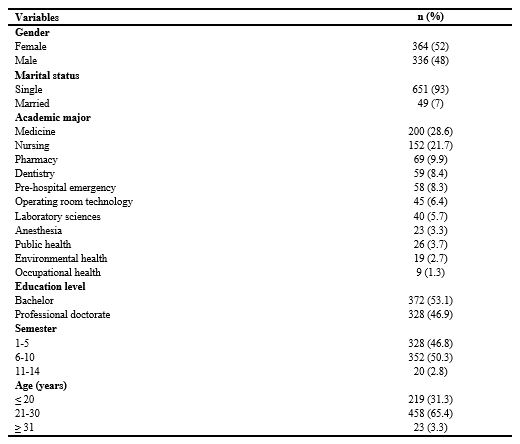
Table 2. Medical sciences students' exposure to cyber incivility

Abbreviations: SD, standard deviation; n, number of participants; Min, minimum; Max, maximum.
Table 3. Three items with the highest mean scores in each dimension of cyber incivility
.JPG)
Abbreviations: SD, standard deviation.
Table 4. Medical sciences students' exposure to cyber incivility by dimensions based on demographic characteristics
Note: Dimension 1: student incivility in E-learning environments; 2: instructor incivility in E-learning environments; 3: student incivility in the use of emails and university systems; 4: instructor incivility in the use of emails and university systems; 5: student incivility in the use of social networks; 6: instructor incivility in the use of social networks; and 7: total cyber incivility. aMann-Whitney U test was used for two-group comparisons. bKruskal-Wallis test was used for multiple-group comparisons.
Abbreviations: SD, standard deviation.
Discussion
This study looked at the extent of medical sciences students’ exposure to cyber incivility. The results showed that the level of exposure was low. In contrast, in the study by Kim et al. in the United States, Hong Kong, and South Korea, students reported experiencing higher levels of cyber incivility [7]. Similarly, in the study by Jagsi et al., faculty members from different nationalities and ethnicities reported that the occurrence of cyber incivility and a negative organizational climate was higher in medical universities [17]. People from different communities and cultures may see and understand incivility in different ways [7]. Moreover, views of incivility can differ depending on a person’s role and context [4]. Therefore, the relatively low mean level of exposure to cyber incivility observed in this study may be due to cultural differences as well as possible self-censorship by the participating students.
According to Sharvit et al., self-censorship refers to the deliberate hiding of information when official sources are not available [18]. According to Noelle‐Neumann’s spiral of silence theory, people sometimes hide their true opinions out of fear of isolation [19]. In other words, individuals may use self-censorship because of the fear of rejection and may gradually make it a habit. In a study by Kamaruddin et al. on cyber incivility in Malaysia, it was found that respondents answered the questionnaire in a socially desirable way. The researchers believed that fear of criticism and blame caused respondents not to report negative incidents. The study’s participants consistently tried to maintain a positive self-concept and self-image by not revealing the truth [20]. Since cyber incivility happens online and often out of public view, it can be hard to identify and check. Sometimes, people who experience cyber incivility may not even be aware of it, or if they are, they may not have the ability to address and solve the issue [21]. Therefore, another reason for the low reported occurrence of cyber incivility in this study could be that it happens out of public sight.
An analysis of the six areas of cyber incivility showed that, according to the students in this study, they experienced more cyber incivility from instructors than from fellow students. This is different from the findings of studies by McNeill et al. [4] in the United States and Farid et al. [22] in Pakistan, which found that students, rather than instructors, are more likely to engage in incivility in online learning environments. In other words, students have greater chance and opportunity to engage in incivility due to age, environmental, and cultural factors [2]. Students often feel more empowered and have less control over their behavior in online learning environments, a phenomenon that was identified as a form of cyber incivility by the students in the study conducted by Farid et al. [22]. According to the students in this study, student incivility in the use of social networks was more common than instructor incivility. With the onset of the COVID-19 pandemic, the academic use of social networks by both instructors and students increased. However, while instructors mainly used social networks for educational purposes, students used them mostly for communicating with friends [23]. It is clear that without enough education and awareness about using social media, virtual interactions on these platforms can increasingly lead to cyber incivility. This is partly because virtual spaces lack many non-verbal cues and have fewer social rules controlling behavior, making cyber incivility more likely in online communications [24]. Among the six areas of cyber incivility, two—student incivility in E-learning environments and instructor incivility in E-learning environments—had the highest mean scores. Cheating was the most frequent form of student incivility in E-learning environments. This finding is consistent with the study by McNeill et al. [4]. Similarly, Kim et al. found that cheating in assignments was the most common form of cyber incivility [7]. Multiple environmental, organizational, individual, and personality-related factors can lead to the emergence and expression of such misconduct. Among these, psychological and personality traits—particularly student narcissism—play an important role in the occurrence of these behaviors [25].
Naturally, with the growing use of virtual spaces and the internet for educational purposes, the likelihood of academic dishonesty in online exams increases if there is no cultural preparedness and no effective monitoring system [8]. In other words, inadequate infrastructure for delivering high-quality online education, the inexperience and limited familiarity of instructors and students with E-learning cultures and systems, and the lack of rules controlling the use of online educational spaces can lead to higher levels of cyber incivility in E-learning environments, cause misunderstandings, and increase user dissatisfaction.
To address this issue, Swartzwelder et al. recommended setting up policies to handle incivility and creating handbooks for students and instructors that clearly state the university's expectations for appropriate conduct in online classes [26].
In the area of instructor incivility in E-learning environments, the three highest-scoring items were "the instructor's failure to provide timely feedback on students' virtual assignments," "the instructor's failure to clearly explain the details of grades in virtual exams to students," and "the instructor's failure to record student grades on the university system on time." In other words, students felt that university instructors placed less importance on these aspects.
The findings of Farid et al. similarly highlighted that inadequate explanations regarding grade details and the threat of failing students for not meeting the instructor's demands were prominent examples of instructor cyber incivility [22]. Moreover, in the study by McNeill et al., issues such as providing vague course schedules and an unclear syllabus, unclear expectations for assignments, failure to record grades within a specified timeframe, and failure to provide timely feedback on assignments were identified as examples of instructor incivility in educational environments by students.
These findings emphasize the need for more focus on cultivating and building a culture of proper and effective use of online education systems among both students and instructors, as well as improving instructors' skills in using the capabilities of online learning environments [4].
In the area of "student incivility in the use of emails and university systems," the item "having errors in punctuation, word spelling, and grammar in messages on the university system or in email text" had the highest average. Similarly, in the study by Kim et al. in Seoul, students were found to lack the ability to write a professional email [27]. The study by Oakley et al., conducted in Pennsylvania, also showed that even though students were familiar with technology, they could not compose a work-related email without errors [28]. Therefore, medical sciences students need training in email writing and related etiquette [27].
In this study, within the area of "instructor incivility in the use of emails and university systems," the item "failing to answer emails and messages on the university system" had the highest average. Factors such as unprofessional email content, conversational tone, grammatical and spelling errors, heavy workloads, and lack of time may cause instructors to be reluctant to answer student messages and emails [29].
In both areas of "student incivility in the use of social networks" and "instructor incivility in the use of social networks," the item "ignoring and failing to answer classmates', instructors', and colleagues' questions in virtual networks" had the highest average, highlighting the importance and necessity of timely responses to messages from both students and instructors.
The results of examining cyber incivility exposure based on students’ demographic characteristics showed that male students experienced higher levels of cyber incivility compared to female students. Younger students, especially those in the 21–30 age group, reported higher mean exposure scores. Among academic majors, pre-hospital emergency students had the highest average scores, while students in environmental health, public health, operating room technology, and anesthesia reported lower scores. Professional doctorate students had higher exposure scores compared to undergraduate students. In addition, exposure to cyber incivility increased with the number of academic semesters completed. The study by Farid et al. found that female students and those with lower self-reported cyber incivility scores were more likely to report uncivil behaviors [22].
Undoubtedly, cultural and personality differences among research samples in various studies can affect the results. Moreover, the higher level of exposure to cyber incivility among students in advanced academic terms may be due to their greater experience in online learning environments compared to students in earlier terms, leading them to face more instances of cyber incivility.
Disrespectful behaviors in online educational environments can disrupt students’ learning and create chaos within the educational setting [30]. On the other hand, many universities struggle with inadequate policies designed for in-person interactions, which are not always suitable for the online environment, where the nature and context of incivility can differ significantly. To address this, universities can set up and communicate clear guidelines for online behavior to set expectations and reduce incidents of incivility. Additionally, providing training on digital etiquette and respectful online communication can give students and faculty the skills to interact positively in virtual settings [7].
Cyber incivility is a culturally dependent concept. Uncivil behaviors can differ from culture to culture. Therefore, its study should match the cultural and social contexts specific to each society. Although this study was conducted with a relatively large sample size, the results may not be easily applied to other regions of Iran or other countries. In addition, the data collection tool in this study was a questionnaire administered electronically to the research population. Self-censorship and lack of honesty in completing the questionnaire could be reasons for the lower reported levels of exposure to cyber incivility in this study. The absence of instructors from this study may also be a limitation. Therefore, it is recommended that future research designs use a mixed-methods approach (combining qualitative studies with surveys) conducted simultaneously on both students and instructors across different countries to collect and study more complete data on cyber incivility and its related factors in academic environments.
Conclusion
The results showed a generally low level of student exposure to cyber incivility. The highest mean was related to instructor incivility in E-learning environments, while the lowest was instructor incivility in the context of social network major, education level, and semester.
These findings highlight the need for educational interventions to improve online communication in academic settings.
Future mixed-methods research involving both students and instructors is recommended to gain deeper insights.
Additionally, creating, carrying out, and carefully checking interventions to reduce cyber incivility is essential for making the academic environment better.
Ethical considerations
The present study was conducted in accordance with the principles of the revised Declaration of Helsinki. The research protocol was approved by the Ethics Committee of Alborz University of Medical Sciences, Iran (Ethics Code: IR.ABZUMS.REC.1400.092). All ethical considerations were followed in this study. Participation by the students was voluntary. Since an explanation regarding consent to participate was provided at the beginning of the electronic questionnaire, completing and submitting the questionnaire was considered as consent to participate in the study. The questionnaires were filled out anonymously, and the participants' information was kept completely private.
Artificial intelligence utilization for article writing
The authors confirm that no generative AI tools were used for the creation of the manuscript’s scientific content, data, tables, or figures. The manuscript was originally written by the authors in Persian. DeepL.com and ChatGPT (version 5, https://chatgpt.com/) were used exclusively for translation and language editing, in accordance with ethical guidelines.
Acknowledgment
The authors thank all the participants in this study. The authors also thank Alborz University of Medical Sciences for approving this research (Research code: 4277).
Conflict of interest statement
The authors declare that they have no competing interests.
Author contributions
MA and NS were involved in the planning and organization of the study. NS was involved in data collection. PRA. designed the statistical analysis. NS. and MA. prepared the first draft of the manuscript. MA and STMH. performed the critical review, and all authors approved the final manuscript.
Funding
The authors received no specific funding for this research.
Data availability statement
The data used in the study are available from the corresponding author upon reasonable request.
Background & Objective: Cyber incivility is a form of deviant social behavior that mainly happens on digital communication platforms such as emails, social media, and online learning systems. These behaviors can come from both students and instructors and may seriously disrupt the educational environment. This study aimed to find out the extent of medical sciences students’ exposure to cyber incivility in academic settings.
Materials & Methods: In this cross-sectional study, 700 medical sciences students were chosen using convenience sampling between 1 February and 1 June 2022. A 68-item researcher-made questionnaire with two sections was used for data collection. To study the data, descriptive and inferential statistics, including Mann-Whitney and Kruskal-Wallis tests, were used to compare the mean exposure-to-cyber-incivility scores across different demographic variables using SPSS software version 21.
Results: The mean students’ exposure to cyber incivility was 134.5 ± 34.64 (range: 62–310). Most participants reported a low to moderate level of exposure to cyber incivility, while less than 1% reported a high level. There were also important differences in the mean score for cyber incivility exposure based on gender (p = 0.015), age (p < 0.001), academic major (p < 0.001), education level (p = 0.001), and academic semester (p < 0.001).
Conclusion: The results showed a generally low level of student exposure to cyber incivility. Future research using a mixed-methods approach with both students and instructors could give deeper insights into cyber incivility and its related factors.
Introduction
With the growing reliance on Information and Communication Technology (ICT), education in the digital era has become increasingly dependent on virtual platforms and online tools [1]. This technological change has not only changed teaching and learning methods but has also strongly changed the way students, faculty members, and other stakeholders interact in academic environments. In this context, one emerging and concerning issue is cyber incivility—a term that refers to rude, disrespectful, or inappropriate behaviors that go against accepted norms of conduct in online settings [2, 3, 4]. Cyber incivility is a form of deviant social behavior that mainly happens on digital communication platforms such as emails, social media, and online learning systems [5]. In other words, cyber incivility can be seen as a digital version of face-to-face incivility, where the absence of direct, in-person interaction creates chances for miscommunication and misrepresentation [6]. According to a study by Kim et al., which aimed to check the extent of cyber civility among 336 nursing students from the United States, Hong Kong, and South Korea, 76.8% of participants reported cyber incivility as a concern. More than half of the students had faced cyber incivility, were aware of it, and saw it as an unacceptable and inappropriate behavior [7]. In another study, McNeill et al. in the United States compared nursing students’ and faculty members’ views of incivility in online learning environments. Most faculty members (86.7%) saw it as a mild to moderate issue, while less than half of the students (42.9%) shared this view [4]. Cyber incivility can include a wide range of disrespectful behaviors in digital environments. Examples are using capital letters in messages (seen as shouting), using demanding or aggressive instead of polite language, delaying feedback, using offensive or harsh words, cheating in online exams, academic dishonesty in online tests, submitting individual assignments as group work, students not meeting deadlines, and instructors not giving timely answers [2, 4, 7]. In a study by Haghighi and Farajollahi on 320 students in Iran, 62% admitted to copying assignments, 30% did their assignments with help from others, 18% copied content from websites without citation, and 4% submitted entire papers under their own name. Students’ views of academic dishonesty among peers included cheating during exams (81%), assignments (54%), and copying without citation (45%) [8]. In academic environments, cyber incivility can come from both students and faculty and may strongly disrupt the educational setting. In a study by McNeill et al., most faculty members (60%) and students (54.8%) believed that students were more likely to take part in uncivil behaviors than faculty. Only a small number of participants believed that faculty were more likely to show incivility, and none identified faculty as the main source of such behavior. In addition, 20% of faculty and 14.3% of students said that the chance of incivility in online learning environments was equal between students and faculty [4]. Although behaviors linked with cyber incivility are often seen as minor or unimportant, they can strongly disrupt learning, harm professional relationships, and negatively affect the mental health of both students and instructors [9, 10]. While such behaviors are usually non-violent, they may lead to interpersonal tension, emotional distress, communication breakdowns [6, 11], psychological discomfort, aggression, withdrawal, and dissatisfaction. More and more, they are being recognized as a form of interpersonal stress [12, 13]. In this regard, several studies have looked into the harmful effects of cyber incivility. For example, findings from a study by Giumetti et al. in the southeastern United States showed that people who received uncivil email messages reported lower motivation and work engagement compared to those who received supportive emails [14]. Similarly, students who send informal or disrespectful email requests to instructors are less likely to have their requests approved, since such messages often reflect poor communication skills [15]. Also, the more virtual accounts and messages a person manages, the higher the chance of facing cyber incivility [7, 9]. Another important point is that views of incivility may differ depending on one’s role and context; people from different communities and cultures may understand incivility in different ways [7]. For example, in the study by McNeill et al., involving nursing students and faculty at the University of Northern Colorado, both groups agreed that certain behaviors—such as disrespectful comments and the use of inappropriate names—were clear examples of incivility. However, their views split on other issues: students saw delayed feedback and disorganized syllabi as forms of incivility, while faculty members did not [4]. Given that even low levels of cyber incivility can have important negative effects on the learning environment, finding and dealing with such behaviors is very important. The first step toward this goal is to check how much students are exposed to uncivil behaviors in digital spaces. Getting this understanding can help build digital communication skills and support a more respectful online culture. For this reason, the present study was designed to check the extent of exposure to cyber incivility among medical sciences students in the academic setting.
Materials & Methods
Design and setting(s)
This cross-sectional study was done between 1 February and 1 June 2022. at Alborz University of Medical Sciences, Karaj, Iran.
Participants and sampling
The study population included all students enrolled in medical science programs, such as health sciences, nursing, pre-hospital emergency care, anesthesia, operating room technology, laboratory sciences, medicine, dentistry, and pharmacy.
The total number of students at Alborz University of Medical Sciences was 3,500. Cochran’s formula was used to find the minimum required sample size. Based on the results of the study by Kim et al. [7] and considering α = 0.05 margin of error and maximum variability (p = 0.5, q = 0.5), the minimum sample size was calculated to be 346. To account for potential non-response and incomplete questionnaires, the sample size was increased to 700 to ensure data reliability and enough representation.
The inclusion criteria for this study were: having experience with E-learning environments, using domestic and international social media platforms (such as WhatsApp, Telegram, Instagram, Bale, Eitaa, etc.), and using email and university systems. Students who were willing to take part in the study were selected through convenience sampling.
Tools/Instruments
A 68-item researcher-made questionnaire with two sections was designed and used for data collection:
Demographic Information: This section included six items to record participants’ age, gender, marital status, academic major, current semester, and educational level.
Students’ Exposure to Cyber Incivility in the Academic Setting: This section contained 62 items that measured the extent of students’ exposure to cyber incivility across six areas within the academic environment: student incivility in E-learning environments (8 items); instructor incivility in E-learning environments (15 items); student incivility in emails and university systems (10 items); instructor incivility in emails and university systems (10 items); student incivility in social networks (10 items); and instructor incivility in social networks (9 items).
Each item represents an instance of cyber incivility that may come from either a student or an instructor within the university context.
Each participating student was asked to indicate how much they had encountered these instances of cyber incivility using a 5-point Likert scale. Since the score range for all areas was 1 (never) to 5 (always), a median score of 3 was considered the midpoint, with higher scores showing a greater degree of exposure to cyber incivility.
The scores from the completed questionnaires ranged from a minimum of 62 to a maximum of 310. Scores from 62 to 144 indicate a low level of exposure to cyber incivility, scores from 145 to 226 show a moderate level, and scores between 227 and 310 show a high level of exposure to cyber incivility. The initial draft of the questionnaire, which had 85 items, was developed based on a review of the literature [2, 3, 7]. Then, face and content validity were checked through expert evaluation.
For content validity, the “necessity” of each item was checked using the Content Validity Ratio (CVR), categorizing items as “essential,” “useful but not essential,” and “not essential.” In addition, the “relevance,” “clarity,” and “simplicity” of each item were checked using the Content Validity Index (CVI). To do this, the questionnaire was given to 10 faculty members at Alborz University of Medical Sciences with expertise in instrument development (n = 3), nursing education (n = 4), and medical education (n = 3) to collect and review their expert opinions. According to Lawshe’s table [16], the minimum acceptable CVR value for ten experts was 0.62.
CVR analysis showed that 18 items scored below the threshold of 0.62 and were therefore removed. The remaining 67 items were kept for the next phase—CVI assessment. At this stage, the CVI values for 62 items were above 0.79, while 5 items scored below 0.7 and were then eliminated.
To check construct validity, Confirmatory Factor Analysis (CFA) was done using Smart PLS version 3. Finally, the reliability of the 62-item questionnaire (after being completed by 30 students) was confirmed by calculating Cronbach’s alpha coefficients, which ranged from 0.83 to 0.92 for the dimensions and were 0.97 for the overall scale.
Data collection methods
The data collection process began after approval from the Ethics Committee of Alborz University of Medical Sciences. The researchers used an electronic version of the questionnaire through the Persian platform "Porsline." First, the electronic questionnaire was created, including explanations about the study's title, objectives, and method. To help students participate in completing the electronic questionnaires, one representative was selected from each faculty to communicate with students and encourage them to complete the survey link. These representatives were responsible for sending the questionnaire link to eligible student groups via social media platforms such as Telegram and WhatsApp. Students who were willing to take part in the study voluntarily completed the questionnaire. Data collection was done over four months, from February to June 2022. The questionnaire link was sent to 800 students, of whom 700 completed the survey, resulting in a response rate of 87.5%. This number (700 participants) exceeds the minimum sample size of 346 originally found using the formula.
Data analysis
After data collection, both descriptive and inferential statistics were used to study the data.
In the descriptive section, statistical measures such as frequency, percentage, mean, and standard deviation were used. In the inferential section, because the data were not normally distributed based on the Kolmogorov-Smirnov test, the Mann–Whitney and Kruskal–Wallis tests were used to compare the mean exposure to cyber incivility scores across different levels of demographic variables. Data analysis was done using SPSS version 21 at a significance level of p ≤ 0.05.
Results
A total of 700 students took part in this study and completed the questionnaire. Most were female (52%), and the majority were single (93%). Regarding academic majors, the largest group was in medicine (28.6%), followed by nursing (21.7%) and pharmacy (9.9%). For educational level, 53.1% of students were in bachelor’s programs, while 46.9% were pursuing professional doctorates. Most students (50.3%) were in semesters 6 to 10, 46.8% in semesters 1 to 5, and 2.8% in semesters 11 to 14. The participants had a mean age of 22.24 ± 3.64 years, ranging from 18 to 50 years (Table 1).
Materials & Methods
Design and setting(s)
This cross-sectional study was done between 1 February and 1 June 2022. at Alborz University of Medical Sciences, Karaj, Iran.
Participants and sampling
The study population included all students enrolled in medical science programs, such as health sciences, nursing, pre-hospital emergency care, anesthesia, operating room technology, laboratory sciences, medicine, dentistry, and pharmacy.
The total number of students at Alborz University of Medical Sciences was 3,500. Cochran’s formula was used to find the minimum required sample size. Based on the results of the study by Kim et al. [7] and considering α = 0.05 margin of error and maximum variability (p = 0.5, q = 0.5), the minimum sample size was calculated to be 346. To account for potential non-response and incomplete questionnaires, the sample size was increased to 700 to ensure data reliability and enough representation.
The inclusion criteria for this study were: having experience with E-learning environments, using domestic and international social media platforms (such as WhatsApp, Telegram, Instagram, Bale, Eitaa, etc.), and using email and university systems. Students who were willing to take part in the study were selected through convenience sampling.
Tools/Instruments
A 68-item researcher-made questionnaire with two sections was designed and used for data collection:
Demographic Information: This section included six items to record participants’ age, gender, marital status, academic major, current semester, and educational level.
Students’ Exposure to Cyber Incivility in the Academic Setting: This section contained 62 items that measured the extent of students’ exposure to cyber incivility across six areas within the academic environment: student incivility in E-learning environments (8 items); instructor incivility in E-learning environments (15 items); student incivility in emails and university systems (10 items); instructor incivility in emails and university systems (10 items); student incivility in social networks (10 items); and instructor incivility in social networks (9 items).
Each item represents an instance of cyber incivility that may come from either a student or an instructor within the university context.
Each participating student was asked to indicate how much they had encountered these instances of cyber incivility using a 5-point Likert scale. Since the score range for all areas was 1 (never) to 5 (always), a median score of 3 was considered the midpoint, with higher scores showing a greater degree of exposure to cyber incivility.
The scores from the completed questionnaires ranged from a minimum of 62 to a maximum of 310. Scores from 62 to 144 indicate a low level of exposure to cyber incivility, scores from 145 to 226 show a moderate level, and scores between 227 and 310 show a high level of exposure to cyber incivility. The initial draft of the questionnaire, which had 85 items, was developed based on a review of the literature [2, 3, 7]. Then, face and content validity were checked through expert evaluation.
For content validity, the “necessity” of each item was checked using the Content Validity Ratio (CVR), categorizing items as “essential,” “useful but not essential,” and “not essential.” In addition, the “relevance,” “clarity,” and “simplicity” of each item were checked using the Content Validity Index (CVI). To do this, the questionnaire was given to 10 faculty members at Alborz University of Medical Sciences with expertise in instrument development (n = 3), nursing education (n = 4), and medical education (n = 3) to collect and review their expert opinions. According to Lawshe’s table [16], the minimum acceptable CVR value for ten experts was 0.62.
CVR analysis showed that 18 items scored below the threshold of 0.62 and were therefore removed. The remaining 67 items were kept for the next phase—CVI assessment. At this stage, the CVI values for 62 items were above 0.79, while 5 items scored below 0.7 and were then eliminated.
To check construct validity, Confirmatory Factor Analysis (CFA) was done using Smart PLS version 3. Finally, the reliability of the 62-item questionnaire (after being completed by 30 students) was confirmed by calculating Cronbach’s alpha coefficients, which ranged from 0.83 to 0.92 for the dimensions and were 0.97 for the overall scale.
Data collection methods
The data collection process began after approval from the Ethics Committee of Alborz University of Medical Sciences. The researchers used an electronic version of the questionnaire through the Persian platform "Porsline." First, the electronic questionnaire was created, including explanations about the study's title, objectives, and method. To help students participate in completing the electronic questionnaires, one representative was selected from each faculty to communicate with students and encourage them to complete the survey link. These representatives were responsible for sending the questionnaire link to eligible student groups via social media platforms such as Telegram and WhatsApp. Students who were willing to take part in the study voluntarily completed the questionnaire. Data collection was done over four months, from February to June 2022. The questionnaire link was sent to 800 students, of whom 700 completed the survey, resulting in a response rate of 87.5%. This number (700 participants) exceeds the minimum sample size of 346 originally found using the formula.
Data analysis
After data collection, both descriptive and inferential statistics were used to study the data.
In the descriptive section, statistical measures such as frequency, percentage, mean, and standard deviation were used. In the inferential section, because the data were not normally distributed based on the Kolmogorov-Smirnov test, the Mann–Whitney and Kruskal–Wallis tests were used to compare the mean exposure to cyber incivility scores across different levels of demographic variables. Data analysis was done using SPSS version 21 at a significance level of p ≤ 0.05.
Results
A total of 700 students took part in this study and completed the questionnaire. Most were female (52%), and the majority were single (93%). Regarding academic majors, the largest group was in medicine (28.6%), followed by nursing (21.7%) and pharmacy (9.9%). For educational level, 53.1% of students were in bachelor’s programs, while 46.9% were pursuing professional doctorates. Most students (50.3%) were in semesters 6 to 10, 46.8% in semesters 1 to 5, and 2.8% in semesters 11 to 14. The participants had a mean age of 22.24 ± 3.64 years, ranging from 18 to 50 years (Table 1).
Table 1. Demographic characteristics of medical sciences students participating in this study (n = 700)
Abbreviations: n, number of participants.
Table 2 shows the level of exposure to cyber incivility among the students in this study. The mean exposure score was 134.5 ± 34.64 (range: 62–310). Most participants reported a low to moderate level of exposure to cyber incivility, while less than 1% reported a high level of exposure.
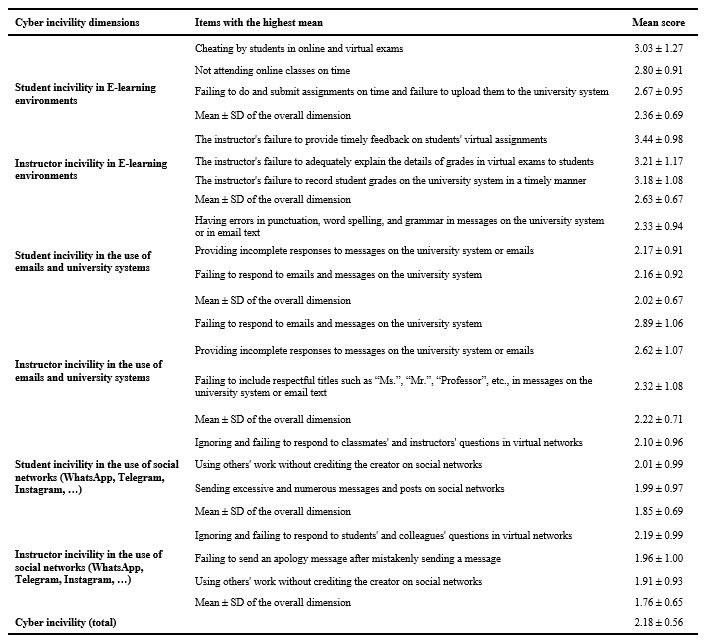
Table 3 shows the three items with the highest mean scores across the different areas of cyber incivility.
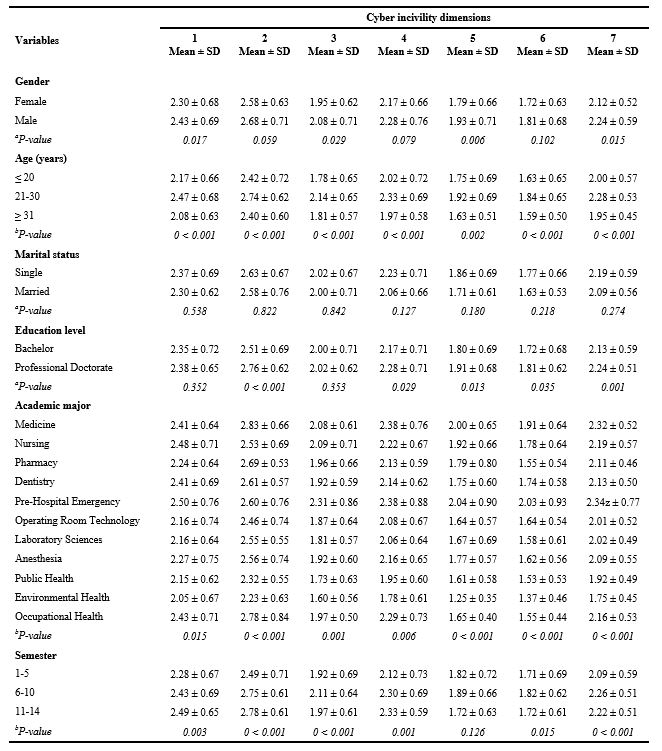
Table 4 shows a comparison of mean exposure to cyber incivility scores across different levels of demographic variables. Although no statistically significant difference in the mean score for cyber incivility exposure was observed between married and single students (p > 0.05), significant differences were found based on gender (p = 0.015), age (p < 0.001), academic major (p < 0.001), education level (p = 0.001), and academic semester (p < 0.001). Specifically, male and younger students—especially those aged 21 to 30—reported higher mean exposure scores. Among academic majors, pre-hospital emergency students had the highest average scores, while students in environmental health, public health, operating room technology, and anesthesia reported lower scores. Professional doctorate students had higher exposure scores compared to undergraduate students. In addition, exposure to cyber incivility increased with the number of academic semesters completed.
Table 3 shows the three items with the highest mean scores across the different areas of cyber incivility.
Table 4 shows a comparison of mean exposure to cyber incivility scores across different levels of demographic variables. Although no statistically significant difference in the mean score for cyber incivility exposure was observed between married and single students (p > 0.05), significant differences were found based on gender (p = 0.015), age (p < 0.001), academic major (p < 0.001), education level (p = 0.001), and academic semester (p < 0.001). Specifically, male and younger students—especially those aged 21 to 30—reported higher mean exposure scores. Among academic majors, pre-hospital emergency students had the highest average scores, while students in environmental health, public health, operating room technology, and anesthesia reported lower scores. Professional doctorate students had higher exposure scores compared to undergraduate students. In addition, exposure to cyber incivility increased with the number of academic semesters completed.
Table 2. Medical sciences students' exposure to cyber incivility
Abbreviations: SD, standard deviation; n, number of participants; Min, minimum; Max, maximum.
Table 3. Three items with the highest mean scores in each dimension of cyber incivility
Abbreviations: SD, standard deviation.
Table 4. Medical sciences students' exposure to cyber incivility by dimensions based on demographic characteristics
Note: Dimension 1: student incivility in E-learning environments; 2: instructor incivility in E-learning environments; 3: student incivility in the use of emails and university systems; 4: instructor incivility in the use of emails and university systems; 5: student incivility in the use of social networks; 6: instructor incivility in the use of social networks; and 7: total cyber incivility. aMann-Whitney U test was used for two-group comparisons. bKruskal-Wallis test was used for multiple-group comparisons.
Abbreviations: SD, standard deviation.
Discussion
This study looked at the extent of medical sciences students’ exposure to cyber incivility. The results showed that the level of exposure was low. In contrast, in the study by Kim et al. in the United States, Hong Kong, and South Korea, students reported experiencing higher levels of cyber incivility [7]. Similarly, in the study by Jagsi et al., faculty members from different nationalities and ethnicities reported that the occurrence of cyber incivility and a negative organizational climate was higher in medical universities [17]. People from different communities and cultures may see and understand incivility in different ways [7]. Moreover, views of incivility can differ depending on a person’s role and context [4]. Therefore, the relatively low mean level of exposure to cyber incivility observed in this study may be due to cultural differences as well as possible self-censorship by the participating students.
According to Sharvit et al., self-censorship refers to the deliberate hiding of information when official sources are not available [18]. According to Noelle‐Neumann’s spiral of silence theory, people sometimes hide their true opinions out of fear of isolation [19]. In other words, individuals may use self-censorship because of the fear of rejection and may gradually make it a habit. In a study by Kamaruddin et al. on cyber incivility in Malaysia, it was found that respondents answered the questionnaire in a socially desirable way. The researchers believed that fear of criticism and blame caused respondents not to report negative incidents. The study’s participants consistently tried to maintain a positive self-concept and self-image by not revealing the truth [20]. Since cyber incivility happens online and often out of public view, it can be hard to identify and check. Sometimes, people who experience cyber incivility may not even be aware of it, or if they are, they may not have the ability to address and solve the issue [21]. Therefore, another reason for the low reported occurrence of cyber incivility in this study could be that it happens out of public sight.
An analysis of the six areas of cyber incivility showed that, according to the students in this study, they experienced more cyber incivility from instructors than from fellow students. This is different from the findings of studies by McNeill et al. [4] in the United States and Farid et al. [22] in Pakistan, which found that students, rather than instructors, are more likely to engage in incivility in online learning environments. In other words, students have greater chance and opportunity to engage in incivility due to age, environmental, and cultural factors [2]. Students often feel more empowered and have less control over their behavior in online learning environments, a phenomenon that was identified as a form of cyber incivility by the students in the study conducted by Farid et al. [22]. According to the students in this study, student incivility in the use of social networks was more common than instructor incivility. With the onset of the COVID-19 pandemic, the academic use of social networks by both instructors and students increased. However, while instructors mainly used social networks for educational purposes, students used them mostly for communicating with friends [23]. It is clear that without enough education and awareness about using social media, virtual interactions on these platforms can increasingly lead to cyber incivility. This is partly because virtual spaces lack many non-verbal cues and have fewer social rules controlling behavior, making cyber incivility more likely in online communications [24]. Among the six areas of cyber incivility, two—student incivility in E-learning environments and instructor incivility in E-learning environments—had the highest mean scores. Cheating was the most frequent form of student incivility in E-learning environments. This finding is consistent with the study by McNeill et al. [4]. Similarly, Kim et al. found that cheating in assignments was the most common form of cyber incivility [7]. Multiple environmental, organizational, individual, and personality-related factors can lead to the emergence and expression of such misconduct. Among these, psychological and personality traits—particularly student narcissism—play an important role in the occurrence of these behaviors [25].
Naturally, with the growing use of virtual spaces and the internet for educational purposes, the likelihood of academic dishonesty in online exams increases if there is no cultural preparedness and no effective monitoring system [8]. In other words, inadequate infrastructure for delivering high-quality online education, the inexperience and limited familiarity of instructors and students with E-learning cultures and systems, and the lack of rules controlling the use of online educational spaces can lead to higher levels of cyber incivility in E-learning environments, cause misunderstandings, and increase user dissatisfaction.
To address this issue, Swartzwelder et al. recommended setting up policies to handle incivility and creating handbooks for students and instructors that clearly state the university's expectations for appropriate conduct in online classes [26].
In the area of instructor incivility in E-learning environments, the three highest-scoring items were "the instructor's failure to provide timely feedback on students' virtual assignments," "the instructor's failure to clearly explain the details of grades in virtual exams to students," and "the instructor's failure to record student grades on the university system on time." In other words, students felt that university instructors placed less importance on these aspects.
The findings of Farid et al. similarly highlighted that inadequate explanations regarding grade details and the threat of failing students for not meeting the instructor's demands were prominent examples of instructor cyber incivility [22]. Moreover, in the study by McNeill et al., issues such as providing vague course schedules and an unclear syllabus, unclear expectations for assignments, failure to record grades within a specified timeframe, and failure to provide timely feedback on assignments were identified as examples of instructor incivility in educational environments by students.
These findings emphasize the need for more focus on cultivating and building a culture of proper and effective use of online education systems among both students and instructors, as well as improving instructors' skills in using the capabilities of online learning environments [4].
In the area of "student incivility in the use of emails and university systems," the item "having errors in punctuation, word spelling, and grammar in messages on the university system or in email text" had the highest average. Similarly, in the study by Kim et al. in Seoul, students were found to lack the ability to write a professional email [27]. The study by Oakley et al., conducted in Pennsylvania, also showed that even though students were familiar with technology, they could not compose a work-related email without errors [28]. Therefore, medical sciences students need training in email writing and related etiquette [27].
In this study, within the area of "instructor incivility in the use of emails and university systems," the item "failing to answer emails and messages on the university system" had the highest average. Factors such as unprofessional email content, conversational tone, grammatical and spelling errors, heavy workloads, and lack of time may cause instructors to be reluctant to answer student messages and emails [29].
In both areas of "student incivility in the use of social networks" and "instructor incivility in the use of social networks," the item "ignoring and failing to answer classmates', instructors', and colleagues' questions in virtual networks" had the highest average, highlighting the importance and necessity of timely responses to messages from both students and instructors.
The results of examining cyber incivility exposure based on students’ demographic characteristics showed that male students experienced higher levels of cyber incivility compared to female students. Younger students, especially those in the 21–30 age group, reported higher mean exposure scores. Among academic majors, pre-hospital emergency students had the highest average scores, while students in environmental health, public health, operating room technology, and anesthesia reported lower scores. Professional doctorate students had higher exposure scores compared to undergraduate students. In addition, exposure to cyber incivility increased with the number of academic semesters completed. The study by Farid et al. found that female students and those with lower self-reported cyber incivility scores were more likely to report uncivil behaviors [22].
Undoubtedly, cultural and personality differences among research samples in various studies can affect the results. Moreover, the higher level of exposure to cyber incivility among students in advanced academic terms may be due to their greater experience in online learning environments compared to students in earlier terms, leading them to face more instances of cyber incivility.
Disrespectful behaviors in online educational environments can disrupt students’ learning and create chaos within the educational setting [30]. On the other hand, many universities struggle with inadequate policies designed for in-person interactions, which are not always suitable for the online environment, where the nature and context of incivility can differ significantly. To address this, universities can set up and communicate clear guidelines for online behavior to set expectations and reduce incidents of incivility. Additionally, providing training on digital etiquette and respectful online communication can give students and faculty the skills to interact positively in virtual settings [7].
Cyber incivility is a culturally dependent concept. Uncivil behaviors can differ from culture to culture. Therefore, its study should match the cultural and social contexts specific to each society. Although this study was conducted with a relatively large sample size, the results may not be easily applied to other regions of Iran or other countries. In addition, the data collection tool in this study was a questionnaire administered electronically to the research population. Self-censorship and lack of honesty in completing the questionnaire could be reasons for the lower reported levels of exposure to cyber incivility in this study. The absence of instructors from this study may also be a limitation. Therefore, it is recommended that future research designs use a mixed-methods approach (combining qualitative studies with surveys) conducted simultaneously on both students and instructors across different countries to collect and study more complete data on cyber incivility and its related factors in academic environments.
Conclusion
The results showed a generally low level of student exposure to cyber incivility. The highest mean was related to instructor incivility in E-learning environments, while the lowest was instructor incivility in the context of social network major, education level, and semester.
These findings highlight the need for educational interventions to improve online communication in academic settings.
Future mixed-methods research involving both students and instructors is recommended to gain deeper insights.
Additionally, creating, carrying out, and carefully checking interventions to reduce cyber incivility is essential for making the academic environment better.
Ethical considerations
The present study was conducted in accordance with the principles of the revised Declaration of Helsinki. The research protocol was approved by the Ethics Committee of Alborz University of Medical Sciences, Iran (Ethics Code: IR.ABZUMS.REC.1400.092). All ethical considerations were followed in this study. Participation by the students was voluntary. Since an explanation regarding consent to participate was provided at the beginning of the electronic questionnaire, completing and submitting the questionnaire was considered as consent to participate in the study. The questionnaires were filled out anonymously, and the participants' information was kept completely private.
Artificial intelligence utilization for article writing
The authors confirm that no generative AI tools were used for the creation of the manuscript’s scientific content, data, tables, or figures. The manuscript was originally written by the authors in Persian. DeepL.com and ChatGPT (version 5, https://chatgpt.com/) were used exclusively for translation and language editing, in accordance with ethical guidelines.
Acknowledgment
The authors thank all the participants in this study. The authors also thank Alborz University of Medical Sciences for approving this research (Research code: 4277).
Conflict of interest statement
The authors declare that they have no competing interests.
Author contributions
MA and NS were involved in the planning and organization of the study. NS was involved in data collection. PRA. designed the statistical analysis. NS. and MA. prepared the first draft of the manuscript. MA and STMH. performed the critical review, and all authors approved the final manuscript.
Funding
The authors received no specific funding for this research.
Data availability statement
The data used in the study are available from the corresponding author upon reasonable request.
Editorial: Original Research |
Subject:
Education
Received: 2025/06/6 | Accepted: 2025/09/15 | Published: 2025/10/1
Received: 2025/06/6 | Accepted: 2025/09/15 | Published: 2025/10/1
References
1. Hernandez RM. Impact of ICT on education: challenges and perspectives. Propósitos Represent. 2017;5(1):325-47. [DOI:10.20511/pyr2017.v5n1.149]
2. Clark CM, Werth L, Ahten S. Cyber-bullying and incivility in the online learning environment, part 1: addressing faculty and student perceptions. Nurse Educ. 2012;37(4):150-6. [DOI:10.1097/NNE.0b013e31825a87e5] [PMID]
3. McCarthy K, Pillai R, Cherry B, Steigerwald M. From cyber to e-mail incivility: a psychometric assessment and measure validation study. Organ Manag J. 2019;16(2):61-8. [DOI:10.1080/15416518.2019.1604198]
4. McNeill J, Dunemn K, Einhellig KS, Clukey L. Exploring nursing student and faculty perceptions of incivility in the online learning environment. J Nurs Educ Pract. 2017;7(5):45-52. [DOI:10.5430/jnep.v7n5p45]
5. Febriana SK, Fajrianthi. Cyber incivility perpetrator: the influenced of dissociative anonimity, invisibility, asychronicity, and dissociative imagination. J Phys Conf Ser. 2019;1175(1):012238. [DOI:10.1088/1742-6596/1175/1/012238]
6. Yadava S. Understanding incivility in the virtual classroom: a critical review. J Educ Dev. 2022;12(23):12-24.
7. Kim SS, Lee JJ, De Gagne JC. Exploration of cybercivility in nursing education using cross-country comparisons. Int J Environ Res Public Health. 2020;17(19):7209. [DOI:10.3390/ijerph17197209] [PMID] []
8. Haghighi FS, Farajollahi M. E-cheating and plagiarism as the challenging hidden face of evaluation system of open and distance education universities and ways to prevent them: the case of PNU. Instr Eval. 2015;7(28):39-49.
9. De Gagne JC, Yang Y, Rushton S, Koppel PD, Hall K. Email use reconsidered in health professions education: viewpoint. JMIR Med Educ. 2020;6(1):e19300. [DOI:10.2196/19300] [PMID] []
10. Moghimian M, Farzi S, Abbaszadeh A, Shahzeydi A, Farzi F, Musarezaie A. Exploring nursing students' and faculty members' perspective on incivility in the online learning environment: a descriptive qualitative study. J Qual Res Health Sci. 2023;12(1):25-30. [DOI:10.34172/jqr.2023.04]
11. Williams KS. Unsociable speech: critical discourses on cyber incivility from inside the non-profit sector in Canada. Qual Res Organ Manag. 2020;15(3):349-69. [DOI:10.1108/QROM-04-2018-1625]
12. Giumetti GW, McKibben ES, Hatfield AL, Schroeder AN, Kowalski RM. Cyber incivility @ work: the new age of interpersonal deviance. Cyberpsychol Behav Soc Netw. 2012;15(3):148-54. [DOI:10.1089/cyber.2011.0336] [PMID]
13. Park Y, Fritz C, Jex SM. Daily cyber incivility and distress: the moderating roles of resources at work and home. J Manage. 2018;44(7):2535-57. [DOI:10.1177/0149206315576796]
14. Giumetti G, Hatfield A, Scisco J, Schroeder A, Mut E, Kowalski R. What a rude e-mail! examining the differential effects of incivility versus support on mood, energy, engagement, and performance in an online context. J Occup Health Psychol. 2013;18(3):297-309. [DOI:10.1037/a0032851] [PMID]
15. Resendes S, Ramanan T, Park A, Petrisor B, Bhandari M. Send it: study of e-mail etiquette and notions from doctors in training. J Surg Educ. 2012;69(3):393-403. [DOI:10.1016/j.jsurg.2011.12.002] [PMID]
16. Lawshe CH. A quantitative approach to content validity. Pers Psychol. 1975;28(4):563-75. [DOI:10.1111/j.1744-6570.1975.tb01393.x]
17. Jagsi R, Griffith K, Krenz C, Jones RD, Cutter C, Feldman EL, et al. Workplace harassment, cyber incivility, and climate in academic medicine. JAMA. 2023;329(21):1848-58. [DOI:10.1001/jama.2023.7232] [PMID] []
18. Sharvit K, Bar-Tal D, Hameiri B, Zafran A, Shahar E, Raviv A. Self-censorship orientation: scale development, correlates and outcomes. J Soc Polit Psychol. 2018;6(2):331-63. [DOI:10.5964/jspp.v6i2.859]
19. Noelle‐Neumann E. The spiral of silence a theory of public opinion. J Commun. 1974;24(2):43-51. [DOI:10.1111/j.1460-2466.1974.tb00367.x]
20. Kamaruddin FA, Ismail IR, Hamid HA. Experienced versus instigated cyber incivility: does self-enhancement matter? J Manag Muamalah. 2021;11(2):113-31.
21. Clark CM, Luparell S. Cyber-incivility, cyber-bullying, and other forms of online aggression: a call to action for nurse educators. Nurse Educ Today. 2020;85:104310. [DOI:10.1016/j.nedt.2019.104310] [PMID]
22. Farid H, Hasan SJ, Naveed A, Hyder PR, Shaikh GM, Pasha L. Incivility in online learning environment: perception of dental students and faculty. J Dent Educ. 2022;86(12):1591-601. [DOI:10.1002/jdd.13031] [PMID]
23. Sobaih AE, Moustafa MA, Ghandforoush P, Khan M. To use or not to use? Social media in higher education in developing countries. Comput Human Behav. 2016;58:296-305. [DOI:10.1016/j.chb.2016.01.002]
24. Koban K, Stein JP, Eckhardt V, Ohler P. Quid pro quo in web 2.0. connecting personality traits and Facebook usage intensity to uncivil commenting intentions in public online discussions. Comput Human Behav. 2018;79:9-18. [DOI:10.1016/j.chb.2017.10.015]
25. Eslahi M, Eslahi R, Seyedabbaszadeh MM. Predicting post graduate students online academic cheating and the role and effect of narcissism on its. Educ Dev Judishapur. 2023;14(3):250-65.
26. Swartzwelder K, Clements P, Holt K, Childs G. Confronting incivility in the online classroom. J Christ Nurs. 2019;36(2):104-11. [DOI:10.1097/CNJ.0000000000000591] [PMID]
27. Kim DH, Yoon HB, Yoo DM, Lee SM, Jung HY, Kim SJ, et al. Etiquette for medical students' email communication with faculty members: a single-institution study. BMC Med Educ. 2016;16:129. [DOI:10.1186/s12909-016-0628-y] [PMID] []
28. Oakley M, Horvath Z, Weinberg SM, Bhatt J, Spallek H. Comparison of e-mail communication skills among first-and fourth-year dental students. J Dent Educ. 2013;77(11):1413-24. [DOI:10.1002/j.0022-0337.2013.77.11.tb05617.x] [PMID]
29. Filippone M, Survinski M. The importance of etiquette in school email. Am Second Educ. 2016;45(1):22-7.
30. Abraham AE, Busch CA, Brownell SE, Cooper KM. Instructor perceptions of student incivility in the online undergraduate science classroom. J Microbiol Biol Educ. 2022;23(1):e00271-21. [DOI:10.1128/jmbe.00271-21] [PMID] []
Send email to the article author
| Rights and permissions | |
 |
This work is licensed under a Creative Commons Attribution-NonCommercial 4.0 International License. |