Tue, Oct 13, 2026
[Archive]
Volume 18, Issue 3 (2025)
J Med Edu Dev 2025, 18(3): 130-144 |
Back to browse issues page



Download citation:
BibTeX | RIS | EndNote | Medlars | ProCite | Reference Manager | RefWorks
Send citation to:


BibTeX | RIS | EndNote | Medlars | ProCite | Reference Manager | RefWorks
Send citation to:
Kamali M, Mousavi S K. Game-based learning efficiency in nursing education in Iran: a systematic review. J Med Edu Dev 2025; 18 (3) :130-144
URL: http://edujournal.zums.ac.ir/article-1-2458-en.html
URL: http://edujournal.zums.ac.ir/article-1-2458-en.html

1- Department of Nursing, Abhar School of Nursing, Zanjan University of Medical Sciences, Zanjan, Iran. , mkamalizums@gmail.com
2- Department of Nursing, Abhar School of Nursing, Zanjan University of Medical Sciences, Zanjan, Iran
2- Department of Nursing, Abhar School of Nursing, Zanjan University of Medical Sciences, Zanjan, Iran
Keywords: experimental game, nursing education research, Iran, systematic review, game-based learning, education
Full-Text [PDF 595 kb]
(1207 Downloads)
| Abstract (HTML) (2102 Views)
Full-Text: (104 Views)
Abstract
Background & Objective: Today, most educational researchers agree that the advantage of using games as an enlivening method is notable. The purpose of this study is to gain insight into the significant effects of using games in nursing education in Iran.
Materials & Methods: Our systematic review was conducted according to the Cochrane Collaboration guidelines. We searched multiple databases, including Web of Science (WoS), Medline, ProQuest, Scopus, PubMed, Science Direct, Magiran, Scientific Information Database (SID), and Google Scholar, to identify relevant studies. The primary research strategy involved intervention studies designed to investigate the impact of using game-based learning methods. The Preferred Reporting Items for Systematic Reviews and Meta-Analyses (PRISMA) diagram illustrates the process of selecting articles. Additionally, the Modified Medical Education Research Study Quality Instrument (MMERSQI) index was employed to assess the quality of the articles. The Cochrane Risk of Bias Tool (RoB 2) and Risk Of Bias In Non-randomized Studies of Interventions (ROBINS-I) were used to assess the risk of bias. Also, the study screening process was performed independently by two reviewers.
Results: Nine articles related to game-based learning were extracted. The mean MMERSQI index score of selected articles was 63.22 ± 7.87, which indicated the moderate and acceptable quality of these articles. Except for one article, the rest of the selected articles showed the positive impact of using game-based learning methods on the cognitive, affective, and behavioral domains of learning in participants. Most studies have emphasized the improvement of the cognitive domain compared to the affective and behavioral domains. Also, there is an increase in grades and satisfaction and a decrease in anxiety among participants as a result of using this method.
Conclusion: Decision-making managers should actively develop suitable platforms to encourage the use of games in various forms as a supplementary tool in the teaching process. This approach can have positive effects and offer an engaging and enjoyable method for nursing education.
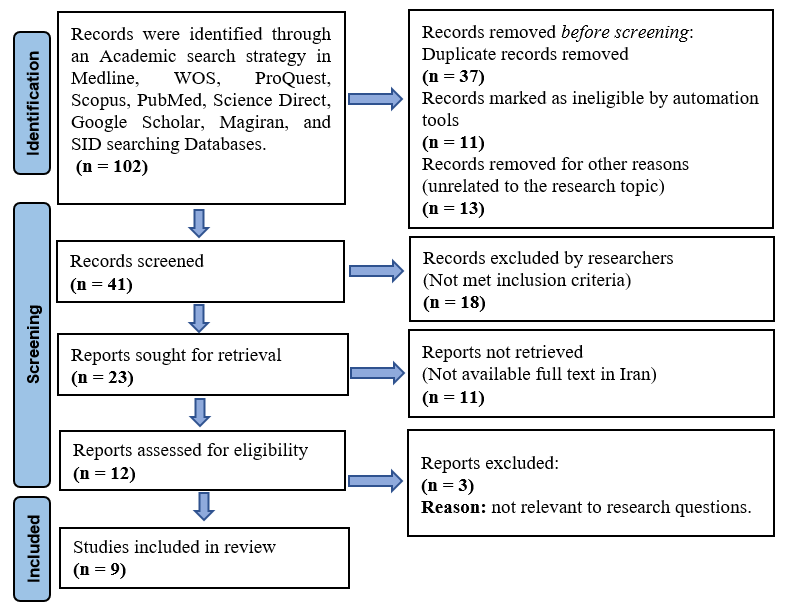
Table 1. Assessment results of articles based on the MMERSQI index
Note: The mean and standard deviation of the MMERSQI score for each item were calculated separately.
Abbreviations: MMERSQI, medical education research study quality instrument; N, number of studies; SD, standard deviation.
Table 2. Evaluation results of characteristics of selected articles
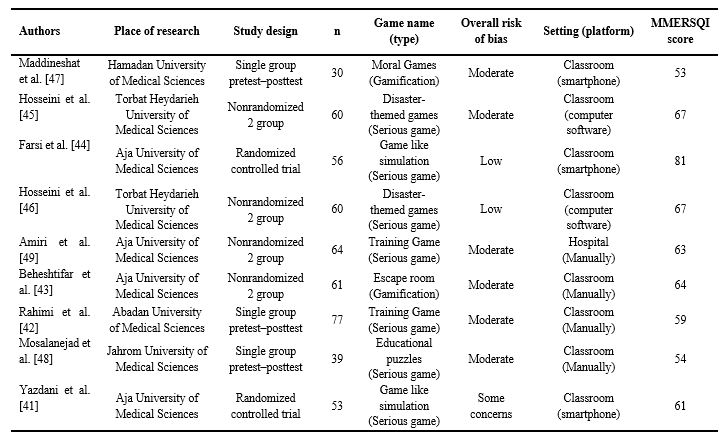
Table 3. Evaluation of selected articles in terms of game-based learning efficiency
Discussion
The quality of the selected articles is an important factor that can have a significant impact on the validity and value of a systematic study. We utilized the MMERSQI index to assess the quality of the articles, and the results indicated a mean and standard deviation of 63.22 ± 7.87 for the selected articles, reflecting a moderate to acceptable quality of these studies.
In line with these results, the studies by Nascimento et al. in 2021 and Gorbanev et al. in 2018 showed that the quality of their articles for systematic review in the MMERSQI criterion was also in the medium range [51, 52]. On the other hand, the study by Xu et al. in 2021 entitled "Learning experiences of game-based educational intervention in nursing students," which used the Mixed Methods Appraisal Tool (MMAT) index to evaluate the quality of articles, showed that the overall methodological quality of the studies was average [53]. This study's results regarding the study design showed that the highest frequency was related to the study of 2 non-randomized groups. Ozdemir and Dink's study showed that most of the quantitative interventional studies found for their systematic review were of the non-randomized controlled trial type [30]. Contrary to these results, selected articles from another study showed that most of the study designs were randomized controlled trials [52]. In general, it can be claimed that the selected articles of this study are of the same quality as the studies conducted in other countries. The results of the present study showed that the prevalence of using serious games during game-based learning is higher than that of gamification. According to another similar study that was conducted in all fields of medical sciences, it was also determined that the frequency of use of serious games is greater than gamification [54]. Nevertheless, Zohari et al.'s study, which was conducted on the use of these learning methods in all medical education fields, showed that gamification was used more than serious games [16]. The choice of game type appears to be entirely a matter of personal preference and the researchers' judgment, making it difficult to attribute any specific superiority or distinction to one game over another.
One of the obvious and largely predictable results of our study was the positive effect of using games in improving the learning level of participants. This result was in line with the results of most research conducted with the aim of evaluating the effectiveness of using games during the education process [22, 30, 31, 51, 52, 55]. However, some studies question the effectiveness of using this method. For example, the study by Karakoç et al. indicates that the impact of game-based learning on students' academic achievement does not vary based on the sub-dimensions of their levels of schooling, different types of assessments, or various disciplines [56]. However, it seems that the effectiveness of using this method is approved by most researchers in the field of education. Another result of the present study was that most of the articles emphasized the impact of game-based learning methods on participants' cognitive components of learning. In line with this result, Ozdemir and Dink, in 2022, during their systematic study, also concluded that game-based learning facilitated the achievement of learning outcomes primarily in the cognitive domain [30]. Another study in 2020, which tracked students' predictive knowledge after playing a serious game based on learning analytics data, showed that this method can significantly improve learners' knowledge levels [57]. Other studies have emphasized the effectiveness of using game-based methods on the cognitive aspect of learning [58-61]. On the other hand, some studies have not confirmed the effectiveness of using this method in improving students' knowledge. Telner et al. found in their study that the participants' learning level when using game-based methods did not differ significantly from that achieved through traditional methods regarding their knowledge component [62]. Moreover, we found that two and three articles, respectively, proved the positive effect of using this method on the affective and behavioral components of learning. In 2021, Vankúš conducted special research on the effectiveness of using game-based learning methods on the affective domain of learning and found that most (84%) studies reported the positive impact of this method on students' motivation, engagement, attitudes, enjoyment, and state of flow [63]. Examining different texts shows that the positive effectiveness of using this method in the affective domain is also confirmed in different literature [64]. During their study, Zaini et al. found that the design and development of education based on the disaster flood game can improve the practical performance of learners [65]. Zahler and Musllam's study in 2021 also showed that this method improves the clinical judgment of nursing students [66]. In addition to this, other studies have also reported the positive effect of using game-based methods on the clinical performance of learners in different fields of study [30, 51, 52, 67, 68].
Consistent with the results of our last research question, which indicated an increase in satisfaction and a decrease in anxiety among nursing students regarding game-based learning, the study by Davidson and Candy in 2016 also demonstrated that this method enhances learner satisfaction [69]. Similarly, Telner's study in 2010 yielded positive results, finding that while this method does not enhance participants' knowledge and learning, it does increase satisfaction with the educational environment [62]. In 2022, Ahmed et al. also reported the effect of using game-based methods on reducing learners' anxiety [70]. However, Hong et al. had a contradictory finding and stated that learners' anxiety did not decrease significantly [71]. In this regard, the study of Dabbous et al. in 2022 showed that the use of this learning method can significantly increase the average grades of pharmacy students [72]. Another similar review has reported the positive effect of using this method on students' achievement in science (quizzes, final exams, and course grades) [73]. Nevertheless, the findings indicate that, in most included studies, learner satisfaction and academic performance associated with the implementation of this method were reported to be higher compared to traditional approaches.
In addition to the relatively small number of studies on game-based learning in nursing education in Iran, one notable limitation of this research is the difficulty and ambiguity in evaluating the quality and manner of gameplay. Specifically, since engaging in games within the educational process requires distinct skills and expertise, none of the studies have addressed the quality of gameplay from the learners' perspective. It can be admitted with certainty that the way the game is played and managed can have a significant impact on its results. In this context, the quality evaluation tool for the articles still needs to include an item that assesses the quality of implementation for interventional studies.
Conclusion
The need to change the education process for medical sciences students is unavoidable due to the importance of their future work. The volume and compactness of the materials and the lengthening of classes have the potential to significantly reduce the quality of learning. In addition to these factors, holding a class traditionally without excitement and variety can make the conditions for accurate and practical learning extremely difficult. At times, these factors are unbearable for the new generation of students who, rightly or wrongly, have spent a significant amount of time in the gaming space, especially games based on electronic platforms. It seems that the expectation of students' complete adaptation to traditional teaching methods has completely failed, and the educational system has no choice but to bring the educational methods closer to the interests of the learners. This issue does not mean that education should be completely game-oriented because this expectation is not feasible and logical. Like many other countries, in addition to enhancing learning outcomes as the primary goal, the use of game-based methods as an adaptable and flexible supplementary approach can help create a fun and engaging educational environment.
Despite the strong evidence supporting the effectiveness of game-based methods in enhancing learning and making the educational environment enjoyable, their limited use in nursing education—an essential discipline within medical sciences—requires the attention of academics in Iran. It appears that educational decision-makers in the field of medical sciences remain uncertain about integrating these methods into the academic environment and are not approaching this issue with the seriousness it deserves. Therefore, decision-makers should actively create suitable platforms to promote the use of games in various forms, as these can serve as positive, engaging, and enjoyable supplementary methods in nursing education. Financial support, allocating and creating a suitable physical and virtual space to carry out these methods, and supporting and paying attention to teachers are among the measures that can be effective in promoting the use of this method and increasing the level of learning and the satisfaction of learners. The results of our study showed that despite the great importance of practical skills in nursing, more research needs to be done on game-based learning methods in this field.
As a result, there is still a research gap concerning the effectiveness of game-based methods in teaching crucial practical nursing skills. It is recommended that researchers in the field of education prioritize this area of study.
Ethical considerations
Not applicable
Artificial intelligence utilization for article writing
Artificial intelligence (AI) has not been used for writing this article.
Acknowledgment
None
Conflict of interest statement
No conflict of interest
Author contributions
Both authors contributed equally to all stages of this systematic review, including the conception and design of the study, literature search, screening and selection of articles, data extraction and analysis, interpretation of the results, and manuscript preparation. Both authors have read and approved the final version of the manuscript.
Funding
The author declares that no financial support was received for this research, authorship, or publication.
Data availability statement
All data supporting the findings of this study are available within the published articles included in the review. No new datasets were generated or analyzed.
Background & Objective: Today, most educational researchers agree that the advantage of using games as an enlivening method is notable. The purpose of this study is to gain insight into the significant effects of using games in nursing education in Iran.
Materials & Methods: Our systematic review was conducted according to the Cochrane Collaboration guidelines. We searched multiple databases, including Web of Science (WoS), Medline, ProQuest, Scopus, PubMed, Science Direct, Magiran, Scientific Information Database (SID), and Google Scholar, to identify relevant studies. The primary research strategy involved intervention studies designed to investigate the impact of using game-based learning methods. The Preferred Reporting Items for Systematic Reviews and Meta-Analyses (PRISMA) diagram illustrates the process of selecting articles. Additionally, the Modified Medical Education Research Study Quality Instrument (MMERSQI) index was employed to assess the quality of the articles. The Cochrane Risk of Bias Tool (RoB 2) and Risk Of Bias In Non-randomized Studies of Interventions (ROBINS-I) were used to assess the risk of bias. Also, the study screening process was performed independently by two reviewers.
Results: Nine articles related to game-based learning were extracted. The mean MMERSQI index score of selected articles was 63.22 ± 7.87, which indicated the moderate and acceptable quality of these articles. Except for one article, the rest of the selected articles showed the positive impact of using game-based learning methods on the cognitive, affective, and behavioral domains of learning in participants. Most studies have emphasized the improvement of the cognitive domain compared to the affective and behavioral domains. Also, there is an increase in grades and satisfaction and a decrease in anxiety among participants as a result of using this method.
Conclusion: Decision-making managers should actively develop suitable platforms to encourage the use of games in various forms as a supplementary tool in the teaching process. This approach can have positive effects and offer an engaging and enjoyable method for nursing education.
Introduction
According to the United Nations Educational, Scientific, and Cultural Organization (UNESCO), education is defined as "the process of facilitating the learning or acquisition of knowledge, skills, values, beliefs, and habits" [1]. One of the theories accepted by most researchers in the field of education is to divide the learning fields into three subcategories, including the cognitive domain (knowledge), affective domain (attitudes), and the behavioral domain (psychomotor or skills). The cognitive components primarily relate to mental and intellectual processes. This includes how individuals know, understand, and process information and apply knowledge to solve problems and conduct research. The affective domain is one of the complex aspects of learning that can guide the mental and practical processes and mostly includes feelings, emotions, and attitudes of learners about the educational content. Behavioral components also refer to natural, autonomic responses or reflexes based on mental content or perceived knowledge. The psychomotor domain comprises utilizing motor skills and coordinating them for accurate clinical or practical performance [2]. Today, educating efficient human resources is a key structural strategy for developing human capital and positively adapting to changing social and cultural conditions. In recent years, we have challenging methods in the educational process [3]. innovative skills through dynamic learning. Implementing flexible curricula that accommodate diverse modern teaching approaches appears essential for effectively balancing and bridging the gap between traditional teaching methodologies and contemporary educational requirements [4]. Games have been used as a learning tool for centuries, but in recent years, they have received more and more attention from education researchers. Games are regarded as a complementary educational activity for developing knowledge and skills because they provide players with the opportunity to explore beyond the familiar and tangible. There are many games specifically structured as educational games that have been impressively used for educational goals [5-7]. Game-Based Learning (GBL) is a new trend in education that has been gradually used for learning improvement [8]. GBL is a fun way of learning through doing or playing, and it is specifically designed and structured to enhance the learning experience [9, 10]. GBL is more prominent in educational settings and can have a positive effect on learners' performance, engagement, anxiety, and satisfaction [11-13].
"Serious games" and "gamification" are two typical forms of game-based learning [14-16]. The definition of a serious game is generally an interactive game, usually based on applications that have a challenging goal and incorporate a scoring process [17]. Playing elements to support educational objectives deliberately is a distinctive feature of serious games. On the other hand, this method is illustrated as smart games that inform, educate, and train students and can be in different formats such as digital, card, and board games [18]. Enhancing collaborative awareness and opportunities for active learning in clinical reasoning, decision-making, and skills development are the other impressive benefits of serious games for education [19-22]. Another type of GBL is gamification, which is a process of game-thinking and game mechanics to engage users and help solve problems [23, 24]. Gamification is the use of a game format in non-game contexts [25]. Gamification is the form of applying game-design elements to transform activities, products, services, and systems. This process should be experiences similar to those offered by games. These elements can include badges, points, and leaderboards to motivate and reward problem-solving activities and processes [26]. Many types of research have proven the fact that gamification has a positive effect on the learning process and can affect various dimensions, including cognitive, motivational, and behavioral [27].
Based on various research conducted around the world, game-based learning formats are well-received by participants. They can create an immersive experience for students that is considered effective, engaging, easy to understand, and comparable to traditional teaching activities [28, 29]. Like many other fields, the use of games in nursing education is an emerging method that has recently. The use of this method in the teaching of theoretical and practical units in the field of nursing, despite some negative aspects and all the challenges ahead, including the facilities required for this educational method as well as the necessary cultivation, has shown that it can lead to a significant increase in the level of students' learning compared with traditional methods [30, 31]. Much research is being done on the use of game-based learning methods in various areas around the world. Review studies regarding the effectiveness of game-based methods in developed communities have provided a comprehensive view of the various aspects of using this method in nursing education. Considering the cultural context of the educational environment and the available facilities at universities in Iran, as well as the varying levels of student access to resources like international applications, it is evident that there is a gap in systematic studies summarizing the results of previous research on the use of game-based methods in medical sciences education, particularly nursing, in Iran. Therefore, this systematic study is designed to investigate the effectiveness of game-based methods in nursing education in Iran and to compare these findings with similar studies conducted in other countries. Given the quantitative and interventional nature of our research goals and the majority of included studies, we structured our research questions using the PICO framework. This framework identifies the population (the participants or group of interest), intervention (the main intervention or exposure under consideration), comparison (an alternative intervention or control group for benchmarking), and outcome (the specific effects or results to be measured) relevant to our research topic [32].
This systematic review is guided by several research questions focusing on nursing education in Iran; (1) It explores which type of games—serious games or gamification—have been utilized more frequently among nursing students, comparing their usage in educational interventions; (2) It examines the platforms on which these games are played, specifically looking at game-based learning methods in comparison to nongame-based platforms, and identifying whether they are accessed via mobile, computer, or web-based formats; (3) The review investigates the impact of game-based learning methods on learners' cognitive, affective, and behavioral components, comparing these outcomes to traditional education methods; (4) It assesses the effects of game-based approaches on learners’ anxiety levels, evaluation scores (grades), and overall satisfaction, again comparing these outcomes to those resulting from traditional educational practices.
Materials & Methods
A systematic review is a method of research to answer a specific research question with minimal error by synthesizing all relevant scientific articles [33]. The present study is a systematic review following the Cochrane Collaboration guidelines with the aim of investigating the effectiveness of using game-based learning methods in nursing education in Iran [34]. The process of selecting the relevant articles to address the research questions and conducting an unbiased analysis to summarize the evidence was carried out according to the updated Preferred Reporting Items for Systematic Reviews and Meta-Analyses (PRISMA) 2020 guidelines [35].
Inclusion criteria
The main criteria for inclusion in the study included scientific articles conducted in Iran with the aim of investigating the effectiveness of using game-based methods in nursing education.
In this regard, all articles written outside of Iran, articles related to other fields of medical sciences, and the use of games to educate other individuals, such as patients, were excluded.
In addition, according to the nature of the research, all systematic reviews and meta-analyses, qualitative research, and non-interventional research were other exclusion criteria. Due to the high prevalence of game-based research since 2015, we considered the years from 2015 to 2025 for our study. Also, articles written in either English or Persian, the availability of electronic format, and the full text were other entry criteria.
Risk of bias assessment
The methodological quality and risk of bias of the included studies were evaluated according to study design. For Randomized Controlled Trials (RCTs), the Cochrane Risk of Bias Tool (RoB 2) was applied. RoB 2 is a tool developed by the Cochrane Collaboration to assess the risk of bias in randomized controlled trials. This tool examines each trial in five main areas: how the randomization was conducted, whether participants received the intended interventions, whether there is missing outcome data, how outcomes were measured, and how the results were selected for reporting. For each area, reviewers answer clear questions called signaling questions to help judge the risk of bias. Based on this, each trial was examined across five domains and ultimately classified as having “low risk,” “some concerns,” or “high risk” of bias. Notably, the identification of high risk in any single domain led to an overall judgment of high risk for the study [36]. Also, for quasi-experimental studies (non-randomized intervention studies), the Risk Of Bias In Non-randomized Studies-of Interventions (ROBINS-I) tool was used.
It examines seven areas, including confounding factors, participant selection, classification of interventions, deviations from planned interventions, missing data, measurement of outcomes, and reporting of results. Each area is rated as low, moderate, severe, or critical risk. The highest risk level among all areas determines the overall risk for the study. ROBINS-I employs clear questions for each area, enabling researchers to assess the quality of these studies in a structured and reliable manner. [37].
Two independent reviewers assessed each study, and any disagreements were resolved by discussion. Heterogeneity among included studies was assessed descriptively by comparing key characteristics such as study design (randomized and non-randomized interventions), participant demographics, types and duration of interventions, intervention settings, and outcome measurement tools [38].
Search strategy
We conducted a comprehensive search to find relevant studies using standard and related keywords in the WOS, Medline, ProQuest, Scopus, PubMed, Science Direct, Magiran, Scientific Information Database (SID), and Google Scholar databases. The keywords were used individually or combined using the Boolean operators "AND" and "OR. Based on this, for each database, a detailed search strategy was developed using a combination of relevant free-text keywords and controlled vocabulary. For example, Medical Subject Headings (MeSH) terms for PubMed/MEDLINE or their equivalents in other databases. As mentioned, the Boolean operators (“AND” and “OR”) were employed to refine the searches. The complete search strategies for all databases, including all keywords and MeSH (or equivalent) terms used, are provided below.
("Game" OR "Game-based learning" OR "Game based learning" OR "Game-based teaching" OR "Game based teaching" OR "Game-based education" OR "Game based education" OR "Game-related education" OR "Game related education" OR "Game-related learning" OR "Game related learning" OR "Game-related teaching" OR "Game related teaching" OR "Game-based training" OR "Game based training" OR "Game-related training" OR "Game related training" OR "Serious game" OR "Gamification" OR "Gamified")
AND ("Nursing" OR "Nursing student" OR "Nursing students" OR "Nurse" OR "Nursing education" OR "Nurse education" OR "Nurse training")
AND ("Iran" OR "Iranian" OR "Iranian universities" OR "Iranian nurse" OR "Iranian nurses") We applied specific search restrictions to improve the relevance of the retrieved results. In each database, the search was restricted to the title, abstract, and keyword fields and limited to articles published in English and Persian. Additional filters, such as publication type and study design, were also applied where possible. The search for each database covered studies published from 2015 to January 2025.
It is worth noting that PubMed is a broader database that includes MEDLINE (indexed with MeSH terms) as its primary component, along with additional records from PubMed Central and recent submissions not yet indexed in MEDLINE.
To avoid duplication, we ensured that records retrieved from MEDLINE were not double-counted in PubMed search results. For Google Scholar, the search was performed using the exact core keywords like the other databases.
Selection process
At this stage, the databases were searched to find articles that met the research objectives. Initially, duplicate articles indexed in multiple databases were removed, followed by the exclusion of articles unrelated to the study objectives or those that did not meet the inclusion criteria despite using advanced search tools. Moreover, articles without available full texts for any reason were also excluded. These steps are shown in the PRISMA diagram (Figure 1).
"Serious games" and "gamification" are two typical forms of game-based learning [14-16]. The definition of a serious game is generally an interactive game, usually based on applications that have a challenging goal and incorporate a scoring process [17]. Playing elements to support educational objectives deliberately is a distinctive feature of serious games. On the other hand, this method is illustrated as smart games that inform, educate, and train students and can be in different formats such as digital, card, and board games [18]. Enhancing collaborative awareness and opportunities for active learning in clinical reasoning, decision-making, and skills development are the other impressive benefits of serious games for education [19-22]. Another type of GBL is gamification, which is a process of game-thinking and game mechanics to engage users and help solve problems [23, 24]. Gamification is the use of a game format in non-game contexts [25]. Gamification is the form of applying game-design elements to transform activities, products, services, and systems. This process should be experiences similar to those offered by games. These elements can include badges, points, and leaderboards to motivate and reward problem-solving activities and processes [26]. Many types of research have proven the fact that gamification has a positive effect on the learning process and can affect various dimensions, including cognitive, motivational, and behavioral [27].
Based on various research conducted around the world, game-based learning formats are well-received by participants. They can create an immersive experience for students that is considered effective, engaging, easy to understand, and comparable to traditional teaching activities [28, 29]. Like many other fields, the use of games in nursing education is an emerging method that has recently. The use of this method in the teaching of theoretical and practical units in the field of nursing, despite some negative aspects and all the challenges ahead, including the facilities required for this educational method as well as the necessary cultivation, has shown that it can lead to a significant increase in the level of students' learning compared with traditional methods [30, 31]. Much research is being done on the use of game-based learning methods in various areas around the world. Review studies regarding the effectiveness of game-based methods in developed communities have provided a comprehensive view of the various aspects of using this method in nursing education. Considering the cultural context of the educational environment and the available facilities at universities in Iran, as well as the varying levels of student access to resources like international applications, it is evident that there is a gap in systematic studies summarizing the results of previous research on the use of game-based methods in medical sciences education, particularly nursing, in Iran. Therefore, this systematic study is designed to investigate the effectiveness of game-based methods in nursing education in Iran and to compare these findings with similar studies conducted in other countries. Given the quantitative and interventional nature of our research goals and the majority of included studies, we structured our research questions using the PICO framework. This framework identifies the population (the participants or group of interest), intervention (the main intervention or exposure under consideration), comparison (an alternative intervention or control group for benchmarking), and outcome (the specific effects or results to be measured) relevant to our research topic [32].
This systematic review is guided by several research questions focusing on nursing education in Iran; (1) It explores which type of games—serious games or gamification—have been utilized more frequently among nursing students, comparing their usage in educational interventions; (2) It examines the platforms on which these games are played, specifically looking at game-based learning methods in comparison to nongame-based platforms, and identifying whether they are accessed via mobile, computer, or web-based formats; (3) The review investigates the impact of game-based learning methods on learners' cognitive, affective, and behavioral components, comparing these outcomes to traditional education methods; (4) It assesses the effects of game-based approaches on learners’ anxiety levels, evaluation scores (grades), and overall satisfaction, again comparing these outcomes to those resulting from traditional educational practices.
Materials & Methods
A systematic review is a method of research to answer a specific research question with minimal error by synthesizing all relevant scientific articles [33]. The present study is a systematic review following the Cochrane Collaboration guidelines with the aim of investigating the effectiveness of using game-based learning methods in nursing education in Iran [34]. The process of selecting the relevant articles to address the research questions and conducting an unbiased analysis to summarize the evidence was carried out according to the updated Preferred Reporting Items for Systematic Reviews and Meta-Analyses (PRISMA) 2020 guidelines [35].
Inclusion criteria
The main criteria for inclusion in the study included scientific articles conducted in Iran with the aim of investigating the effectiveness of using game-based methods in nursing education.
In this regard, all articles written outside of Iran, articles related to other fields of medical sciences, and the use of games to educate other individuals, such as patients, were excluded.
In addition, according to the nature of the research, all systematic reviews and meta-analyses, qualitative research, and non-interventional research were other exclusion criteria. Due to the high prevalence of game-based research since 2015, we considered the years from 2015 to 2025 for our study. Also, articles written in either English or Persian, the availability of electronic format, and the full text were other entry criteria.
Risk of bias assessment
The methodological quality and risk of bias of the included studies were evaluated according to study design. For Randomized Controlled Trials (RCTs), the Cochrane Risk of Bias Tool (RoB 2) was applied. RoB 2 is a tool developed by the Cochrane Collaboration to assess the risk of bias in randomized controlled trials. This tool examines each trial in five main areas: how the randomization was conducted, whether participants received the intended interventions, whether there is missing outcome data, how outcomes were measured, and how the results were selected for reporting. For each area, reviewers answer clear questions called signaling questions to help judge the risk of bias. Based on this, each trial was examined across five domains and ultimately classified as having “low risk,” “some concerns,” or “high risk” of bias. Notably, the identification of high risk in any single domain led to an overall judgment of high risk for the study [36]. Also, for quasi-experimental studies (non-randomized intervention studies), the Risk Of Bias In Non-randomized Studies-of Interventions (ROBINS-I) tool was used.
It examines seven areas, including confounding factors, participant selection, classification of interventions, deviations from planned interventions, missing data, measurement of outcomes, and reporting of results. Each area is rated as low, moderate, severe, or critical risk. The highest risk level among all areas determines the overall risk for the study. ROBINS-I employs clear questions for each area, enabling researchers to assess the quality of these studies in a structured and reliable manner. [37].
Two independent reviewers assessed each study, and any disagreements were resolved by discussion. Heterogeneity among included studies was assessed descriptively by comparing key characteristics such as study design (randomized and non-randomized interventions), participant demographics, types and duration of interventions, intervention settings, and outcome measurement tools [38].
Search strategy
We conducted a comprehensive search to find relevant studies using standard and related keywords in the WOS, Medline, ProQuest, Scopus, PubMed, Science Direct, Magiran, Scientific Information Database (SID), and Google Scholar databases. The keywords were used individually or combined using the Boolean operators "AND" and "OR. Based on this, for each database, a detailed search strategy was developed using a combination of relevant free-text keywords and controlled vocabulary. For example, Medical Subject Headings (MeSH) terms for PubMed/MEDLINE or their equivalents in other databases. As mentioned, the Boolean operators (“AND” and “OR”) were employed to refine the searches. The complete search strategies for all databases, including all keywords and MeSH (or equivalent) terms used, are provided below.
("Game" OR "Game-based learning" OR "Game based learning" OR "Game-based teaching" OR "Game based teaching" OR "Game-based education" OR "Game based education" OR "Game-related education" OR "Game related education" OR "Game-related learning" OR "Game related learning" OR "Game-related teaching" OR "Game related teaching" OR "Game-based training" OR "Game based training" OR "Game-related training" OR "Game related training" OR "Serious game" OR "Gamification" OR "Gamified")
AND ("Nursing" OR "Nursing student" OR "Nursing students" OR "Nurse" OR "Nursing education" OR "Nurse education" OR "Nurse training")
AND ("Iran" OR "Iranian" OR "Iranian universities" OR "Iranian nurse" OR "Iranian nurses") We applied specific search restrictions to improve the relevance of the retrieved results. In each database, the search was restricted to the title, abstract, and keyword fields and limited to articles published in English and Persian. Additional filters, such as publication type and study design, were also applied where possible. The search for each database covered studies published from 2015 to January 2025.
It is worth noting that PubMed is a broader database that includes MEDLINE (indexed with MeSH terms) as its primary component, along with additional records from PubMed Central and recent submissions not yet indexed in MEDLINE.
To avoid duplication, we ensured that records retrieved from MEDLINE were not double-counted in PubMed search results. For Google Scholar, the search was performed using the exact core keywords like the other databases.
Selection process
At this stage, the databases were searched to find articles that met the research objectives. Initially, duplicate articles indexed in multiple databases were removed, followed by the exclusion of articles unrelated to the study objectives or those that did not meet the inclusion criteria despite using advanced search tools. Moreover, articles without available full texts for any reason were also excluded. These steps are shown in the PRISMA diagram (Figure 1).
Figure 1. PRISMA diagram of screening process and selection of articles
Data collection
In the data collection and with the aim of classifying the information extracted from the articles, a form with 4 sections was prepared by the researchers of this study. The first section was the scientific quality of selected articles.
For this purpose, among the available scales, the researchers decided to use the Modified Medical Education Research Study Quality Instrument (MMERSQI) scale. At first, this scale was introduced in 2007 as the MERSQI to appraise the methodological quality of medical education studies [39]. In 2023, Al Asmri et al. introduced the modified version of this tool, titled MMERSQI, to address existing shortcomings and enhance the validity of the scale. The MMERSQI consists of 7 domains to evaluate the scientific article from different aspects.
The minimum score obtained on this scale is 23.5, and the maximum score is 100, which indicates the highest quality of an article.
study design (7-23), sampling (0.5-10), setting (5-8), type of data (4-11), validity of evaluation instrument (0-15), data analysis (0-17), and outcomes (7-16) [40]. The MMERSQI was selected in this review due to its specific focus on assessing the methodological quality of studies in medical and health professions education. Compared to general appraisal tools, MMERSQI provides a more comprehensive and validated assessment across multiple relevant domains, including study design, sampling, and outcomes. This feature makes it particularly suitable for evaluating research on game-based learning interventions in nursing education settings.
The second section of this form contained bibliographic references of the articles, along with other items such as the course name and the number of participants. The third section of this form was information related to the games used, such as game type, game setting, and platform.
The last part of this form was prepared and adjusted based on the main research questions of this study. As a result, we extracted the findings from the selected articles regarding the impact on learners' cognitive, affective, and behavioral components, as well as their grades, anxiety levels, and satisfaction during the game-based learning method. By PRISMA guidelines, the results of the included studies were analyzed and synthesized using a descriptive approach. Extracted data were summarized in structured tables, allowing for clear comparison across studies in terms of participants, interventions, game characteristics, outcomes, and study quality (as assessed by the MMERSQI scale). The findings were grouped and narratively synthesized based on the main research questions and outcome domains (cognitive, affective, behavioral, academic grades, anxiety, and participant satisfaction). Sensitivity and specificity were considered conceptually, with a focus on the clarity of intervention effects and the distinctiveness of outcome measurement tools in the included studies. The PRISMA flow diagram was used to document the study selection process, and the completed PRISMA checklist is attached as a supplement to ensure methodological transparency and rigor.
Data analysis
The study screening process was performed independently by two reviewers. Both reviewers separately screened the titles and abstracts of all identified records for eligibility. In cases of disagreement regarding inclusion or exclusion decisions, the reviewers discussed the discrepancies until consensus was reached. A meta-analysis was not conducted in this systematic review for several methodological reasons.
Firstly, the primary research questions of this review are largely descriptive and exploratory, focusing on mapping the types, platforms, and usage frequencies of game-based learning interventions in nursing education, which are not suitable for statistical pooling.
Therefore, we performed a systematic review with a narrative synthesis approach in order to comprehensively answer all of the research questions and maintain consistency in data analysis.
Results
According to the PRISMA template for locating suitable articles for our systematic review, researchers initially identified 102 articles published in various databases. After processing, 37 articles were excluded due to duplication (published in more than one database), 11 articles were discarded following the application of automation tools for a more precise search in the databases (utilizing the specific filters and options available), and 13 articles were removed after a manual assessment by the researchers for being unrelated to the research topic. In the screening process, out of the remaining 41 articles, 18 were excluded due to not matching the inclusion criteria.
In the next step, 11 other articles were excluded due to the unavailability of their full text.
In the end, 3 other articles that did not give a clear and reliable answer to our research question were also removed so that only 9 articles were available for final evaluation (Figure 1) [41-49]. As mentioned, a 4-section form was used to collect the information on the selected articles. The first section of this forms the MMERSQI index.
The researchers' investigations showed that the mean and standard deviation of the MMERSQI score of the articles was 63.22 ± 7.87, which indicates the moderate and acceptable quality of selected articles. The highest score is related to the score of 81, and the lowest is related to the score of 53.
For a more detailed analysis, the scores of the seven dimensions of this index were measured for all selected articles.
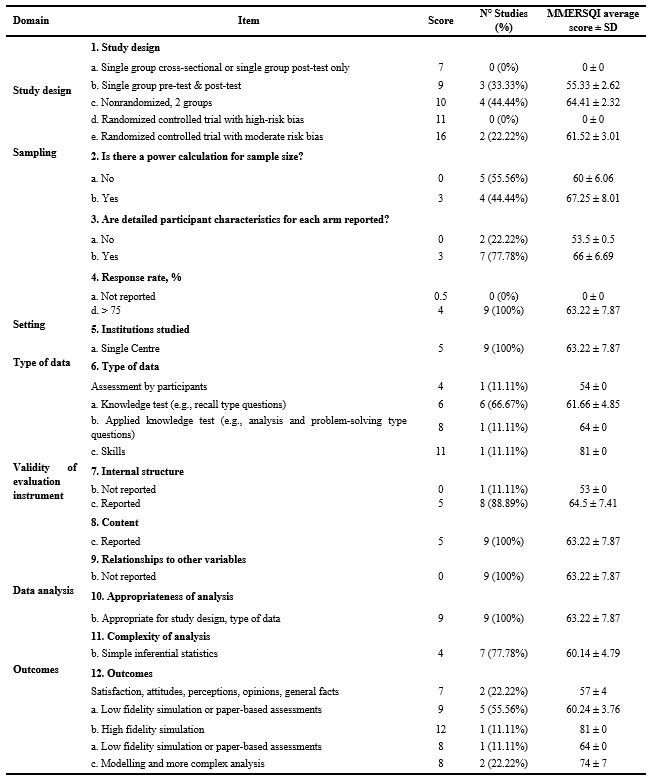
In terms of study design, the most common type was the 2-group non-randomized study, which included five studies with a mean and standard deviation of 64.41 ± 2.32 in the MMERSQI index. From the sampling point, most of the studies did not use strong statistical methods to determine the sample size. Nevertheless, most of the studies mentioned the characteristics of the participants. Also, a response rate of more than 75% was reported in all the studies.
In the subsequent analysis, the settings item revealed that all the studies were conducted at a single center. When assessing the data type index, the researchers found that the majority of studies, six in total, with a mean and standard deviation of 61.66 ± 4.85 in the MMERSQI, had measured participants' knowledge.
In examining the important aspect of evaluating the validity of the evaluation instrument, the results showed that most of the studies had reported their research instrument's internal and content validity. In the data analysis aspect, all the studies used statistical tools appropriate to the type of study, and most used simple inferential statistical tests.
In conclusion, the evaluation of the results from the selected articles indicated that most of them measured participants' knowledge using a paper-based survey, which was reported in five articles with a mean and standard deviation of 60.24 ± 3.76. The results of the assessment based on the MMERSQI index are shown in Table 1.
In continuation, in line with the second section of the data collection form, the selected articles' evaluation regarding their characteristics showed that the mean ± SD of the number of participants in the selected articles was 55.55 ± 13.05, the largest of which was 77, and the smallest was 39. To complete the third section of the data collection form and answer our first main research question, we referred to Becker's study in 2021 on the difference between gamification and serious games. Becker states that serious games and gamification are two very close terms, but minor differences can be found between them. From Becker's point of view, using the elements of a game in a context different from the routine context of the game is the definition of gamification. In other words, gamification is a process that systematically integrates educational goals into a game within an entirely different context. Additionally, serious games are designed with a purpose beyond mere entertainment; they incorporate all the elements of traditional games typically played for enjoyment, but their primary goal is to facilitate learning and enhance the educational experience of participants [50]. Based on this, examining the type of games showed that seven studies used serious games, and only two used gamifications. Except for one article, the other studies were conducted in the classroom. Regarding the game platform (research question 2), the evaluation results revealed that three studies were done on smartphones, two articles on computer software, and four articles without using electronic tools. Of the nine included studies, two were assessed as having a low risk of bias, five had moderate risk, one had serious risk, and one study was judged as having some concerns. Given these findings, a substantial proportion of studies demonstrated an acceptable (low or moderate) risk of bias; however, the presence of studies with serious or some concerns caution when interpreting the results. The results of the articles' evaluation regarding their characteristics are shown in Table 2.
In the data collection and with the aim of classifying the information extracted from the articles, a form with 4 sections was prepared by the researchers of this study. The first section was the scientific quality of selected articles.
For this purpose, among the available scales, the researchers decided to use the Modified Medical Education Research Study Quality Instrument (MMERSQI) scale. At first, this scale was introduced in 2007 as the MERSQI to appraise the methodological quality of medical education studies [39]. In 2023, Al Asmri et al. introduced the modified version of this tool, titled MMERSQI, to address existing shortcomings and enhance the validity of the scale. The MMERSQI consists of 7 domains to evaluate the scientific article from different aspects.
The minimum score obtained on this scale is 23.5, and the maximum score is 100, which indicates the highest quality of an article.
study design (7-23), sampling (0.5-10), setting (5-8), type of data (4-11), validity of evaluation instrument (0-15), data analysis (0-17), and outcomes (7-16) [40]. The MMERSQI was selected in this review due to its specific focus on assessing the methodological quality of studies in medical and health professions education. Compared to general appraisal tools, MMERSQI provides a more comprehensive and validated assessment across multiple relevant domains, including study design, sampling, and outcomes. This feature makes it particularly suitable for evaluating research on game-based learning interventions in nursing education settings.
The second section of this form contained bibliographic references of the articles, along with other items such as the course name and the number of participants. The third section of this form was information related to the games used, such as game type, game setting, and platform.
The last part of this form was prepared and adjusted based on the main research questions of this study. As a result, we extracted the findings from the selected articles regarding the impact on learners' cognitive, affective, and behavioral components, as well as their grades, anxiety levels, and satisfaction during the game-based learning method. By PRISMA guidelines, the results of the included studies were analyzed and synthesized using a descriptive approach. Extracted data were summarized in structured tables, allowing for clear comparison across studies in terms of participants, interventions, game characteristics, outcomes, and study quality (as assessed by the MMERSQI scale). The findings were grouped and narratively synthesized based on the main research questions and outcome domains (cognitive, affective, behavioral, academic grades, anxiety, and participant satisfaction). Sensitivity and specificity were considered conceptually, with a focus on the clarity of intervention effects and the distinctiveness of outcome measurement tools in the included studies. The PRISMA flow diagram was used to document the study selection process, and the completed PRISMA checklist is attached as a supplement to ensure methodological transparency and rigor.
Data analysis
The study screening process was performed independently by two reviewers. Both reviewers separately screened the titles and abstracts of all identified records for eligibility. In cases of disagreement regarding inclusion or exclusion decisions, the reviewers discussed the discrepancies until consensus was reached. A meta-analysis was not conducted in this systematic review for several methodological reasons.
Firstly, the primary research questions of this review are largely descriptive and exploratory, focusing on mapping the types, platforms, and usage frequencies of game-based learning interventions in nursing education, which are not suitable for statistical pooling.
Therefore, we performed a systematic review with a narrative synthesis approach in order to comprehensively answer all of the research questions and maintain consistency in data analysis.
Results
According to the PRISMA template for locating suitable articles for our systematic review, researchers initially identified 102 articles published in various databases. After processing, 37 articles were excluded due to duplication (published in more than one database), 11 articles were discarded following the application of automation tools for a more precise search in the databases (utilizing the specific filters and options available), and 13 articles were removed after a manual assessment by the researchers for being unrelated to the research topic. In the screening process, out of the remaining 41 articles, 18 were excluded due to not matching the inclusion criteria.
In the next step, 11 other articles were excluded due to the unavailability of their full text.
In the end, 3 other articles that did not give a clear and reliable answer to our research question were also removed so that only 9 articles were available for final evaluation (Figure 1) [41-49]. As mentioned, a 4-section form was used to collect the information on the selected articles. The first section of this forms the MMERSQI index.
The researchers' investigations showed that the mean and standard deviation of the MMERSQI score of the articles was 63.22 ± 7.87, which indicates the moderate and acceptable quality of selected articles. The highest score is related to the score of 81, and the lowest is related to the score of 53.
For a more detailed analysis, the scores of the seven dimensions of this index were measured for all selected articles.
In terms of study design, the most common type was the 2-group non-randomized study, which included five studies with a mean and standard deviation of 64.41 ± 2.32 in the MMERSQI index. From the sampling point, most of the studies did not use strong statistical methods to determine the sample size. Nevertheless, most of the studies mentioned the characteristics of the participants. Also, a response rate of more than 75% was reported in all the studies.
In the subsequent analysis, the settings item revealed that all the studies were conducted at a single center. When assessing the data type index, the researchers found that the majority of studies, six in total, with a mean and standard deviation of 61.66 ± 4.85 in the MMERSQI, had measured participants' knowledge.
In examining the important aspect of evaluating the validity of the evaluation instrument, the results showed that most of the studies had reported their research instrument's internal and content validity. In the data analysis aspect, all the studies used statistical tools appropriate to the type of study, and most used simple inferential statistical tests.
In conclusion, the evaluation of the results from the selected articles indicated that most of them measured participants' knowledge using a paper-based survey, which was reported in five articles with a mean and standard deviation of 60.24 ± 3.76. The results of the assessment based on the MMERSQI index are shown in Table 1.
In continuation, in line with the second section of the data collection form, the selected articles' evaluation regarding their characteristics showed that the mean ± SD of the number of participants in the selected articles was 55.55 ± 13.05, the largest of which was 77, and the smallest was 39. To complete the third section of the data collection form and answer our first main research question, we referred to Becker's study in 2021 on the difference between gamification and serious games. Becker states that serious games and gamification are two very close terms, but minor differences can be found between them. From Becker's point of view, using the elements of a game in a context different from the routine context of the game is the definition of gamification. In other words, gamification is a process that systematically integrates educational goals into a game within an entirely different context. Additionally, serious games are designed with a purpose beyond mere entertainment; they incorporate all the elements of traditional games typically played for enjoyment, but their primary goal is to facilitate learning and enhance the educational experience of participants [50]. Based on this, examining the type of games showed that seven studies used serious games, and only two used gamifications. Except for one article, the other studies were conducted in the classroom. Regarding the game platform (research question 2), the evaluation results revealed that three studies were done on smartphones, two articles on computer software, and four articles without using electronic tools. Of the nine included studies, two were assessed as having a low risk of bias, five had moderate risk, one had serious risk, and one study was judged as having some concerns. Given these findings, a substantial proportion of studies demonstrated an acceptable (low or moderate) risk of bias; however, the presence of studies with serious or some concerns caution when interpreting the results. The results of the articles' evaluation regarding their characteristics are shown in Table 2.
Table 1. Assessment results of articles based on the MMERSQI index
Note: The mean and standard deviation of the MMERSQI score for each item were calculated separately.
Abbreviations: MMERSQI, medical education research study quality instrument; N, number of studies; SD, standard deviation.
Table 2. Evaluation results of characteristics of selected articles
Note: The score obtained from the assessment of each article was calculated according to the MMERSQI scale.
Abbreviations: MMERSQI, medical education research study quality instrument; n, number of participants.
Abbreviations: MMERSQI, medical education research study quality instrument; n, number of participants.
The most critical aspect and the findings of the third research question pertained to examining the effectiveness of game-based learning methods on learners' cognitive, affective, and behavioral components in nursing education.
In this regard, the review of the articles showed that, except for one study, other articles showed improvement in participants' learning levels in different forms and educational goal components due to using game-based methods.
Most of the selected studies (6 articles) emphasized the impact of game-based learning methods on participants' cognitive components of learning. Two and three articles, respectively, proved the positive effect of using this method on the affective and behavioral components of learning.
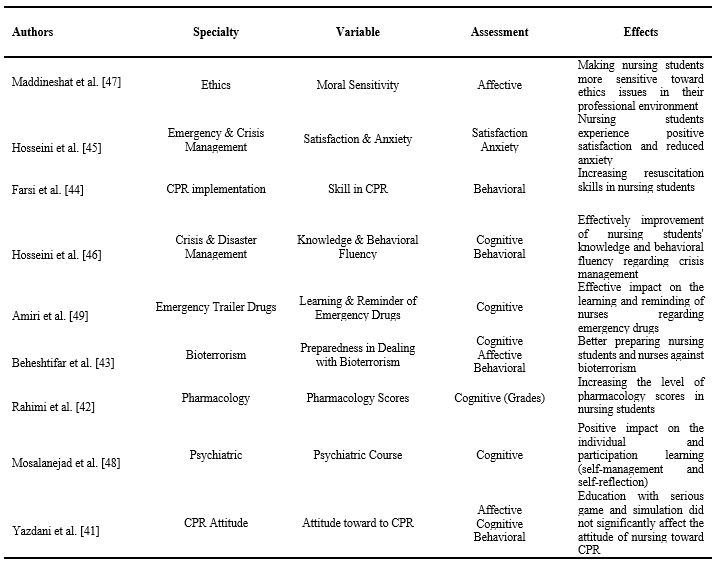
In other words, we can say that most studies have emphasized the improvement of cognitive components compared to learners' behavioral (clinical skills) and affective components due to using this learning method. The article by Yazdani et al. in 2018 was the only study that sought to compare the effectiveness of simulation and game-based training in the attitude of nursing students towards cardiopulmonary resuscitation, and the results indicated that there is no significant difference between these two methods [41]. Meanwhile, two articles evaluated all three components, and only one of them reported a positive effect on all three. In the following, the evaluation of the articles showed that only the study by Masoumian et al. investigated participants' satisfaction and anxiety levels during the game-based learning method. Due to their study results, there is an increase in satisfaction and a decrease in anxiety among nursing students [45]. The study by Maddineshat et al. also measured learners' satisfaction among 15 games and showed that the Drawing or Art Production Game had the highest satisfaction score [47]. In the end, only the article by Rahimi et al. investigated students' grades, and the results of this study indicated the improvement of students' grades under the game-based learning method [42]. The evaluation of the selected articles in terms of game-based learning efficiency is given in Table 3.
In this regard, the review of the articles showed that, except for one study, other articles showed improvement in participants' learning levels in different forms and educational goal components due to using game-based methods.
Most of the selected studies (6 articles) emphasized the impact of game-based learning methods on participants' cognitive components of learning. Two and three articles, respectively, proved the positive effect of using this method on the affective and behavioral components of learning.
In other words, we can say that most studies have emphasized the improvement of cognitive components compared to learners' behavioral (clinical skills) and affective components due to using this learning method. The article by Yazdani et al. in 2018 was the only study that sought to compare the effectiveness of simulation and game-based training in the attitude of nursing students towards cardiopulmonary resuscitation, and the results indicated that there is no significant difference between these two methods [41]. Meanwhile, two articles evaluated all three components, and only one of them reported a positive effect on all three. In the following, the evaluation of the articles showed that only the study by Masoumian et al. investigated participants' satisfaction and anxiety levels during the game-based learning method. Due to their study results, there is an increase in satisfaction and a decrease in anxiety among nursing students [45]. The study by Maddineshat et al. also measured learners' satisfaction among 15 games and showed that the Drawing or Art Production Game had the highest satisfaction score [47]. In the end, only the article by Rahimi et al. investigated students' grades, and the results of this study indicated the improvement of students' grades under the game-based learning method [42]. The evaluation of the selected articles in terms of game-based learning efficiency is given in Table 3.
Table 3. Evaluation of selected articles in terms of game-based learning efficiency
Note: The efficiency of game-based learning was evaluated based on the reported effects in each study across cognitive, affective, and behavioral domains.
Abbreviations: CPR, cardiopulmonary resuscitation.
Abbreviations: CPR, cardiopulmonary resuscitation.
Discussion
The quality of the selected articles is an important factor that can have a significant impact on the validity and value of a systematic study. We utilized the MMERSQI index to assess the quality of the articles, and the results indicated a mean and standard deviation of 63.22 ± 7.87 for the selected articles, reflecting a moderate to acceptable quality of these studies.
In line with these results, the studies by Nascimento et al. in 2021 and Gorbanev et al. in 2018 showed that the quality of their articles for systematic review in the MMERSQI criterion was also in the medium range [51, 52]. On the other hand, the study by Xu et al. in 2021 entitled "Learning experiences of game-based educational intervention in nursing students," which used the Mixed Methods Appraisal Tool (MMAT) index to evaluate the quality of articles, showed that the overall methodological quality of the studies was average [53]. This study's results regarding the study design showed that the highest frequency was related to the study of 2 non-randomized groups. Ozdemir and Dink's study showed that most of the quantitative interventional studies found for their systematic review were of the non-randomized controlled trial type [30]. Contrary to these results, selected articles from another study showed that most of the study designs were randomized controlled trials [52]. In general, it can be claimed that the selected articles of this study are of the same quality as the studies conducted in other countries. The results of the present study showed that the prevalence of using serious games during game-based learning is higher than that of gamification. According to another similar study that was conducted in all fields of medical sciences, it was also determined that the frequency of use of serious games is greater than gamification [54]. Nevertheless, Zohari et al.'s study, which was conducted on the use of these learning methods in all medical education fields, showed that gamification was used more than serious games [16]. The choice of game type appears to be entirely a matter of personal preference and the researchers' judgment, making it difficult to attribute any specific superiority or distinction to one game over another.
One of the obvious and largely predictable results of our study was the positive effect of using games in improving the learning level of participants. This result was in line with the results of most research conducted with the aim of evaluating the effectiveness of using games during the education process [22, 30, 31, 51, 52, 55]. However, some studies question the effectiveness of using this method. For example, the study by Karakoç et al. indicates that the impact of game-based learning on students' academic achievement does not vary based on the sub-dimensions of their levels of schooling, different types of assessments, or various disciplines [56]. However, it seems that the effectiveness of using this method is approved by most researchers in the field of education. Another result of the present study was that most of the articles emphasized the impact of game-based learning methods on participants' cognitive components of learning. In line with this result, Ozdemir and Dink, in 2022, during their systematic study, also concluded that game-based learning facilitated the achievement of learning outcomes primarily in the cognitive domain [30]. Another study in 2020, which tracked students' predictive knowledge after playing a serious game based on learning analytics data, showed that this method can significantly improve learners' knowledge levels [57]. Other studies have emphasized the effectiveness of using game-based methods on the cognitive aspect of learning [58-61]. On the other hand, some studies have not confirmed the effectiveness of using this method in improving students' knowledge. Telner et al. found in their study that the participants' learning level when using game-based methods did not differ significantly from that achieved through traditional methods regarding their knowledge component [62]. Moreover, we found that two and three articles, respectively, proved the positive effect of using this method on the affective and behavioral components of learning. In 2021, Vankúš conducted special research on the effectiveness of using game-based learning methods on the affective domain of learning and found that most (84%) studies reported the positive impact of this method on students' motivation, engagement, attitudes, enjoyment, and state of flow [63]. Examining different texts shows that the positive effectiveness of using this method in the affective domain is also confirmed in different literature [64]. During their study, Zaini et al. found that the design and development of education based on the disaster flood game can improve the practical performance of learners [65]. Zahler and Musllam's study in 2021 also showed that this method improves the clinical judgment of nursing students [66]. In addition to this, other studies have also reported the positive effect of using game-based methods on the clinical performance of learners in different fields of study [30, 51, 52, 67, 68].
Consistent with the results of our last research question, which indicated an increase in satisfaction and a decrease in anxiety among nursing students regarding game-based learning, the study by Davidson and Candy in 2016 also demonstrated that this method enhances learner satisfaction [69]. Similarly, Telner's study in 2010 yielded positive results, finding that while this method does not enhance participants' knowledge and learning, it does increase satisfaction with the educational environment [62]. In 2022, Ahmed et al. also reported the effect of using game-based methods on reducing learners' anxiety [70]. However, Hong et al. had a contradictory finding and stated that learners' anxiety did not decrease significantly [71]. In this regard, the study of Dabbous et al. in 2022 showed that the use of this learning method can significantly increase the average grades of pharmacy students [72]. Another similar review has reported the positive effect of using this method on students' achievement in science (quizzes, final exams, and course grades) [73]. Nevertheless, the findings indicate that, in most included studies, learner satisfaction and academic performance associated with the implementation of this method were reported to be higher compared to traditional approaches.
In addition to the relatively small number of studies on game-based learning in nursing education in Iran, one notable limitation of this research is the difficulty and ambiguity in evaluating the quality and manner of gameplay. Specifically, since engaging in games within the educational process requires distinct skills and expertise, none of the studies have addressed the quality of gameplay from the learners' perspective. It can be admitted with certainty that the way the game is played and managed can have a significant impact on its results. In this context, the quality evaluation tool for the articles still needs to include an item that assesses the quality of implementation for interventional studies.
Conclusion
The need to change the education process for medical sciences students is unavoidable due to the importance of their future work. The volume and compactness of the materials and the lengthening of classes have the potential to significantly reduce the quality of learning. In addition to these factors, holding a class traditionally without excitement and variety can make the conditions for accurate and practical learning extremely difficult. At times, these factors are unbearable for the new generation of students who, rightly or wrongly, have spent a significant amount of time in the gaming space, especially games based on electronic platforms. It seems that the expectation of students' complete adaptation to traditional teaching methods has completely failed, and the educational system has no choice but to bring the educational methods closer to the interests of the learners. This issue does not mean that education should be completely game-oriented because this expectation is not feasible and logical. Like many other countries, in addition to enhancing learning outcomes as the primary goal, the use of game-based methods as an adaptable and flexible supplementary approach can help create a fun and engaging educational environment.
Despite the strong evidence supporting the effectiveness of game-based methods in enhancing learning and making the educational environment enjoyable, their limited use in nursing education—an essential discipline within medical sciences—requires the attention of academics in Iran. It appears that educational decision-makers in the field of medical sciences remain uncertain about integrating these methods into the academic environment and are not approaching this issue with the seriousness it deserves. Therefore, decision-makers should actively create suitable platforms to promote the use of games in various forms, as these can serve as positive, engaging, and enjoyable supplementary methods in nursing education. Financial support, allocating and creating a suitable physical and virtual space to carry out these methods, and supporting and paying attention to teachers are among the measures that can be effective in promoting the use of this method and increasing the level of learning and the satisfaction of learners. The results of our study showed that despite the great importance of practical skills in nursing, more research needs to be done on game-based learning methods in this field.
As a result, there is still a research gap concerning the effectiveness of game-based methods in teaching crucial practical nursing skills. It is recommended that researchers in the field of education prioritize this area of study.
Ethical considerations
Not applicable
Artificial intelligence utilization for article writing
Artificial intelligence (AI) has not been used for writing this article.
Acknowledgment
None
Conflict of interest statement
No conflict of interest
Author contributions
Both authors contributed equally to all stages of this systematic review, including the conception and design of the study, literature search, screening and selection of articles, data extraction and analysis, interpretation of the results, and manuscript preparation. Both authors have read and approved the final version of the manuscript.
Funding
The author declares that no financial support was received for this research, authorship, or publication.
Data availability statement
All data supporting the findings of this study are available within the published articles included in the review. No new datasets were generated or analyzed.
Editorial: Review |
Subject:
Medical Education
Received: 2025/04/12 | Accepted: 2025/08/12 | Published: 2025/10/1
Received: 2025/04/12 | Accepted: 2025/08/12 | Published: 2025/10/1
References
1. Murray J. What is the purpose of education? A context for early childhood education. Int J Early Years Educ. 2023;31(3):571-578. [DOI:10.1080/09669760.2023.2238399]
2. Abbasi M, Shirazi M, Torkmandi H, Homayoon S, Abdi M. Impact of teaching, learning, and assessment of medical law on cognitive, affective and psychomotor skills of medical students: a systematic review. BMC Med Educ. 2023;23(1):703. [DOI:10.1186/s12909-023-04695-2] [PMID] []
3. Azizi A, Fathi Vajargha K, Arefi M, Abolghasemi M. Explaining the human resources training and improvement paradigm: focusing on the individual development model (IDP). Res Med Educ. 2020;12(4):59-69. [DOI:10.52547/rme.12.4.59]
4. Challa KT, Sayed A, Acharya Y. Modern techniques of teaching and learning in medical education: a descriptive literature review. MedEdPublish. 2021;10:18. [DOI:10.15694/mep.2021.000018.1] [PMID] []
5. Dahalan F, Alias N, Shaharom MSN. Gamification and game-based learning for vocational education and training: a systematic literature review. Educ Inf Technol. 2024;29(2):1279-1317. [DOI:10.1007/s10639-022-11548-w] [PMID] []
6. Vygotsky LS, Cole M. Mind in society: development of higher psychological processes. Cambridge: Harvard University Press; 1978.
7. Backlund P, Hendrix M. Educational games-are they worth the effort? A literature survey of the effectiveness of serious games. In: 2013 5th international conference on games and virtual worlds for serious applications (VS-GAMES); 2013:1-8. [DOI:10.1109/VS-GAMES.2013.6624226]
8. Gudadappanavar AM, Benni JM, Javali SB. Effectiveness of the game-based learning over traditional teaching-learning strategy to instruct pharmacology for phase II medical students. J Educ Health Promot. 2021;10(1):91. [DOI:10.4103/jehp.jehp_624_20] [PMID] []
9. Azizan ID, Alias M, Mustafa MZ. Effect of game-based learning in vehicle air-conditioning course on cognitive and affective skills of vocational students. J Tech Educ Train. 2021;13(3):146-154. [DOI:10.30880/jtet.2021.13.03.014]
10. Roodt S, Ryklief Y. Using digital game-based learning to improve the academic efficiency of vocational education students. In: Research anthology on vocational education and preparing future workers. Hershey: IGI Global; 2022:643-671. [DOI:10.4018/978-1-6684-5696-5.ch037]
11. Billner-Garcia RM, Spilker A. Development and implementation of a game-based neonatal resuscitation refresher training: effect on registered nurse knowledge, skills, motivation, engagement. J Nurses Prof Dev. 2024;40(1):24-28. [DOI:10.1097/NND.0000000000000953] [PMID]
12. Rajendran DPD, Sundarraj RP. Designing game-based learning artefacts for cybersecurity processes using action design research: nascent design theory implications. Bus Inf Syst Eng. 2024:1-20. [DOI:10.1007/s12599-024-00852-z]
13. Bonefont V, Carbino B, Zakerzadeh R. Addressing test anxiety using game-based assessment. Biomed Eng Educ. 2022;2(2):319-330. [DOI:10.1007/s43683-022-00082-3] [PMID] []
14. Krath J, Schürmann L, Von Korflesch HF. Revealing the theoretical basis of gamification: a systematic review and analysis of theory in research on gamification, serious games and game-based learning. Comput Human Behav. 2021;125:106963. [DOI:10.1016/j.chb.2021.106963]
15. Tolks D, Schmidt JJ, Kuhn S. The role of AI in serious games and gamification for health: scoping review. JMIR Serious Games. 2024;12(1):e48258. [DOI:10.2196/48258] [PMID] []
16. Zohari M, Karim N, Malgard S, Aalaa M, Asadzandi S, Borhani S. Comparison of gamification, game-based learning, and serious games in medical education: a scientometrics analysis. J Adv Med Educ Prof. 2023;11(1):50.
17. Hookham G, Nesbitt K. A systematic review of the definition and measurement of engagement in serious games. In: Proceedings of the australasian computer science week multiconference; 2019:1-10. [DOI:10.1145/3290688.3290747]
18. Zhonggen Y. A meta-analysis of use of serious games in education over a decade. Int J Comput Games Technol. 2019;2019(1):4797032. [DOI:10.1155/2019/4797032]
19. Abd-Alrazaq A, Al-Jafar E, Alajlani M, Toro C, Alhuwail D, Ahmed A, et al. The effectiveness of serious games for alleviating depression: systematic review and meta-analysis. JMIR Serious Games. 2022;10(1):e32331. [DOI:10.2196/32331] [PMID] []
20. Bakhuys Roozeboom M, Visschedijk G, Oprins E. The effectiveness of three serious games measuring generic learning features. Br J Educ Technol. 2017;48(1):83-100. [DOI:10.1111/bjet.12342]
21. Giessen HW. Serious games effects: an overview. Procedia Soc Behav Sci. 2015;174:2240-2244. [DOI:10.1016/j.sbspro.2015.01.881]
22. Min A, Min H, Kim S. Effectiveness of serious games in nurse education: a systematic review. Nurse Educ Today. 2022;108:105178. [DOI:10.1016/j.nedt.2021.105178] [PMID]
23. Robson K, Plangger K, Kietzmann JH, McCarthy I, Pitt L. Is it all a game? Understanding the principles of gamification. Bus Horiz. 2015;58(4):411-420. [DOI:10.1016/j.bushor.2015.03.006]
24. Seaborn K, Fels DI. Gamification in theory and action: a survey. Int J Hum Comput Stud. 2015;74:14-31. [DOI:10.1016/j.ijhcs.2014.09.006]
25. Deterding S, Dixon D, Khaled R, Nacke L. From game design elements to gamefulness: defining gamification. In: Proceedings of the 15th international academic MindTrek conference: envisioning future media environments; 2011. [DOI:10.1145/2181037.2181040]
26. Sharma W, Lim WM, Kumar S, Verma A, Kumra R. Game on! a state-of-the-art overview of doing business with gamification. Technol Forecast Soc Change. 2024;198:122988. [DOI:10.1016/j.techfore.2023.122988]
27. Sailer M, Homner L. The gamification of learning: a meta-analysis. Educ Psychol Rev. 2020;32(1):77-112. [DOI:10.1007/s10648-019-09498-w]
28. Yu Z, Gao M, Wang L. The effect of educational games on learning outcomes, student motivation, engagement and satisfaction. J Educ Comput Res. 2021;59(3):522-546. [DOI:10.1177/0735633120969214]
29. Xu M, Luo Y, Zhang Y, Xia R, Qian H, Zou X. Game-based learning in medical education. Front Public Health. 2023;11:1113682. [DOI:10.3389/fpubh.2023.1113682] [PMID] []
30. Ozdemir EK, Dinc L. Game-based learning in undergraduate nursing education: a systematic review of mixed-method studies. Nurse Educ Pract. 2022;62:103375. [DOI:10.1016/j.nepr.2022.103375] [PMID]
31. Gallegos C, Tesar AJ, Connor K, Martz K. The use of a game-based learning platform to engage nursing students: a descriptive, qualitative study. Nurse Educ Pract. 2017;27:101-106. [DOI:10.1016/j.nepr.2017.08.019] [PMID]
32. Nishikawa-Pacher A. Research questions with PICO: a universal mnemonic. Publications. 2022;10(3):21. [DOI:10.3390/publications10030021]
33. Mengist W, Soromessa T, Legese G. Method for conducting systematic literature review and meta-analysis for environmental science research. MethodsX. 2020;7:100777. [DOI:10.1016/j.mex.2019.100777] [PMID] []
34. Cumpston MS, McKenzie JE, Welch VA, Brennan SE. Strengthening systematic reviews in public health: guidance in the cochrane handbook for systematic reviews of interventions. J Public Health. 2022;44(4):e588-e592. [DOI:10.1093/pubmed/fdac036] [PMID] []
35. Page MJ, McKenzie JE, Bossuyt PM, Boutron I, Hoffmann TC, Mulrow CD, et al. The PRISMA 2020 statement: an updated guideline for reporting systematic reviews. BMJ. 2021;372:n71. [DOI:10.1136/bmj.n71] [PMID] []
36. Nejadghaderi SA, Balibegloo M, Rezaei N. The cochrane risk of bias assessment tool 2 (RoB 2) versus the original RoB: a perspective on the pros and cons. Health Sci Rep. 2024;7(6):e2165. [DOI:10.1002/hsr2.2165] [PMID] []
37. Higgins JP, Morgan RL, Rooney AA, Taylor KW, Thayer KA, Silva RA, et al. A tool to assess risk of bias in non-randomized follow-up studies of exposure effects (ROBINS-E). Environ Int. 2024;186:108602. [DOI:10.1016/j.envint.2024.108602] [PMID] []
38. Higgins JP, Li T. Exploring heterogeneity. In: Systematic reviews in health research: meta‐analysis in context. 2022:185-203. [DOI:10.1002/9781119099369.ch10] [PMID] []
39. Reed DA, Cook DA, Beckman TJ, Levine RB, Kern DE, Wright SM. Association between funding and quality of published medical education research. JAMA. 2007;298(9):1002-1009. [DOI:10.1001/jama.298.9.1002] [PMID]
40. Al Asmri M, Haque MS, Parle J. A modified medical education research study quality instrument (MMERSQI) developed by delphi consensus. BMC Med Educ. 2023;23(1):63. [DOI:10.1186/s12909-023-04033-6] [PMID] []
41. Yazdani M, Farsi Z, Nezamzadeh M. Cardiopulmonary resuscitation education with serious game on base smart phone and simulation on the attitude of nursing students in aja university of medical sciences. Mil Caring Sci J. 2018;5(2):95-103. [DOI:10.29252/mcs.5.2.95]
42. Rahimi V, Heidari M, Naeimi S, Moradbeigi K. The effect of targeted and game-based pharmacology education on nursing students' pharmacology scores. 2021;27(1):72-83.
43. Beheshtifar M, Pishgooie SAH, Sharififar ST, Khoshvaghti A. Evaluation of the effect of gaming-based education themed escape room on preparedness of aja
44. undergraduate nursing students in dealing with bioterrorism. Mil Caring Sci J. 2021;8(3):218-229.
45. Farsi Z, Yazdani M, Butler S, Nezamzadeh M, Mirlashari J. Comparative effectiveness of simulation versus serious game for training nursing students in cardiopulmonary resuscitation: a randomized control trial. Int J Comput Games Technol. 2021;2021:1-12. [DOI:10.1155/2021/6695077]
46. Hosseini MM, Hosseini STM, Qayumi K. Nursing student satisfaction with a crisis management game-based training; a quasi-experimental study. Iran J Emerg Med. 2023;10(1):e22.
47. Hosseini MM, Hosseini TM, Qayumi K, Baeradeh N. Game-based vs. case-based training for increasing knowledge and behavioral fluency of nurse students regarding crisis and disaster management; a quasi-experimental study. Arch Acad Emerg Med. 2022;10(1):e77.
48. Maddineshat M, Yousefzadeh MR, Mohseni M, Maghsoudi Z, Ghaffari ME. Teaching ethics using games: impact on iranian nursing students' moral sensitivity. Indian J Med Ethics. 2019;4(1):14-20. [DOI:10.20529/IJME.2018.056] [PMID]
49. Mosalanejad L, Razeghi B, Ifard SA. Educational game: a fun and team-based learning in psychiatric course and its effects on learning indicators. Bangladesh J Med Sci. 2018;17(4):631. [DOI:10.3329/bjms.v17i4.38328]
50. Amiri F, Pishgooie SAH, Aliyari S, Habibi H. A comparative study on the effect of game and speech training on nurses' learning and reminder of emergency trailer drugs in selected military hospitals. Mil Caring Sci J. 2019;6(1):9-15. [DOI:10.29252/mcs.6.1.9]
51. Becker K. What's the difference between gamification, serious games, educational games, and game-based learning. Acad Lett. 2021;209:1-4. [DOI:10.20935/AL209]
52. Gorbanev I, Agudelo-Londoño S, González RA, et al. A systematic review of serious games in medical education: quality of evidence and pedagogical strategy. Med Educ Online. 2018;23(1):1438718. [DOI:10.1080/10872981.2018.1438718] [PMID] []
53. Nascimento KG, Ferreira MBG, Felix MMS, Nascimento JSG, Chavaglia SRR, Barbosa MH. Effectiveness of the serious game for learning in nursing: systematic review. Rev Gaucha Enferm. 2021;42:e20200274. [DOI:10.1590/1983-1447.2021.20200274] [PMID]
54. Xu Y, Lau Y, Cheng LJ, Lau ST. Learning experiences of game-based educational intervention in nursing students: a systematic mixed-studies review. Nurse Educ Today. 2021;107:105139. [DOI:10.1016/j.nedt.2021.105139] [PMID]
55. Gentry SV, Gauthier A, Ehrstrom BE, et al. Serious gaming and gamification education in health professions: systematic review. J Med Internet Res. 2019;21(3):e12994. [DOI:10.2196/12994] [PMID] []
56. Kamali M, Mousavi SK. The effect of spaced learning method on the evaluation score and education quality in nursing students. Med Teach. 2024;46(9):1228-1235. [DOI:10.1080/0142159X.2024.2308057] [PMID]
57. Karakoç B, Eryılmaz K, Turan Özpolat E, Yıldırım İ. The effect of game-based learning on student achievement: a meta-analysis study. Technol Knowl Learn. 2022;27(1):207-222. [DOI:10.1007/s10758-020-09471-5]
58. Alonso‐Fernández C, Martínez‐Ortiz I, Caballero R, Freire M, Fernández‐Manjón B. Predicting students' knowledge after playing a serious game based on learning analytics data: a case study. J Comput Assist Learn. 2020;36(3):350-358. [DOI:10.1111/jcal.12405]
59. Tavares N. The use and impact of game-based learning on the learning experience and knowledge retention of nursing undergraduate students: a systematic literature review. Nurse Educ Today. 2022;117:105484. [DOI:10.1016/j.nedt.2022.105484] [PMID]
60. Greipl S, Moeller K, Ninaus M. Potential and limits of game-based learning. Int J Technol Enhanc Learn. 2020;12(4):363-389. [DOI:10.1504/IJTEL.2020.110047]
61. Liu ZY, Shaikh ZA, Gazizova F. Using the concept of game-based learning in education. Int J Emerg Technol Learn. 2020;15(14):53-64.
https://doi.org/10.3991/ijet.v15i14.14675 [DOI:10.3991/ijet.v16i14.24151]
62. Barz N, Benick M, Dörrenbächer-Ulrich L, Perels F. The effect of digital game-based learning interventions on cognitive, metacognitive, and affective-motivational learning outcomes in school: a meta-analysis. Rev Educ Res. 2024;94(2):193-227. [DOI:10.3102/00346543231167795]
63. Vankúš P. Influence of game-based learning in mathematics education on students' affective domain: a systematic review. Mathematics. 2021;9(9):986. [DOI:10.3390/math9090986]
64. Wilkinson P. Affective educational games: utilizing emotions in game-based learning. In: 2013 5th international conference on games and virtual worlds for serious applications (VS-GAMES); 2013:1-8. [DOI:10.1109/VS-GAMES.2013.6624219]
65. Pekárková S, Milková E, Ševčíková A. Affective domains, intrinsic motivation and game-based application in early childhood education. Eur Proc Soc Behav Sci. 2017;31. [DOI:10.15405/epsbs.2017.10.70]
66. Zaini NA, Noor SFM, Zailani SZM. Design and development of flood disaster game-based learning based on learning domain. Int J Eng Adv Technol. 2020;9(4):679-685. [DOI:10.35940/ijeat.C6216.049420]
67. Zehler A, Musallam E. Game-based learning and nursing students' clinical judgment in postpartum hemorrhage: a pilot study. J Nurs Educ. 2021;60(3):159-164. [DOI:10.3928/01484834-20210222-07] [PMID]
68. Taub M, Sawyer R, Smith A, Rowe J, Azevedo R, Lester J. The agency effect: The impact of student agency on learning, emotions, and problem-solving behaviors in a game-based learning environment. Comput Educ. 2020;147:103781. [DOI:10.1016/j.compedu.2019.103781]
69. Li MC, Tsai CC. Game-based learning in science education: A review of relevant research. J Sci Educ Technol. 2013;22:877-898. [DOI:10.1007/s10956-013-9436-x]
70. Davidson SJ, Candy L. Teaching EBP using game‐based learning: Improving the student experience. Worldviews Evid Based Nurs. 2016;13(4):285-293. [DOI:10.1111/wvn.12152] [PMID]
71. Ahmed AA, Ampry ES, Komariah A, et al. Investigating the effect of using game-based learning on EFL learners' motivation and anxiety. Educ Res Int. 2022;2022(1):6503139. [DOI:10.1155/2022/6503139]
72. Hung CM, Huang I, Hwang GJ. Effects of digital game-based learning on students' self-efficacy, motivation, anxiety, and achievements in learning mathematics. J Comput Educ. 2014;1:151-166. [DOI:10.1007/s40692-014-0008-8]
73. Dabbous M, Kawtharani A, Fahs I, Hallal Z, Shouman D, Akel M, et al. The role of game-based learning in experiential education: Tool validation, motivation assessment, and outcomes evaluation among a sample of pharmacy students. Educ Sci. 2022;12(7):434. [DOI:10.3390/educsci12070434]
74. Lei H, Chiu MM, Wang D, Wang C, Xie T. Effects of game-based learning on students' achievement in science: a meta-analysis. J Educ Comput Res. 2022;60(6):1373-1398. [DOI:10.1177/07356331211064543]
Send email to the article author
| Rights and permissions | |
 |
This work is licensed under a Creative Commons Attribution-NonCommercial 4.0 International License. |