Tue, Oct 13, 2026
[Archive]
Volume 18, Issue 3 (2025)
J Med Edu Dev 2025, 18(3): 58-66 |
Back to browse issues page


Ethics code: IR.KAUMS.REC.1403.019


Download citation:
BibTeX | RIS | EndNote | Medlars | ProCite | Reference Manager | RefWorks
Send citation to:


BibTeX | RIS | EndNote | Medlars | ProCite | Reference Manager | RefWorks
Send citation to:
Sadoughi M, Mazhabdar A. From purpose to prosperity: the role of grit in linking meaning in life to flourishing of medical students. J Med Edu Dev 2025; 18 (3) :58-66
URL: http://edujournal.zums.ac.ir/article-1-2439-en.html
URL: http://edujournal.zums.ac.ir/article-1-2439-en.html

1- Department of Psychology, Faculty of Humanities, University of Kashan, Kashan, Iran , sadoughi.psy@gmail.com
2- Department of Psychology, Faculty of Humanities, University of Kashan, Kashan, Iran
2- Department of Psychology, Faculty of Humanities, University of Kashan, Kashan, Iran
Full-Text [PDF 573 kb]
(541 Downloads)
| Abstract (HTML) (1654 Views)
Full-Text: (101 Views)
Abstract
Background & Objective: Flourishing is a key indicator of psychological well-being, playing a significant role in the academic engagement and professional performance of medical students. Therefore, identifying the factors that contribute to flourishing is crucial. This study aimed to examine the relationship between the meaning in life and the flourishing of students while also examining the mediating role of grit.
Materials & Methods: This study employed a quantitative, cross-sectional correlation design and utilized structural equation modeling for analysis. The statistical population included all students of Kashan University of Medical Sciences in 2024. Two hundred ninety-one participants were selected through stratified random sampling, proportional to their respective group sizes. Rashid and Seligman's flourishing scale, Steger's meaning in life scale, and Duckworth's short grit scale were used to collect data from 14 to 24 December 2024, and the data were analyzed by structural equation modeling using Amos-22 software.
Results: Meaning in life directly predicted flourishing (ß = 0.461, p < 0.001) and grit (ß = 0.428, p < 0.001), and the relationship between grit and students' flourishing was positive and significant (ß = 0.276, p < 0.001). Additionally, the meaning in life can indirectly influence flourishing through grit (ß = 0.118, p = 0.003). Thus, it can be concluded that grit serves as a mediating factor in the relationship between meaning in life and flourishing.
Conclusion: Strengthening the meaning in life in medical students can help increase their grit in stressful academic environments and ultimately improve their flourishing and academic success. Therefore, designing educational and counseling programs to enhance the meaning in life can help empower students in terms of grit and provide a basis for the further well-being of medical students. Furthermore, future studies can investigate the role of other individual and environmental variables in this process and assess the impact of meaning-seeking interventions on students' well-being.
Introduction
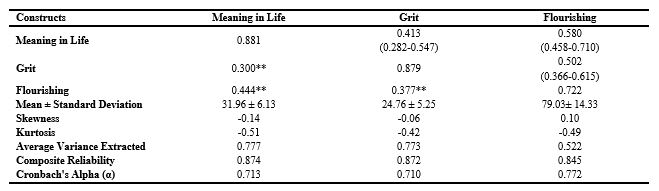
Table 1. Fornell-Larcker criterion, HTMT ratios with 95% confidence intervals, AVE values, and composite reliability and Cronbach's alpha indices
Discussion
This study aimed to explore the mediating role of grit in the relationship between meaning in life and the flourishing of students. The results showed that meaning in life predicts flourishing. This finding was consistent with the results of research by Chen et al. [29], and Morse et al. [20]. In explaining this relationship, meaning in life serves as a mechanism that not only reduces the experience of negative emotions but also enhances positive emotions such as satisfaction and happiness. As a result, it increases students' grit in the face of difficulties [29]. Meaning in life provides a clear direction for daily actions and behaviors, acting as a crucial factor in fostering motivation and hope. This, in turn, helps individuals perform more effectively and resiliently in pursuit of their goals [20].
Individuals who grasp the meaning in life are better equipped to confront challenges and navigate obstacles on their path to flourishing. They can set goals for continuous self-improvement and approach change positively by actively engaging with the problems they encounter [40]. On the other hand, the presence of meaning in life facilitates better interaction with others and enhances the quality of human social relationships [18]. Therefore, the meaning in life plays a crucial role in strengthening the key components of flourishing,
which include positive emotions, accomplishments, and relationships. The results also showed that grit could have a mediating role in the relationship between meaning in life and flourishing. This finding is consistent with numerous studies on the relationship between meaning in life and grit [41-45]. To elaborate, the presence of meaning in life leads individuals to perceive their existence as purposeful. A meaningful and purposeful life fosters greater motivation and hope, driving individuals to strive for their goals with persistence and determination [41]. Consequently, meaning in life can enhance individuals' ability to sustain themselves and endure challenges.
On the other hand, individuals with higher grit approach their goals with enthusiasm and resilience, remaining undeterred by obstacles encountered on the path to success and prosperity [44]. These individuals can maximize their abilities, leveraging their internal strengths and external opportunities to navigate toward success effectively [45]. In essence, this personality trait empowers individuals to confront challenges with determination, overcome barriers, and seize life's opportunities to flourish to the fullest extent possible.
This study had several limitations. First, the reliance on self-report methods for data collection introduces the possibility of bias and cognitive distortion among participants. Additionally, because this study utilized a correlational approach, caution must be exercised in interpreting the results causally. Therefore, it is recommended that future research employ alternative methods, such as interviews or comparative and experimental research designs.
Since this study focused on students from one university, the generalization of the findings to other groups and communities should be approached with caution. Future studies should include diverse populations and examine additional factors, such :::as char:::acter strengths, that may influence students' flourishing or serve as mediators in the relationship between meaning in life and flourishing.
Conclusion
The findings of this study suggest that meaning in life significantly contributes to the flourishing of medical students, both directly and indirectly, through the enhancement of grit.
By fostering grit and boosting motivation, meaning in life provides a solid foundation for students' academic and professional well-being. Therefore, it is essential to focus on strategies that enhance meaning in life within academic environments. One effective strategy is to design training courses and workshops that help students discover their values, goals, and personal meaning in life. Such programs can increase students' motivation and commitment to their academic and professional paths. Additionally, developing effective interventions to increase grit can help strengthen students' coping skills. Furthermore, offering specialized counseling services at universities, such as coaching sessions and motivational programs, is crucial for supporting students and fostering their resilience and grit.
At a broader level, medical education policymakers should implement strategies to promote students' personal and professional development by creating supportive, motivating, and meaningful learning environments.
Volunteering opportunities, the design of experiential learning programs, fostering positive interactions between students and faculty, and increasing student responsibility are among the measures that can effectively strengthen students' sense of meaning in life and grit. Future studies should also explore other psychological factors that may significantly influence the relationship between meaning in life, grit, and flourishing.
Longitudinal and interventional studies can also better understand the causal relationships between these variables and provide stronger evidence for developing educational and psychological interventions. Overall, investing in educational, counseling, and related support policies can enhance individual student performance and ultimately improve the quality of medical education and health services at a macro level. Therefore, professors, counselors, and policymakers in the field of medical education must implement effective strategies to strengthen these factors, enabling students to pursue their path to flourishing with increased motivation and enthusiasm.
Ethical considerations
The study reported here was approved by the ethical committee of the University of Kashan (Iran) (ethical code: IR.KASHANU.REC.1403.019).
Informed consent was obtained from all participants, and they were given the option to withdraw from the study at any time.
All collected data were treated as anonymous and confidential, and the students were assured that the data would be aggregated to protect their anonymity.
Artificial intelligence utilization for article writing
The authors declare that they did not use generative Artificial Intelligence (AI) and AI-assisted technologies in the writing process of this paper.
Acknowledgment
The auhors would like to express their sincere appreciation to the students of Kashan University of Medical Sciences (Iran) who actively participatted in this study.
Conflict of interest statement
The authors declare that they have no conflict of interest.
Author contributions
M.S. conceived and designed the study, supervised all implementation stages, performed data analysis, critically reviewed the manuscript, and approved the final version.
A.M. contributed to study conceptualization, data collection, and initial manuscript drafting.
Funding
The authors received no financial support for the research, authorship, and/or publication of this article.
Data availability statement
Data and materials could be made available upon reasonable request.
Background & Objective: Flourishing is a key indicator of psychological well-being, playing a significant role in the academic engagement and professional performance of medical students. Therefore, identifying the factors that contribute to flourishing is crucial. This study aimed to examine the relationship between the meaning in life and the flourishing of students while also examining the mediating role of grit.
Materials & Methods: This study employed a quantitative, cross-sectional correlation design and utilized structural equation modeling for analysis. The statistical population included all students of Kashan University of Medical Sciences in 2024. Two hundred ninety-one participants were selected through stratified random sampling, proportional to their respective group sizes. Rashid and Seligman's flourishing scale, Steger's meaning in life scale, and Duckworth's short grit scale were used to collect data from 14 to 24 December 2024, and the data were analyzed by structural equation modeling using Amos-22 software.
Results: Meaning in life directly predicted flourishing (ß = 0.461, p < 0.001) and grit (ß = 0.428, p < 0.001), and the relationship between grit and students' flourishing was positive and significant (ß = 0.276, p < 0.001). Additionally, the meaning in life can indirectly influence flourishing through grit (ß = 0.118, p = 0.003). Thus, it can be concluded that grit serves as a mediating factor in the relationship between meaning in life and flourishing.
Conclusion: Strengthening the meaning in life in medical students can help increase their grit in stressful academic environments and ultimately improve their flourishing and academic success. Therefore, designing educational and counseling programs to enhance the meaning in life can help empower students in terms of grit and provide a basis for the further well-being of medical students. Furthermore, future studies can investigate the role of other individual and environmental variables in this process and assess the impact of meaning-seeking interventions on students' well-being.
Introduction
The journey through university education, particularly in medical sciences, presents numerous challenges and difficulties that can impact students' psychological well-being [1]. It is crucial to prioritize the psychological well-being of medical students, as it is directly linked to their academic and professional performance [2]. Consequently, enhancing psychological well-being during their studies is a shared concern among both students and administrators within the medical education system [3]. While previous research on well-being has examined two distinct approaches—hedonic and virtue orientation—recent findings indicate that these aspects complement each other, together forming a cohesive concept of well-being known as flourishing [4]. Positive emotions, meaning in life, engagement, accomplishments, and relationships are considered the most important components of flourishing [5], which can play an effective role in improving academic performance [6], increasing psychological capital [7], and hope [8], as well as reducing anxiety and depression [9]. One significant factor that can greatly influence the flourishing of students is the meaning in life. A meaningful life implies that an individual perceives their existence as purposeful and aligned with values beyond themselves [10, 11]. According to Baumeister's theory [12], individuals are naturally inclined to seek meaning and purpose in their lives. The meaning in life serves as a powerful source of strength during challenges and adversity, helping to mitigate various psychological distress [13].
Meaning in life is closely tied to well-being; it reflects the value of existence and the purpose of an individual's life, influencing their motivation and becoming clear in their actions [14]. Research generally indicates that meaning in life is positively linked to positive emotions [15], increased grit [16], reduced anxiety in stressful situations [17], improved quality of social relationships [18], happiness [19], and overall subjective well-being [20].
Moreover, it can serve as a significant predictor of flourishing [21]. However, the effect of meaning in life on the quality of individuals' flourishing has received less attention. Understanding how meaning in life influences the flourishing of science students not only improves our grasp of this relationship but also offers valuable insights for developing effective interventions to promote student flourishing. One factor that may mediate the relationship between meaning in life and flourishing is grit. Two key aspects of grit—perseverance of effort and consistency of interest—are essential for overcoming challenges and strengthening the determination to achieve goals [22].
Research indicates that grit is not only a strong predictor of academic and professional success but also has a direct relationship with psychological well-being and individual flourishing [23, 24]. Meaning in life can serve as a powerful source of motivation, helping individuals to exhibit greater perseverance and stability in the face of challenges and difficulties [25, 26]. This grit, in turn, leads to increased psychological well-being of medical students [27].
The challenges of studying in a university environment, particularly for medical students facing heavy academic pressures, extended practical programs, and frequent exposure to various types of patients, highlight the importance of addressing their psychological well-being [1].
This study is grounded in the significant role of meaning in Seligman's theory of well-being [5], which integrates hedonic and eudaimonic well-being alongside Duckworth's theory of grit [28]. Specifically, we propose that grit serves as a mediating role in the relationship between meaning in life and well-being. The mediation hypothesis suggests that individuals who find meaning in their lives are more likely to pursue long-term goals and exhibit greater resilience when confronted with obstacles [23].
Furthermore, a strong sense of meaning in life may help students maintain their motivation and commitment to their goals, even in the face of academic and professional challenges and demands, by reinforcing their grit [29]. This, in turn, ultimately contributes to their flourishing. However, no study has examined the relationship between meaning in life and flourishing in medical students concerning the mediating role of grit.
Therefore, the present study aimed to examine the mediating role of grit in the relationship between meaning in life and flourishing in students at Kashan University of Medical Sciences.
Materials & Methods
Design and setting(s)
The present study employed a quantitative approach with a cross-sectional correlation design, utilizing structural equation modeling. It was conducted among students at Kashan University of Medical Sciences, Kashan, Iran. The questionnaires were completed from 14 to 24 December 2024.
Participants and sampling
The statistical population for this study consisted of all students at Kashan University of Medical Sciences during the 2024-2025 academic year. According to Klein's guideline [30], a minimum of 10 to 15 cases is required for each latent variable in the model, with a minimum total sample size of 200 participants. To enhance the statistical power and generalizability of the findings, a sample of 300 individuals was selected using a stratified random sampling method proportional to the sizes of the groups.
The inclusion criteria for the study included being a student at Kashan University of Medical Sciences and providing consent to participate. The exclusion criteria included incomplete completion of the questionnaires and the participant's unwillingness to continue participating in the study.
Participants completed the Steger's Meaning in Life Questionnaire, Duckworth's Grit Scale, Rashid, and Seligman's Flourishing Questionnaire, as well as demographic questions. The data were analyzed using structural equation modeling with Amos-22 software.
Tools/Instruments
Flourishing Questionnaire
This questionnaire, developed by Rashid and Seligman [31] to measure the level of individual flourishing, comprises five subscales: Positive emotions, engagement, relationships, meaning, and accomplishments, with 25 items on a five-point Likert scale. In a study conducted by Khanjani et al. [32], both the convergent and discriminant validity of the questionnaire were confirmed. The internal consistency and reliability were assessed using Cronbach's alpha coefficient, which yielded values of 0.63 for engagement, 0.66 for meaning, 0.67 for relationships, 0.44 for accomplishments, and 0.57 for positive emotion. The overall reliability for the entire questionnaire was 0.84.
Meaning in Life Questionnaire
This questionnaire, designed by Steger in 2006, comprises two subscales: Meaning presence and meaning search, each consisting of five questions. The scoring of this questionnaire is based on a five-point Likert scale from 1 = ‘completely false’ to 5 = ‘completely true’, and the scores for each component range from 5 to 25. In the study by Steger et al. [33], the convergent validity of the questionnaire was confirmed using the life satisfaction scale, and its internal consistency coefficient was found to be above 0.8 in several studies.
In the study conducted by Nasiri et al. [34], the validity of the questionnaire was confirmed through factor analysis. The reliability was assessed using Cronbach's alpha coefficient, which was found to be 0.76 for the meaning-seeking subscale, 0.74 for the other meaning-seeking subscale, and 0.86 for the total scale.
Grit Scale
Originally developed by Duckworth et al. [28] in 2007 with 12 items across two subscales: Perseverance of effort and consistency of interest. The questionnaire consists of twelve items. In 2009, Duckworth and Quinn [23] designed a shortened form of this questionnaire. While maintaining the two-component structure, this questionnaire has four fewer questions than the original questionnaire and has better psychometric indicators. In this questionnaire, four questions are considered for each of the two subscales.
The scoring method is designed on a five-point scale from 1 = ‘not at all like me’ to 5 = ‘very much like me’. The range of scores is from 8 to 40, and higher scores indicate greater stability and perseverance of the subject. The reliability of the questionnaire was assessed by Duckworth and Quinn [23]. They reported reliability scores of 0.67 for the perseverance in effort subscale, 0.64 for the consistency of interest subscale, and 0.75 for the overall questionnaire. In Iran, the construct validity of this tool was also confirmed by Sadoughi and Eskandari [35], who reported a Cronbach's alpha coefficient of 0.75.
Data collection methods
After securing approval from the Research Ethics Committee, the study's objectives and the confidentiality of the questionnaire information were thoroughly explained to the participants. Their consent to participate in the study was then obtained. The research questionnaires were provided to them in person and were completed in approximately 20 minutes.
Data analysis
To analyze the data, missing values were first assessed using Little's test [36]. Next, univariate outliers were identified through standard score analysis, while multivariate outliers were examined using the Mahalanobis distance calculation. Ultimately, out of the 300 distributed questionnaires, 291 valid and complete records were included in the analysis after removing nine defective responses.
First, the demographic characteristics of the participants were examined. Then, structural equation modeling using Amos-22 software was employed to analyze the relationships between the variables, and the model fit indices were reported.
Results
Of the total sample, 150 participants (51.5%) were female, and 141 participants (48.5%) were male. In terms of academic affiliation, 63 participants (21.6%) were from the School of Nursing and Midwifery, 38 participants (13.1%) were from the School of Paramedical Sciences, 148 participants (50.9%) were from the School of Medicine, 30 participants (10.3%) were from the School of Health, and 12 participants (4.1%) were from the School of Dentistry. The participants were in the age range of 18 to 29 years, with an average of 22.84 ± 2.30 years.
The mean, standard deviation, skewness, and kurtosis of the studied variables, as well as the correlation coefficients between the constructs, are presented in Table 1. Before conducting the structural equation modeling analysis, the validity and reliability of the instruments were assessed using the Average Variance Extracted (AVE) index, the Fornell-Larcker criterion, and the Heterotrait-Monotrait Ratio (HTMT). Additionally, composite reliability and Cronbach's alpha coefficient were evaluated. As shown in Table 1, the composite reliability for all constructs exceeds 0.7. The AVE values for all constructs exceed 0.5, indicating both convergent validity and the relevance of items within each construct [37].
Meaning in life is closely tied to well-being; it reflects the value of existence and the purpose of an individual's life, influencing their motivation and becoming clear in their actions [14]. Research generally indicates that meaning in life is positively linked to positive emotions [15], increased grit [16], reduced anxiety in stressful situations [17], improved quality of social relationships [18], happiness [19], and overall subjective well-being [20].
Moreover, it can serve as a significant predictor of flourishing [21]. However, the effect of meaning in life on the quality of individuals' flourishing has received less attention. Understanding how meaning in life influences the flourishing of science students not only improves our grasp of this relationship but also offers valuable insights for developing effective interventions to promote student flourishing. One factor that may mediate the relationship between meaning in life and flourishing is grit. Two key aspects of grit—perseverance of effort and consistency of interest—are essential for overcoming challenges and strengthening the determination to achieve goals [22].
Research indicates that grit is not only a strong predictor of academic and professional success but also has a direct relationship with psychological well-being and individual flourishing [23, 24]. Meaning in life can serve as a powerful source of motivation, helping individuals to exhibit greater perseverance and stability in the face of challenges and difficulties [25, 26]. This grit, in turn, leads to increased psychological well-being of medical students [27].
The challenges of studying in a university environment, particularly for medical students facing heavy academic pressures, extended practical programs, and frequent exposure to various types of patients, highlight the importance of addressing their psychological well-being [1].
This study is grounded in the significant role of meaning in Seligman's theory of well-being [5], which integrates hedonic and eudaimonic well-being alongside Duckworth's theory of grit [28]. Specifically, we propose that grit serves as a mediating role in the relationship between meaning in life and well-being. The mediation hypothesis suggests that individuals who find meaning in their lives are more likely to pursue long-term goals and exhibit greater resilience when confronted with obstacles [23].
Furthermore, a strong sense of meaning in life may help students maintain their motivation and commitment to their goals, even in the face of academic and professional challenges and demands, by reinforcing their grit [29]. This, in turn, ultimately contributes to their flourishing. However, no study has examined the relationship between meaning in life and flourishing in medical students concerning the mediating role of grit.
Therefore, the present study aimed to examine the mediating role of grit in the relationship between meaning in life and flourishing in students at Kashan University of Medical Sciences.
Materials & Methods
Design and setting(s)
The present study employed a quantitative approach with a cross-sectional correlation design, utilizing structural equation modeling. It was conducted among students at Kashan University of Medical Sciences, Kashan, Iran. The questionnaires were completed from 14 to 24 December 2024.
Participants and sampling
The statistical population for this study consisted of all students at Kashan University of Medical Sciences during the 2024-2025 academic year. According to Klein's guideline [30], a minimum of 10 to 15 cases is required for each latent variable in the model, with a minimum total sample size of 200 participants. To enhance the statistical power and generalizability of the findings, a sample of 300 individuals was selected using a stratified random sampling method proportional to the sizes of the groups.
The inclusion criteria for the study included being a student at Kashan University of Medical Sciences and providing consent to participate. The exclusion criteria included incomplete completion of the questionnaires and the participant's unwillingness to continue participating in the study.
Participants completed the Steger's Meaning in Life Questionnaire, Duckworth's Grit Scale, Rashid, and Seligman's Flourishing Questionnaire, as well as demographic questions. The data were analyzed using structural equation modeling with Amos-22 software.
Tools/Instruments
Flourishing Questionnaire
This questionnaire, developed by Rashid and Seligman [31] to measure the level of individual flourishing, comprises five subscales: Positive emotions, engagement, relationships, meaning, and accomplishments, with 25 items on a five-point Likert scale. In a study conducted by Khanjani et al. [32], both the convergent and discriminant validity of the questionnaire were confirmed. The internal consistency and reliability were assessed using Cronbach's alpha coefficient, which yielded values of 0.63 for engagement, 0.66 for meaning, 0.67 for relationships, 0.44 for accomplishments, and 0.57 for positive emotion. The overall reliability for the entire questionnaire was 0.84.
Meaning in Life Questionnaire
This questionnaire, designed by Steger in 2006, comprises two subscales: Meaning presence and meaning search, each consisting of five questions. The scoring of this questionnaire is based on a five-point Likert scale from 1 = ‘completely false’ to 5 = ‘completely true’, and the scores for each component range from 5 to 25. In the study by Steger et al. [33], the convergent validity of the questionnaire was confirmed using the life satisfaction scale, and its internal consistency coefficient was found to be above 0.8 in several studies.
In the study conducted by Nasiri et al. [34], the validity of the questionnaire was confirmed through factor analysis. The reliability was assessed using Cronbach's alpha coefficient, which was found to be 0.76 for the meaning-seeking subscale, 0.74 for the other meaning-seeking subscale, and 0.86 for the total scale.
Grit Scale
Originally developed by Duckworth et al. [28] in 2007 with 12 items across two subscales: Perseverance of effort and consistency of interest. The questionnaire consists of twelve items. In 2009, Duckworth and Quinn [23] designed a shortened form of this questionnaire. While maintaining the two-component structure, this questionnaire has four fewer questions than the original questionnaire and has better psychometric indicators. In this questionnaire, four questions are considered for each of the two subscales.
The scoring method is designed on a five-point scale from 1 = ‘not at all like me’ to 5 = ‘very much like me’. The range of scores is from 8 to 40, and higher scores indicate greater stability and perseverance of the subject. The reliability of the questionnaire was assessed by Duckworth and Quinn [23]. They reported reliability scores of 0.67 for the perseverance in effort subscale, 0.64 for the consistency of interest subscale, and 0.75 for the overall questionnaire. In Iran, the construct validity of this tool was also confirmed by Sadoughi and Eskandari [35], who reported a Cronbach's alpha coefficient of 0.75.
Data collection methods
After securing approval from the Research Ethics Committee, the study's objectives and the confidentiality of the questionnaire information were thoroughly explained to the participants. Their consent to participate in the study was then obtained. The research questionnaires were provided to them in person and were completed in approximately 20 minutes.
Data analysis
To analyze the data, missing values were first assessed using Little's test [36]. Next, univariate outliers were identified through standard score analysis, while multivariate outliers were examined using the Mahalanobis distance calculation. Ultimately, out of the 300 distributed questionnaires, 291 valid and complete records were included in the analysis after removing nine defective responses.
First, the demographic characteristics of the participants were examined. Then, structural equation modeling using Amos-22 software was employed to analyze the relationships between the variables, and the model fit indices were reported.
Results
Of the total sample, 150 participants (51.5%) were female, and 141 participants (48.5%) were male. In terms of academic affiliation, 63 participants (21.6%) were from the School of Nursing and Midwifery, 38 participants (13.1%) were from the School of Paramedical Sciences, 148 participants (50.9%) were from the School of Medicine, 30 participants (10.3%) were from the School of Health, and 12 participants (4.1%) were from the School of Dentistry. The participants were in the age range of 18 to 29 years, with an average of 22.84 ± 2.30 years.
The mean, standard deviation, skewness, and kurtosis of the studied variables, as well as the correlation coefficients between the constructs, are presented in Table 1. Before conducting the structural equation modeling analysis, the validity and reliability of the instruments were assessed using the Average Variance Extracted (AVE) index, the Fornell-Larcker criterion, and the Heterotrait-Monotrait Ratio (HTMT). Additionally, composite reliability and Cronbach's alpha coefficient were evaluated. As shown in Table 1, the composite reliability for all constructs exceeds 0.7. The AVE values for all constructs exceed 0.5, indicating both convergent validity and the relevance of items within each construct [37].
Table 1. Fornell-Larcker criterion, HTMT ratios with 95% confidence intervals, AVE values, and composite reliability and Cronbach's alpha indices
Note: Bold values on the diagonal represent the square root of Average Variance Extracted (AVE). Values below the diagonal (bold numbers) show correlations between constructs, and values above the diagonal show HTMT ratios with 95% confidence intervals. ** indicates p < 0.05.
Abbreviations: AVE, average variance extracted; CR, composite reliability; HTMT, heterotrait-monotrait ratio; p, probability-value.
Abbreviations: AVE, average variance extracted; CR, composite reliability; HTMT, heterotrait-monotrait ratio; p, probability-value.
Additionally, Table 1 shows that all univariate validity ratio values are below the acceptable threshold of 0.85 [30], which confirms the discriminant validity of the constructs. Based on the correlation coefficients between the research variables in Table 1, the relationship between meaning in life and student flourishing is positive and significant. Additionally, meaning in life has a significant direct relationship with grit. To estimate the effect coefficients and model fit indices, the usual maximum likelihood method was used. The normality of the data is one of the most important assumptions of this estimation method. As shown in Table 1, the absolute values of the skewness and kurtosis coefficients for the model variables fall within the range of +2 to -2. This suggests that the distribution does not significantly deviate from univariate normality. To examine the assumption of multivariate normality, the Mardia multivariate kurtosis coefficient was used in the Amos-22 software. Values greater than 5 for the Mardia coefficient indicate a non-normal distribution of the data [38].
The Mardia coefficient for the data in this study is 3.301, while its Critical Value (CR) is 2.001. Since the CR is just above the threshold of 1.96, there is a potential indication of some violation of multivariate normality, although it remains below the CR of 2.58. However, this value is not sufficiently high to invalidate the use of the maximum likelihood method. To enhance result accuracy, the bootstrap method with 2,000 resampling was employed. Also, the multicollinearity of the predictor variables was examined using the Variance Inflation Factor (VIF) and tolerance. The VIF ranged from 1.099 to 0.909, with a tolerance index of 0.909. These values indicate the absence of collinearity. Therefore, given the confirmation of the assumptions above, the results obtained from this method can be considered reliable. Next, the fit indices of the proposed model are examined, followed by the presentation of standardized coefficients for direct, indirect, and total effects, as well as the percentage of variance explained by the variables.
The fit indices of the model include the chi-square value (χ²(24) = 2.570) as the overall fit index, with a Goodness-of-Fit Index (GFI) of 0.955, a Comparative Fit Index (CFI) of 0.944, a Normed Fit Index (NFI) of 0.913, a Root Mean Square Error of Approximation (RMSEA) of 0.074, a Standardized Root Mean Square Residual Index (SRMR) of 0.046, and a p of Close Fit (PCLOSE) of 0.042.
These results indicate that the proposed model aligns well with the data. It is important to note that a chi-square value of less than 3, along with a GFI and both the adaptive and normalized fit indices exceeding 0.90, suggests a good fit for the model. In addition, the closer the approximation error index and the root mean square residual index are to zero, the better the model fits.
The results concerning the first hypothesis of the research indicate that meaning in life directly predicts flourishing (ß = 0.461, p < 0.001) and grit (ß = 0.428, p < 0.001). Additionally, the direct effect of grit on students' flourishing is both positive and significant (ß = 0.276, p < 0.001). Regarding the second hypothesis, which explores the mediating role of grit in the relationship between meaning in life and flourishing, the findings indicate that meaning in life can indirectly influence flourishing through grit (ß = 0.118, p = 0.003). Thus, it can be concluded that grit serves as a mediator in the relationship between meaning in life and flourishing (Figure 1). In total, meaning in life and grit explain 39.8% of the variance in flourishing, and other important variables outside the model explain the rest of the variance.
Variance accounted for was used to examine the mediation power of grit. The values of this index, which reflect the ratio of the indirect effect to the total effect, suggest that values between 0.2 and 0.8 indicate partial mediation. Conversely, values below 0.2 and above 0.8 indicate non-mediation and complete mediation, respectively [39]. In the present study, the variance accounted for value is 0.255, indicating that grit partially mediates the relationship between meaning in life and student flourishing.

The Mardia coefficient for the data in this study is 3.301, while its Critical Value (CR) is 2.001. Since the CR is just above the threshold of 1.96, there is a potential indication of some violation of multivariate normality, although it remains below the CR of 2.58. However, this value is not sufficiently high to invalidate the use of the maximum likelihood method. To enhance result accuracy, the bootstrap method with 2,000 resampling was employed. Also, the multicollinearity of the predictor variables was examined using the Variance Inflation Factor (VIF) and tolerance. The VIF ranged from 1.099 to 0.909, with a tolerance index of 0.909. These values indicate the absence of collinearity. Therefore, given the confirmation of the assumptions above, the results obtained from this method can be considered reliable. Next, the fit indices of the proposed model are examined, followed by the presentation of standardized coefficients for direct, indirect, and total effects, as well as the percentage of variance explained by the variables.
The fit indices of the model include the chi-square value (χ²(24) = 2.570) as the overall fit index, with a Goodness-of-Fit Index (GFI) of 0.955, a Comparative Fit Index (CFI) of 0.944, a Normed Fit Index (NFI) of 0.913, a Root Mean Square Error of Approximation (RMSEA) of 0.074, a Standardized Root Mean Square Residual Index (SRMR) of 0.046, and a p of Close Fit (PCLOSE) of 0.042.
These results indicate that the proposed model aligns well with the data. It is important to note that a chi-square value of less than 3, along with a GFI and both the adaptive and normalized fit indices exceeding 0.90, suggests a good fit for the model. In addition, the closer the approximation error index and the root mean square residual index are to zero, the better the model fits.
The results concerning the first hypothesis of the research indicate that meaning in life directly predicts flourishing (ß = 0.461, p < 0.001) and grit (ß = 0.428, p < 0.001). Additionally, the direct effect of grit on students' flourishing is both positive and significant (ß = 0.276, p < 0.001). Regarding the second hypothesis, which explores the mediating role of grit in the relationship between meaning in life and flourishing, the findings indicate that meaning in life can indirectly influence flourishing through grit (ß = 0.118, p = 0.003). Thus, it can be concluded that grit serves as a mediator in the relationship between meaning in life and flourishing (Figure 1). In total, meaning in life and grit explain 39.8% of the variance in flourishing, and other important variables outside the model explain the rest of the variance.
Variance accounted for was used to examine the mediation power of grit. The values of this index, which reflect the ratio of the indirect effect to the total effect, suggest that values between 0.2 and 0.8 indicate partial mediation. Conversely, values below 0.2 and above 0.8 indicate non-mediation and complete mediation, respectively [39]. In the present study, the variance accounted for value is 0.255, indicating that grit partially mediates the relationship between meaning in life and student flourishing.
Figure 1. Structural equation model showing the relationships between meaning in life, grit, and flourishing
Discussion
This study aimed to explore the mediating role of grit in the relationship between meaning in life and the flourishing of students. The results showed that meaning in life predicts flourishing. This finding was consistent with the results of research by Chen et al. [29], and Morse et al. [20]. In explaining this relationship, meaning in life serves as a mechanism that not only reduces the experience of negative emotions but also enhances positive emotions such as satisfaction and happiness. As a result, it increases students' grit in the face of difficulties [29]. Meaning in life provides a clear direction for daily actions and behaviors, acting as a crucial factor in fostering motivation and hope. This, in turn, helps individuals perform more effectively and resiliently in pursuit of their goals [20].
Individuals who grasp the meaning in life are better equipped to confront challenges and navigate obstacles on their path to flourishing. They can set goals for continuous self-improvement and approach change positively by actively engaging with the problems they encounter [40]. On the other hand, the presence of meaning in life facilitates better interaction with others and enhances the quality of human social relationships [18]. Therefore, the meaning in life plays a crucial role in strengthening the key components of flourishing,
which include positive emotions, accomplishments, and relationships. The results also showed that grit could have a mediating role in the relationship between meaning in life and flourishing. This finding is consistent with numerous studies on the relationship between meaning in life and grit [41-45]. To elaborate, the presence of meaning in life leads individuals to perceive their existence as purposeful. A meaningful and purposeful life fosters greater motivation and hope, driving individuals to strive for their goals with persistence and determination [41]. Consequently, meaning in life can enhance individuals' ability to sustain themselves and endure challenges.
On the other hand, individuals with higher grit approach their goals with enthusiasm and resilience, remaining undeterred by obstacles encountered on the path to success and prosperity [44]. These individuals can maximize their abilities, leveraging their internal strengths and external opportunities to navigate toward success effectively [45]. In essence, this personality trait empowers individuals to confront challenges with determination, overcome barriers, and seize life's opportunities to flourish to the fullest extent possible.
This study had several limitations. First, the reliance on self-report methods for data collection introduces the possibility of bias and cognitive distortion among participants. Additionally, because this study utilized a correlational approach, caution must be exercised in interpreting the results causally. Therefore, it is recommended that future research employ alternative methods, such as interviews or comparative and experimental research designs.
Since this study focused on students from one university, the generalization of the findings to other groups and communities should be approached with caution. Future studies should include diverse populations and examine additional factors, such :::as char:::acter strengths, that may influence students' flourishing or serve as mediators in the relationship between meaning in life and flourishing.
Conclusion
The findings of this study suggest that meaning in life significantly contributes to the flourishing of medical students, both directly and indirectly, through the enhancement of grit.
By fostering grit and boosting motivation, meaning in life provides a solid foundation for students' academic and professional well-being. Therefore, it is essential to focus on strategies that enhance meaning in life within academic environments. One effective strategy is to design training courses and workshops that help students discover their values, goals, and personal meaning in life. Such programs can increase students' motivation and commitment to their academic and professional paths. Additionally, developing effective interventions to increase grit can help strengthen students' coping skills. Furthermore, offering specialized counseling services at universities, such as coaching sessions and motivational programs, is crucial for supporting students and fostering their resilience and grit.
At a broader level, medical education policymakers should implement strategies to promote students' personal and professional development by creating supportive, motivating, and meaningful learning environments.
Volunteering opportunities, the design of experiential learning programs, fostering positive interactions between students and faculty, and increasing student responsibility are among the measures that can effectively strengthen students' sense of meaning in life and grit. Future studies should also explore other psychological factors that may significantly influence the relationship between meaning in life, grit, and flourishing.
Longitudinal and interventional studies can also better understand the causal relationships between these variables and provide stronger evidence for developing educational and psychological interventions. Overall, investing in educational, counseling, and related support policies can enhance individual student performance and ultimately improve the quality of medical education and health services at a macro level. Therefore, professors, counselors, and policymakers in the field of medical education must implement effective strategies to strengthen these factors, enabling students to pursue their path to flourishing with increased motivation and enthusiasm.
Ethical considerations
The study reported here was approved by the ethical committee of the University of Kashan (Iran) (ethical code: IR.KASHANU.REC.1403.019).
Informed consent was obtained from all participants, and they were given the option to withdraw from the study at any time.
All collected data were treated as anonymous and confidential, and the students were assured that the data would be aggregated to protect their anonymity.
Artificial intelligence utilization for article writing
The authors declare that they did not use generative Artificial Intelligence (AI) and AI-assisted technologies in the writing process of this paper.
Acknowledgment
The auhors would like to express their sincere appreciation to the students of Kashan University of Medical Sciences (Iran) who actively participatted in this study.
Conflict of interest statement
The authors declare that they have no conflict of interest.
Author contributions
M.S. conceived and designed the study, supervised all implementation stages, performed data analysis, critically reviewed the manuscript, and approved the final version.
A.M. contributed to study conceptualization, data collection, and initial manuscript drafting.
Funding
The authors received no financial support for the research, authorship, and/or publication of this article.
Data availability statement
Data and materials could be made available upon reasonable request.
Editorial: Original Research |
Subject:
Medical Education
Received: 2025/03/7 | Accepted: 2025/07/23 | Published: 2025/10/1
Received: 2025/03/7 | Accepted: 2025/07/23 | Published: 2025/10/1
Send email to the article author
| Rights and permissions | |
 |
This work is licensed under a Creative Commons Attribution-NonCommercial 4.0 International License. |