Wed, Sep 9, 2026
[Archive]
Volume 18, Issue 4 (2025)
J Med Edu Dev 2025, 18(4): 92-101 |
Back to browse issues page


Ethics code: IR.ZUMS.REC.1400.012


Download citation:
BibTeX | RIS | EndNote | Medlars | ProCite | Reference Manager | RefWorks
Send citation to:


BibTeX | RIS | EndNote | Medlars | ProCite | Reference Manager | RefWorks
Send citation to:
Eshghi A, Bahrami Nejad N, Jafari Varjoshani N. The effect of instructors' caring behavior on nursing students' professional self-concept: a descriptive-correlational study. J Med Edu Dev 2025; 18 (4) :92-101
URL: http://edujournal.zums.ac.ir/article-1-2408-en.html
URL: http://edujournal.zums.ac.ir/article-1-2408-en.html

1- Department of Medical–Surgical Nursing, School of Nursing and Midwifery, Zanjan University of Medical Sciences, Zanjan, Iran , azareshghi.m@gmail.com
2- Department of Community Health Nursing, School of Nursing and Midwifery Zanjan University of Medical Sciences, Zanjan, Iranc
3- Department of Community Health Nursing, School of Nursing and Midwifery Zanjan University of Medical Sciences, Zanjan, Iran
2- Department of Community Health Nursing, School of Nursing and Midwifery Zanjan University of Medical Sciences, Zanjan, Iranc
3- Department of Community Health Nursing, School of Nursing and Midwifery Zanjan University of Medical Sciences, Zanjan, Iran
Full-Text [PDF 506 kb]
(370 Downloads)
| Abstract (HTML) (1376 Views)
Full-Text: (84 Views)
Abstract
Background & Objective: Positive professional self-concept plays an important role in improving clinical performance and effective professional role performance among nursing students. Since this construct can be influenced by various factors, including educational interactions, the present study was designed and done to check the correlation between nursing students' professional self-concept and their perception of instructors' caring behavior.
Materials & Methods: The present study is a descriptive-correlational research done on 248 nursing students from semester 4 to semester 8 of the bachelor's degree program in Zanjan province, who were included in the study through stratified random sampling. Data were gathered using a three-part questionnaire (including demographic information, Nursing Students' Perception of Instructor Caring (NSPIC), and Nurses' Self-Concept Questionnaire (NSCQ)). Statistical analysis was done using SPSS 25 software and descriptive indices and inferential tests (independent t-test, Pearson correlation coefficient, one-way analysis of variance (ANOVA), and post-hoc tests).
Results: The mean ± Standard Deviation (SD) of nursing students' professional self-concept in Zanjan province was 229.82 ± 40.29, with the highest and lowest mean scores belonging to the communication dimension 97.39 ± 23.8 and leadership dimension 18.37 ± 21.8, respectively. The mean ± SD of instructors' caring behavior was 126.37 ± 14.70. The highest and lowest mean scores belonged to the respectful sharing dimension 26.15 ± 4.26 and controlling versus flexibility dimension 3.04 ± 4.82, respectively. The relationship between professional self-concept and the controlling versus flexibility dimension of caring behavior was inverse (r = -0.15, p = 0.019), while the relationship between professional self-concept and other dimensions of instructors' caring behavior was direct and positive. This means that with an increase in instructors' controlling versus flexibility behavior, students' professional self-concept decreases, and conversely, with an increase in other dimensions of caring behavior, students' professional self-concept increases.
Conclusion: Based on the findings, students have moderate professional self-concept and are far from the desired level. On the other hand, considering the relationship between professional self-concept and instructors' caring behavior, it is suggested that educational workshops be held to improve instructors' caring behavior. Furthermore, looking into other factors related to professional self-concept in nursing students is also recommended.
In this regard, Kim et al. [13] showed that the experience of the first clinical practice had a negative effect on professional self-concept, while perceived interpersonal relationships with nursing instructors had a positive relationship with professional self-concept. Nursing education is a purposeful process that, through the transfer of values, beliefs, attitudes, and professional principles to students, provides the foundation for forming professional personality and showing desirable behaviors in them. This process plays a fundamental role in preparing students to accept professional responsibilities in clinical environments [14]. Educational instructors and their caring behavior are among the most important factors in the educational process [15] and play an important role in students' professional development [16].
he concept of nursing students’ perception of instructors’ caring behavior has been defined as “nursing students’ awareness of the mutual relationship between themselves and the instructor, which enables them to seek meaning, wholeness, and growth as professional nurses” [17]. Ludin and colleagues (2016) emphasized the importance of instructors’ interpersonal skills, particularly the ability to communicate effectively and respectfully with nursing students in clinical settings. From their perspective, professional knowledge and competence, role modeling, willingness, and the ability to provide constructive feedback are among the key components of effective instructors’ caring behavior [18].
A positive learning environment promotes and makes easier the development of caring behaviors, teamwork, self-efficacy, competence, and academic achievement among students [19]. Moreover, positive caring interactions from instructors boost students’ self-confidence, strengthen their positive attitude toward the profession, reduce anxiety, make easier learning of roles and responsibilities of a nurse, improve interpersonal relationships, bridge the gap between theory and practice, and increase motivation in clinical settings [20, 21]. In contrast, inappropriate instructor responses to students’ mistakes and unfair evaluations can lead to feelings of hopelessness and passivity among nursing students. The lack of clearly stated performance expectations, insufficient feedback, and poor role modeling by instructors have been identified as major issues in clinical education [22].
Based on a review of the literature, the factors influencing professional self-concept have been studied from various perspectives.
One of the factors that appears to affect the status of professional self-concept is instructors’ caring behavior. Since no study has been done on the relationship between nursing students’ professional self-concept and their perception of instructors’ caring behavior, the present study was created with the aim of determining the relationship between nursing students’ professional self-concept and their perception of instructors’ caring behavior.
Materials & Methods
Design and setting(s)
This descriptive-correlational study was conducted at Zanjan University of Medical Sciences and the Islamic Azad Universities of Zanjan and Abhar from April 14, 2021 to June 21, 2021.
Participants and sampling
The study population included all fourth- to eighth-semester nursing students in Zanjan Province, encompassing students from public nursing schools in Zanjan and Abhar, as well as the Islamic Azad nursing schools in the same cities. The sample size was estimated using the following formula:
n = [N × Z²(α/2) × p(1 - p)] / [e² × (N - 1) + Z²(α/2) × p(1 - p)]
where 'e' is the margin of error (5%), 'p' is the estimated proportion (0.5), 'N' is population size, and Zα/2 is the z value for a 95% confidence level (1.96).
Based on this calculation, the required sample size was estimated to be 226. Considering a 10% attrition rate, 248 nursing students were selected using stratified random sampling.
Academic semesters were considered as strata, and participants were randomly selected from each stratum in proportion to its size. The students participating in the study were from semester 4 to 8. Then, the semesters were considered as stratum and the number of samples from each stratum was selected in proportion to the size of that stratum (proportionality) and by simple random sampling.
For example, 26 samples were selected from the 4th semester nursing students of Zanjan, who numbered 57, and 22 were selected from the 8th semester students, who numbered 49. In the end, 13 students who did not complete the questionnaire were excluded from the study. Guest students, transfer students, and those admitted through the nursing assistant quota were not included in the study. Data collection was done between April and the end of June 2021.
Tools/Instruments
We used three different questionnaires tools to collect data for this study.
The first tool gathered demographic information about participants. We also used two questionnaires: The Nursing Students' Perception of Instructor Caring (NSPIC) and the Nurses' Self-Concept Questionnaire (NSCQ). For demographic information, we looked at several factors including participants' age, gender, which semester they were in, their cumulative GPA, whether they were native students, their marital status, and whether they had jobs. Wade and Kasper created the NSPIC questionnaire back in 2006. This questionnaire has 31 questions that are divided into five main areas. The first area focuses on confidence through caring and has 11 questions. The second area looks at creating a helpful learning environment with 10 questions. Three questions examine how much students value the meaning of life. Four questions explore the balance between control and flexibility. Finally, three questions address respectful sharing. Students answer each question using a scale from 1 to 6, where 1 means they strongly disagree and 6 means they strongly agree. When we add up all the scores, they can range anywhere from 31 to 186. Higher total scores show that students have a more positive view of how caring their instructors are. Since the number of items in each domain differs, to allow for comparison of scores between domains, both the mean raw scores and the scores on a 1-to-6 scale for each domain were calculated.
The NSPIC has been used in numerous studies both within Iran [15] and internationally [23, 24], with its validity and reliability checked. In Wade and Kasper's study, the reliability was reported to be 0.97 using Cronbach's alpha [17]. In the study by Zamanzadeh et al., reliability was evaluated using the test-retest method, with a two-week interval and a Pearson correlation coefficient of 0.94 calculated on a sample of 10 nursing students.
The face validity of the tool was also confirmed through a survey of 10 faculty members from the School of Nursing at Tabriz University [15]. In the current study, the face validity of the questionnaire was checked by sending it to specialists (10 faculty members from the School of Nursing and Midwifery in Zanjan), and the reliability of the instrument was estimated using Cronbach's alpha, giving a value of 0.84. Kevin built the Nurses' Self-Concept Questionnaire (NSCQ) in 2001. This questionnaire contains 36 questions spread across six different areas.
Questions 1 through 6 focus on self-esteem. Questions 7 to 12 examine care. Knowledge is covered in questions 13 to 18. Questions 19 through 24 look at relationships with staff members. Communication is addressed in questions 25 to 30. Leadership is explored in the final questions, 31 through 36. All questions are written in a positive way, and participants answer using a scale from 1 to 8. The lowest
possible total score is 36, while the highest is 288. Higher scores show that nurses have a better professional self-concept. Researchers have used this questionnaire in studies both inside Iran and in other countries around the world.
Multiple studies have confirmed that this questionnaire is both valid and reliable. The internal consistency of the tool was checked by Kevin in 2008, and Cronbach’s alpha ranged between 0.82 and 0.92 for the different dimensions of the questionnaire [9].
In Iran, the questionnaire was first translated in a study by Badiyeh-Peyma et al. in 2013, and the reliability of the Persian version of the NSCQ was determined using Spearman-Brown’s correlation coefficient and Cronbach’s alpha, with values of 0.84 and 0.97, respectively.
The validity of the Persian version of the NSCQ was also checked using Pearson’s correlation coefficient among its subscales and exploratory factor analysis, both of which confirmed its validity [5].
In the current study, the face validity of the questionnaire was confirmed by sending it to specialists (10 faculty members from the School of Nursing and Midwifery at Zanjan University), and the reliability of the instrument was estimated using Cronbach’s alpha, giving a value of 0.93.
Data collection methods
Data collection started after obtaining the ethics code. Due to the prevalence of COVID-19 and the students' absence from the university, an electronic questionnaire link, along with an explanation of the study procedure, objectives, and confidentiality of the information, was shared with the students via virtual platforms (WhatsApp or Telegram).
For students who were present during the sampling period due to their internships or clinical placements in hospitals, data was gathered in person.
Data analysis
Statistical analysis was done using SPSS software version 25.
To assess the normality of the distributions of variables, skewness and kurtosis coefficients were calculated. Given the normal distribution of the data, parametric tests were applied.
Descriptive statistics (absolute and relative frequency, mean, and standard deviation) and inferential statistics (independent t-test, Pearson correlation coefficient, one-way ANOVA, and Tukey's post hoc test were used for data analysis. A p < 0.05 was considered statistically significant.
Results
The majority of participants were in the age group of under 22 years (57.9%) and were female (54%). Most of the students were in their 4th semester, and 66.4% of them had a GPA higher than 16 (Table 1).
Table 1. Frequency distribution of demographic variables among nursing students
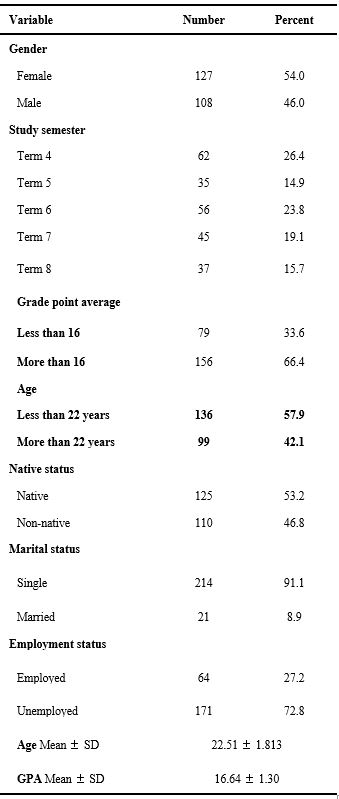
Table 2. Mean and standard deviation of nursing students' professional self-concept scores (1) and nursing students' perceptions of instructors' caring behavior (2)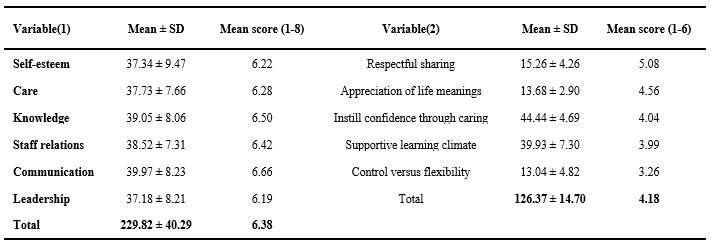
Abbreviations: SD, standard deviation; CI, confidence interval.
Table 3. Correlation between dimensions of nursing students' professional self-concept and perceptions of instructors' caring behavior
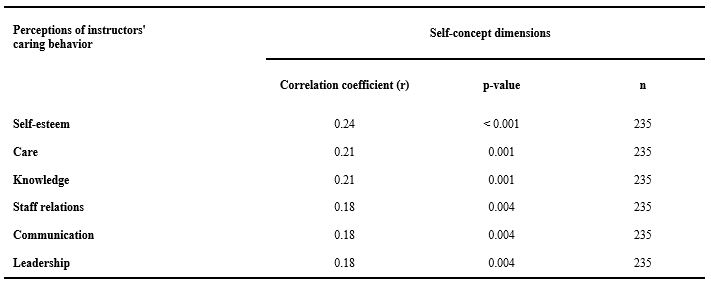
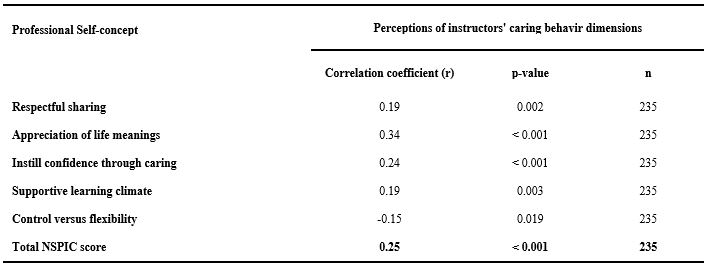
Table 4. Correlation between dimensions of nursing students' perceptions of instructors' caring behavior and professional self-concept
Discussion
The present study aimed to investigate the relationship between nursing students' professional self-concept in Zanjan province and their perception of instructors' caring behaviors. The results of the data analysis revealed a significant relationship between the students' professional self-concept and various dimensions of instructors' caring behaviors. With the exception of the dimension "control versus flexibility," which showed a negative relationship with professional self-concept, other dimensions of caring behavior were positively correlated with professional self-concept.
Notably, the inverse relationship between the dimension "control versus flexibility" in instructors' caring behaviors and nursing students' professional self-concept can be explained by theoretical reasons and recent research evidence. Strict and inflexible behavioral styles, especially in clinical educational settings, can hinder the development of independence, creativity, and self-confidence in students, ultimately weakening their professional self-concept [25]. In such circumstances, students have fewer opportunities to experience professional responsibility, trial and error, decision-making, making the clinical environment appear threatening [23]. In contrast, instructors who adopt a supportive, collaborative, and flexible approach in their interactions with students create a sense of psychological safety and provide a platform for gradual growth, thereby fostering an enhanced professional image and increased self-efficacy in students [26]. Therefore, balancing control and flexibility in instructors' behavior plays a key role in fostering a desirable professional self-concept in nursing students. The mean overall score of professional self-concept among students in this study was 22.29 ± 29.40 out of a maximum of 386, which is considered above average and shows a relatively good level of professional self-concept among the students. However, there is still a gap towards reaching an ideal status. The highest score among the dimensions of professional self-concept was found in the "communication" dimension. This finding is consistent with recent studies. For example, in a study conducted in 2023, nursing students achieved the highest score in the communication dimension, highlighting the importance and development of this skill in clinical environments [27]. One of the main reasons for this is the team-based nature of clinical education in nursing. Nursing students are continuously interacting in clinical settings with patients, their families, clinical nurses, instructors, and other members of the healthcare team. These frequent interactions provide multiple opportunities to practice and improve communication skills, which in turn strengthens the professional self-concept in this dimension [23]. Additionally, another study reported a strong link between communication skills and professional self-concept in nursing students. This study found that students with stronger communication skills also experienced a more positive professional self-concept [28]. On the other hand, the lowest score was observed in the "leadership" dimension, which could be explained by the lack of formal leadership training in the nursing undergraduate curriculum and the limited opportunities for leadership practice. This finding matches the results of Wang et al. [4], which showed that the leadership dimension had the lowest average score among the professional self-concept dimensions.
The relatively low score of students in the "self-esteem" dimension may be due to several factors such as low self-confidence, ineffective interaction with instructors, feelings of insignificance, and the challenging professional conditions in clinical environments [29]. These findings match with previous studies done in Iran, where professional self-concept among students was reported to be at an average or low level. In the studies by Jahromi et al. [3] and Poorgholami et al. [6], similar to the present study, the highest score was related to the "communication" dimension, while the lowest score was related to "self-esteem." In contrast, studies done outside of Iran, such as Ford (2015), have shown that students have achieved higher scores in the self-esteem dimension [30]. In the study by Wang et al. [4], the "leadership" dimension also had the lowest average score, which matches the findings of the present study, although in their research, the highest score was related to the "relationship with colleagues" dimension. It seems that the relatively low level of professional self-concept among Iranian students is influenced by weaknesses in the nursing education and management system, as nursing education, through the transmission of values, beliefs, and professional principles, plays a key role in strengthening self-concept [11]. Furthermore, factors like the social image of the nursing profession, its social acceptance, and cultural values also play a role in shaping self-concept [9, 10]. It seems that after the COVID-19 pandemic, the social status of the nursing profession in Iran has improved, which could be one of the reasons for the relatively high professional self-concept observed in the present study.
Regarding the instructors' caring behaviors, the mean perceived score by students was 126.37 ± 14.70 out of a maximum of 184, indicating a relatively positive evaluation of the instructors' behaviors. Among the different dimensions of caring behavior, the "respectful participation" dimension received the highest score, while the "control versus flexibility" dimension received the lowest. These results are consistent with the findings of Zamanzadeh et al. [15]. Furthermore, a study in 2023 showed that nursing instructors, by providing psychological support, fostering self-confidence, and maintaining a warm and friendly attitude, play a significant role in the professional development of students [31]. Studies such as the one by Labrague et al. [23] conducted in four different countries reported a lower average of caring behaviors compared to the present study, while the study by Taylan et al. in Turkey [32] reported a more favorable status of caring behaviors than the present findings. The differences in study results may be due to several factors, including students' personality traits, educational background, cultural and social conditions, and variations in nursing education systems.
The statistical analysis also revealed a positive and significant connection between the overall average of perceived instructors' caring behaviors and all dimensions of professional self-concept (p < 0.05, r = 0.25). In other words, the more nursing students see their instructors' caring behaviors, the higher their professional self-concept.
The only exception in this regard was the "control versus flexibility" dimension, which showed a negative connection with professional self-concept. This finding suggests that too much control by instructors may weaken students' professional self-concept [33]. Therefore, instructors should find a balance between control and flexibility in their interactions with students to encourage the growth of self-confidence and professional skills in students [34].
A review of the literature showed that no independent studies have been done in Iran on the relationship between nursing students' professional self-concept and their perceptions of instructors' caring behaviors. Therefore, the present study fills this gap and shows that instructors' caring behaviors can affect the improvement of students' professional self-concept, even if this influence is at a moderate level.
Due to the closure of universities during the COVID-19 pandemic, studying instructors' caring behaviors has been difficult and is considered a limitation of the present study. On the other hand, the COVID-19 situation may have had a dual effect on professional self-concept: on one hand, it may have improved the professional self-concept by raising the social status of nurses, while on the other hand, by limiting students' direct professional experiences, it may have slowed its natural growth. These aspects have been less discussed in current studies and need further investigation.
Conclusion
The results of data analysis showed that there was a connection between nursing students' professional self-concept and instructors' caring behaviors. Although this connection was moderate, the research hypothesis about the relationship between nursing students' professional self-concept and their views on instructors' caring behaviors was supported. One of the main limits of this study was the data collection done during the post-COVID-19 period, along with the restrictions caused by the COVID-19 pandemic. During this time, many in-person activities in educational and clinical settings were either limited or stopped, and face-to-face interactions between students and instructors were reduced. These conditions may have affected how students saw instructors' caring behaviors and how their professional self-concept was formed or weakened. Since clinical education during this period was held mostly online or in limited sessions, students had fewer chances for direct experiences, deep interactions, and learning by doing. This could have affected how accurately they viewed instructors' behaviors. Considering the limits of the present study, it is suggested that future studies be done when educational and clinical training happen under normal conditions, without health crises, to allow for a more accurate and experience-based check of students' views.
Long-term studies should be designed and done to track changes in nursing students' professional self-concept throughout their studies, especially during crises like pandemics. Additionally, it would be helpful to explore whether online interactions with instructors (such as through online classes or distance learning) have the same or different impact compared to in-person interactions in shaping students' professional self-concept. Another recommendation is to conduct a comparison study to look at the differences between students who were trained during the COVID-19 pandemic and those trained afterward, in terms of their views on instructors' caring behaviors and their professional self-concept.
Ethical considerations
This article is derived from a Master's thesis in Nursing, which was approved by the Ethics Committee of Zanjan University of Medical Sciences (IR.ZUMS.REC.1400.012). All procedures were conducted in accordance with the guidelines of the Helsinki Declaration. Before completing the questionnaire, all participants were informed about the objectives of the study.
Additionally, anonymity of the participants' identities and obtaining informed consent for participation were ensured for all participants in the study.
Artificial intelligence utilization for article writing
This article was not prepared using any artificial intelligence tools.
Acknowledgment
The authors wish to express their sincere gratitude to all those who participated in this research.
Conflict of interest statement
The authors declare that they have no conflict of interest.
Author contributions
AE, NBN, and NJV were responsible for the conception and design of the study and supervised the content design.
AE was in charge of the implementation and data collection. It is worth noting that AE and NBN performed the statistical analysis of the data. All authors read and approved the manuscript and contributed to its preparation.
Funding
This research was supported by the Research Vice Chancellor of Zanjan University of Medical Sciences under Grant No. 186-25-19.
Data availability statement
The dataset used and/or analyzed during the current study is available from the corresponding author upon reasonable request. For further data access, please contact the corresponding author.
Background & Objective: Positive professional self-concept plays an important role in improving clinical performance and effective professional role performance among nursing students. Since this construct can be influenced by various factors, including educational interactions, the present study was designed and done to check the correlation between nursing students' professional self-concept and their perception of instructors' caring behavior.
Materials & Methods: The present study is a descriptive-correlational research done on 248 nursing students from semester 4 to semester 8 of the bachelor's degree program in Zanjan province, who were included in the study through stratified random sampling. Data were gathered using a three-part questionnaire (including demographic information, Nursing Students' Perception of Instructor Caring (NSPIC), and Nurses' Self-Concept Questionnaire (NSCQ)). Statistical analysis was done using SPSS 25 software and descriptive indices and inferential tests (independent t-test, Pearson correlation coefficient, one-way analysis of variance (ANOVA), and post-hoc tests).
Results: The mean ± Standard Deviation (SD) of nursing students' professional self-concept in Zanjan province was 229.82 ± 40.29, with the highest and lowest mean scores belonging to the communication dimension 97.39 ± 23.8 and leadership dimension 18.37 ± 21.8, respectively. The mean ± SD of instructors' caring behavior was 126.37 ± 14.70. The highest and lowest mean scores belonged to the respectful sharing dimension 26.15 ± 4.26 and controlling versus flexibility dimension 3.04 ± 4.82, respectively. The relationship between professional self-concept and the controlling versus flexibility dimension of caring behavior was inverse (r = -0.15, p = 0.019), while the relationship between professional self-concept and other dimensions of instructors' caring behavior was direct and positive. This means that with an increase in instructors' controlling versus flexibility behavior, students' professional self-concept decreases, and conversely, with an increase in other dimensions of caring behavior, students' professional self-concept increases.
Conclusion: Based on the findings, students have moderate professional self-concept and are far from the desired level. On the other hand, considering the relationship between professional self-concept and instructors' caring behavior, it is suggested that educational workshops be held to improve instructors' caring behavior. Furthermore, looking into other factors related to professional self-concept in nursing students is also recommended.
Introduction
Self-concept is defined as the realistic perception of oneself and affects having good feelings about oneself, valuing the meanings of life, and progress. Humans are not born with self-concept. Each person's self-concept is derived from the image seen by society and emerges as a result of social interactions [1]. Professional self-concept refers to the identification of an individual's professional characteristics, standards, and abilities, as well as their getting and practice [2]. Professional self-concept as a motivational factor leads to greater insight, sense of responsibility, and professional development [3]. Nurses who have high professional self-concept, in addition to success in doing their professional role, have job satisfaction and a greater tendency to maintain their job [4]. Furthermore, nurses with positive self-concept follow ethical principles more in caring for their patients and have more effective interprofessional relationships [5]. In contrast, low professional self-concept in nursing is considered an obstacle to independent and effective performance, authority, and initiative [6]. Based on Wang's study [4], positive professional self-concept can reduce the level of academic burnout. Literature review shows that multiple factors affect professional self-concept in nurses. In this regard, Hojat et al. [7] in their study showed that nurses' professional self-concept is affected by their spiritual intelligence, job satisfaction, and reduction of job stress. In a study done by Çöplü et al. in Turkey [8], the results pointed out that social perception of the profession, shortage of human resources, equipment, and lack of adequate job security are factors affecting professional self-concept. Professional self-concept is one of the main concepts in education, management, and clinical planning for the advancement of the nursing profession [6]. Knowledge, values, professional skills, sense of worthiness and personal competence, performance, and motivation are the main factors in forming a healthy professional self-concept [9, 10]. In recent years, numerous studies have been done regarding factors affecting professional self-concept in nursing students. The results of Chang's study [11] showed that factors such as fostering critical thinking, sense of belonging, and university culture can continuously promote nursing students' professional self-concept. Of course, factors such as economic level and the reason for choosing the field also have important effects on professional self-concept [12]. The development of professional self-concept begins when students start nursing education [9, 10]. Clinical educational environments and clinical instructors are among the factors influencing nursing students' professional self-concept.In this regard, Kim et al. [13] showed that the experience of the first clinical practice had a negative effect on professional self-concept, while perceived interpersonal relationships with nursing instructors had a positive relationship with professional self-concept. Nursing education is a purposeful process that, through the transfer of values, beliefs, attitudes, and professional principles to students, provides the foundation for forming professional personality and showing desirable behaviors in them. This process plays a fundamental role in preparing students to accept professional responsibilities in clinical environments [14]. Educational instructors and their caring behavior are among the most important factors in the educational process [15] and play an important role in students' professional development [16].
he concept of nursing students’ perception of instructors’ caring behavior has been defined as “nursing students’ awareness of the mutual relationship between themselves and the instructor, which enables them to seek meaning, wholeness, and growth as professional nurses” [17]. Ludin and colleagues (2016) emphasized the importance of instructors’ interpersonal skills, particularly the ability to communicate effectively and respectfully with nursing students in clinical settings. From their perspective, professional knowledge and competence, role modeling, willingness, and the ability to provide constructive feedback are among the key components of effective instructors’ caring behavior [18].
A positive learning environment promotes and makes easier the development of caring behaviors, teamwork, self-efficacy, competence, and academic achievement among students [19]. Moreover, positive caring interactions from instructors boost students’ self-confidence, strengthen their positive attitude toward the profession, reduce anxiety, make easier learning of roles and responsibilities of a nurse, improve interpersonal relationships, bridge the gap between theory and practice, and increase motivation in clinical settings [20, 21]. In contrast, inappropriate instructor responses to students’ mistakes and unfair evaluations can lead to feelings of hopelessness and passivity among nursing students. The lack of clearly stated performance expectations, insufficient feedback, and poor role modeling by instructors have been identified as major issues in clinical education [22].
Based on a review of the literature, the factors influencing professional self-concept have been studied from various perspectives.
One of the factors that appears to affect the status of professional self-concept is instructors’ caring behavior. Since no study has been done on the relationship between nursing students’ professional self-concept and their perception of instructors’ caring behavior, the present study was created with the aim of determining the relationship between nursing students’ professional self-concept and their perception of instructors’ caring behavior.
Materials & Methods
Design and setting(s)
This descriptive-correlational study was conducted at Zanjan University of Medical Sciences and the Islamic Azad Universities of Zanjan and Abhar from April 14, 2021 to June 21, 2021.
Participants and sampling
The study population included all fourth- to eighth-semester nursing students in Zanjan Province, encompassing students from public nursing schools in Zanjan and Abhar, as well as the Islamic Azad nursing schools in the same cities. The sample size was estimated using the following formula:
n = [N × Z²(α/2) × p(1 - p)] / [e² × (N - 1) + Z²(α/2) × p(1 - p)]
where 'e' is the margin of error (5%), 'p' is the estimated proportion (0.5), 'N' is population size, and Zα/2 is the z value for a 95% confidence level (1.96).
Based on this calculation, the required sample size was estimated to be 226. Considering a 10% attrition rate, 248 nursing students were selected using stratified random sampling.
Academic semesters were considered as strata, and participants were randomly selected from each stratum in proportion to its size. The students participating in the study were from semester 4 to 8. Then, the semesters were considered as stratum and the number of samples from each stratum was selected in proportion to the size of that stratum (proportionality) and by simple random sampling.
For example, 26 samples were selected from the 4th semester nursing students of Zanjan, who numbered 57, and 22 were selected from the 8th semester students, who numbered 49. In the end, 13 students who did not complete the questionnaire were excluded from the study. Guest students, transfer students, and those admitted through the nursing assistant quota were not included in the study. Data collection was done between April and the end of June 2021.
Tools/Instruments
We used three different questionnaires tools to collect data for this study.
The first tool gathered demographic information about participants. We also used two questionnaires: The Nursing Students' Perception of Instructor Caring (NSPIC) and the Nurses' Self-Concept Questionnaire (NSCQ). For demographic information, we looked at several factors including participants' age, gender, which semester they were in, their cumulative GPA, whether they were native students, their marital status, and whether they had jobs. Wade and Kasper created the NSPIC questionnaire back in 2006. This questionnaire has 31 questions that are divided into five main areas. The first area focuses on confidence through caring and has 11 questions. The second area looks at creating a helpful learning environment with 10 questions. Three questions examine how much students value the meaning of life. Four questions explore the balance between control and flexibility. Finally, three questions address respectful sharing. Students answer each question using a scale from 1 to 6, where 1 means they strongly disagree and 6 means they strongly agree. When we add up all the scores, they can range anywhere from 31 to 186. Higher total scores show that students have a more positive view of how caring their instructors are. Since the number of items in each domain differs, to allow for comparison of scores between domains, both the mean raw scores and the scores on a 1-to-6 scale for each domain were calculated.
The NSPIC has been used in numerous studies both within Iran [15] and internationally [23, 24], with its validity and reliability checked. In Wade and Kasper's study, the reliability was reported to be 0.97 using Cronbach's alpha [17]. In the study by Zamanzadeh et al., reliability was evaluated using the test-retest method, with a two-week interval and a Pearson correlation coefficient of 0.94 calculated on a sample of 10 nursing students.
The face validity of the tool was also confirmed through a survey of 10 faculty members from the School of Nursing at Tabriz University [15]. In the current study, the face validity of the questionnaire was checked by sending it to specialists (10 faculty members from the School of Nursing and Midwifery in Zanjan), and the reliability of the instrument was estimated using Cronbach's alpha, giving a value of 0.84. Kevin built the Nurses' Self-Concept Questionnaire (NSCQ) in 2001. This questionnaire contains 36 questions spread across six different areas.
Questions 1 through 6 focus on self-esteem. Questions 7 to 12 examine care. Knowledge is covered in questions 13 to 18. Questions 19 through 24 look at relationships with staff members. Communication is addressed in questions 25 to 30. Leadership is explored in the final questions, 31 through 36. All questions are written in a positive way, and participants answer using a scale from 1 to 8. The lowest
possible total score is 36, while the highest is 288. Higher scores show that nurses have a better professional self-concept. Researchers have used this questionnaire in studies both inside Iran and in other countries around the world.
Multiple studies have confirmed that this questionnaire is both valid and reliable. The internal consistency of the tool was checked by Kevin in 2008, and Cronbach’s alpha ranged between 0.82 and 0.92 for the different dimensions of the questionnaire [9].
In Iran, the questionnaire was first translated in a study by Badiyeh-Peyma et al. in 2013, and the reliability of the Persian version of the NSCQ was determined using Spearman-Brown’s correlation coefficient and Cronbach’s alpha, with values of 0.84 and 0.97, respectively.
The validity of the Persian version of the NSCQ was also checked using Pearson’s correlation coefficient among its subscales and exploratory factor analysis, both of which confirmed its validity [5].
In the current study, the face validity of the questionnaire was confirmed by sending it to specialists (10 faculty members from the School of Nursing and Midwifery at Zanjan University), and the reliability of the instrument was estimated using Cronbach’s alpha, giving a value of 0.93.
Data collection methods
Data collection started after obtaining the ethics code. Due to the prevalence of COVID-19 and the students' absence from the university, an electronic questionnaire link, along with an explanation of the study procedure, objectives, and confidentiality of the information, was shared with the students via virtual platforms (WhatsApp or Telegram).
For students who were present during the sampling period due to their internships or clinical placements in hospitals, data was gathered in person.
Data analysis
Statistical analysis was done using SPSS software version 25.
To assess the normality of the distributions of variables, skewness and kurtosis coefficients were calculated. Given the normal distribution of the data, parametric tests were applied.
Descriptive statistics (absolute and relative frequency, mean, and standard deviation) and inferential statistics (independent t-test, Pearson correlation coefficient, one-way ANOVA, and Tukey's post hoc test were used for data analysis. A p < 0.05 was considered statistically significant.
Results
The majority of participants were in the age group of under 22 years (57.9%) and were female (54%). Most of the students were in their 4th semester, and 66.4% of them had a GPA higher than 16 (Table 1).
Table 1. Frequency distribution of demographic variables among nursing students
Abbreviations: GPA, grade point average; SD, standard deviation.
Based on the study findings, the average professional self-concept score of nursing students was 229.82 ± 40.29. The highest score was for the "communication" dimension (39.97 ± 8.23), while the lowest score was for the "leadership" dimension (37.18 ± 8.21). As for instructors' caring behaviors, the average score was 126.37 ±. 14.70. The highest score was in the "respectful involvement" dimension (15.26± 4.26) and the lowest score was in the "control vs. flexibility" dimension (13.04± 4.82) (Tables 2).
Table 2. Mean and standard deviation of nursing students' professional self-concept scores (1) and nursing students' perceptions of instructors' caring behavior (2)
Abbreviations: SD, standard deviation; CI, confidence interval.
Regarding the relationship between the dimensions of professional self-concept and the total score of instructors' caring behaviors, the results indicated that all dimensions of professional self-concept, including self-esteem, care, knowledge, staff relations, communication, and leadership, had a direct relationship with instructors' caring behaviors. This means that improving instructors' caring behaviors leads to an improvement in these dimensions of professional self-concept (Table 3).
Table 3. Correlation between dimensions of nursing students' professional self-concept and perceptions of instructors' caring behavior
Note: Pearson correlation coefficient was used to analyze the relationship between professional self-concept dimensions and perceptions of instructors' caring behavior.
Abbreviations: r, Pearson correlation coefficient; n, number of participants; p, probability value.
Abbreviations: r, Pearson correlation coefficient; n, number of participants; p, probability value.
The results showed that, except for the "control vs. flexibility" dimension, all other aspects of instructors' caring behaviors were directly linked to students' professional self-concept. A negative relationship was found between professional self-concept and the "control vs. flexibility" dimension. Specifically, as instructors' control behaviors increased and their flexibility decreased, students' professional self-concept decreased. On the other hand, when other caring behaviors increased, students' professional self-concept improved. The correlation between students' overall professional self-concept score and instructors' caring behaviors was direct and statistically significant (p < 0.001). With a correlation value of (r = 0.25), this suggests that improving instructors' caring behaviors can enhance students' professional self-concept (Table 4). Since the sample size in the current study is relatively large, there is a possibility that statistical significance may be observed merely due to the sample size. In studies with large samples, even weak relationships can become statistically significant, but this does not necessarily imply clinical or theoretical importance. Therefore, the interpretation of the results should be done with caution and consideration of the actual effect size.
Table 4. Correlation between dimensions of nursing students' perceptions of instructors' caring behavior and professional self-concept
Note: Pearson correlation coefficient was used to analyze the relationship between dimensions of instructors' caring behavior and total professional self-concept scores.
Abbreviations: r, Pearson correlation coefficient; n, number of participants; p, probability value.
Abbreviations: r, Pearson correlation coefficient; n, number of participants; p, probability value.
Discussion
The present study aimed to investigate the relationship between nursing students' professional self-concept in Zanjan province and their perception of instructors' caring behaviors. The results of the data analysis revealed a significant relationship between the students' professional self-concept and various dimensions of instructors' caring behaviors. With the exception of the dimension "control versus flexibility," which showed a negative relationship with professional self-concept, other dimensions of caring behavior were positively correlated with professional self-concept.
Notably, the inverse relationship between the dimension "control versus flexibility" in instructors' caring behaviors and nursing students' professional self-concept can be explained by theoretical reasons and recent research evidence. Strict and inflexible behavioral styles, especially in clinical educational settings, can hinder the development of independence, creativity, and self-confidence in students, ultimately weakening their professional self-concept [25]. In such circumstances, students have fewer opportunities to experience professional responsibility, trial and error, decision-making, making the clinical environment appear threatening [23]. In contrast, instructors who adopt a supportive, collaborative, and flexible approach in their interactions with students create a sense of psychological safety and provide a platform for gradual growth, thereby fostering an enhanced professional image and increased self-efficacy in students [26]. Therefore, balancing control and flexibility in instructors' behavior plays a key role in fostering a desirable professional self-concept in nursing students. The mean overall score of professional self-concept among students in this study was 22.29 ± 29.40 out of a maximum of 386, which is considered above average and shows a relatively good level of professional self-concept among the students. However, there is still a gap towards reaching an ideal status. The highest score among the dimensions of professional self-concept was found in the "communication" dimension. This finding is consistent with recent studies. For example, in a study conducted in 2023, nursing students achieved the highest score in the communication dimension, highlighting the importance and development of this skill in clinical environments [27]. One of the main reasons for this is the team-based nature of clinical education in nursing. Nursing students are continuously interacting in clinical settings with patients, their families, clinical nurses, instructors, and other members of the healthcare team. These frequent interactions provide multiple opportunities to practice and improve communication skills, which in turn strengthens the professional self-concept in this dimension [23]. Additionally, another study reported a strong link between communication skills and professional self-concept in nursing students. This study found that students with stronger communication skills also experienced a more positive professional self-concept [28]. On the other hand, the lowest score was observed in the "leadership" dimension, which could be explained by the lack of formal leadership training in the nursing undergraduate curriculum and the limited opportunities for leadership practice. This finding matches the results of Wang et al. [4], which showed that the leadership dimension had the lowest average score among the professional self-concept dimensions.
The relatively low score of students in the "self-esteem" dimension may be due to several factors such as low self-confidence, ineffective interaction with instructors, feelings of insignificance, and the challenging professional conditions in clinical environments [29]. These findings match with previous studies done in Iran, where professional self-concept among students was reported to be at an average or low level. In the studies by Jahromi et al. [3] and Poorgholami et al. [6], similar to the present study, the highest score was related to the "communication" dimension, while the lowest score was related to "self-esteem." In contrast, studies done outside of Iran, such as Ford (2015), have shown that students have achieved higher scores in the self-esteem dimension [30]. In the study by Wang et al. [4], the "leadership" dimension also had the lowest average score, which matches the findings of the present study, although in their research, the highest score was related to the "relationship with colleagues" dimension. It seems that the relatively low level of professional self-concept among Iranian students is influenced by weaknesses in the nursing education and management system, as nursing education, through the transmission of values, beliefs, and professional principles, plays a key role in strengthening self-concept [11]. Furthermore, factors like the social image of the nursing profession, its social acceptance, and cultural values also play a role in shaping self-concept [9, 10]. It seems that after the COVID-19 pandemic, the social status of the nursing profession in Iran has improved, which could be one of the reasons for the relatively high professional self-concept observed in the present study.
Regarding the instructors' caring behaviors, the mean perceived score by students was 126.37 ± 14.70 out of a maximum of 184, indicating a relatively positive evaluation of the instructors' behaviors. Among the different dimensions of caring behavior, the "respectful participation" dimension received the highest score, while the "control versus flexibility" dimension received the lowest. These results are consistent with the findings of Zamanzadeh et al. [15]. Furthermore, a study in 2023 showed that nursing instructors, by providing psychological support, fostering self-confidence, and maintaining a warm and friendly attitude, play a significant role in the professional development of students [31]. Studies such as the one by Labrague et al. [23] conducted in four different countries reported a lower average of caring behaviors compared to the present study, while the study by Taylan et al. in Turkey [32] reported a more favorable status of caring behaviors than the present findings. The differences in study results may be due to several factors, including students' personality traits, educational background, cultural and social conditions, and variations in nursing education systems.
The statistical analysis also revealed a positive and significant connection between the overall average of perceived instructors' caring behaviors and all dimensions of professional self-concept (p < 0.05, r = 0.25). In other words, the more nursing students see their instructors' caring behaviors, the higher their professional self-concept.
The only exception in this regard was the "control versus flexibility" dimension, which showed a negative connection with professional self-concept. This finding suggests that too much control by instructors may weaken students' professional self-concept [33]. Therefore, instructors should find a balance between control and flexibility in their interactions with students to encourage the growth of self-confidence and professional skills in students [34].
A review of the literature showed that no independent studies have been done in Iran on the relationship between nursing students' professional self-concept and their perceptions of instructors' caring behaviors. Therefore, the present study fills this gap and shows that instructors' caring behaviors can affect the improvement of students' professional self-concept, even if this influence is at a moderate level.
Due to the closure of universities during the COVID-19 pandemic, studying instructors' caring behaviors has been difficult and is considered a limitation of the present study. On the other hand, the COVID-19 situation may have had a dual effect on professional self-concept: on one hand, it may have improved the professional self-concept by raising the social status of nurses, while on the other hand, by limiting students' direct professional experiences, it may have slowed its natural growth. These aspects have been less discussed in current studies and need further investigation.
Conclusion
The results of data analysis showed that there was a connection between nursing students' professional self-concept and instructors' caring behaviors. Although this connection was moderate, the research hypothesis about the relationship between nursing students' professional self-concept and their views on instructors' caring behaviors was supported. One of the main limits of this study was the data collection done during the post-COVID-19 period, along with the restrictions caused by the COVID-19 pandemic. During this time, many in-person activities in educational and clinical settings were either limited or stopped, and face-to-face interactions between students and instructors were reduced. These conditions may have affected how students saw instructors' caring behaviors and how their professional self-concept was formed or weakened. Since clinical education during this period was held mostly online or in limited sessions, students had fewer chances for direct experiences, deep interactions, and learning by doing. This could have affected how accurately they viewed instructors' behaviors. Considering the limits of the present study, it is suggested that future studies be done when educational and clinical training happen under normal conditions, without health crises, to allow for a more accurate and experience-based check of students' views.
Long-term studies should be designed and done to track changes in nursing students' professional self-concept throughout their studies, especially during crises like pandemics. Additionally, it would be helpful to explore whether online interactions with instructors (such as through online classes or distance learning) have the same or different impact compared to in-person interactions in shaping students' professional self-concept. Another recommendation is to conduct a comparison study to look at the differences between students who were trained during the COVID-19 pandemic and those trained afterward, in terms of their views on instructors' caring behaviors and their professional self-concept.
Ethical considerations
This article is derived from a Master's thesis in Nursing, which was approved by the Ethics Committee of Zanjan University of Medical Sciences (IR.ZUMS.REC.1400.012). All procedures were conducted in accordance with the guidelines of the Helsinki Declaration. Before completing the questionnaire, all participants were informed about the objectives of the study.
Additionally, anonymity of the participants' identities and obtaining informed consent for participation were ensured for all participants in the study.
Artificial intelligence utilization for article writing
This article was not prepared using any artificial intelligence tools.
Acknowledgment
The authors wish to express their sincere gratitude to all those who participated in this research.
Conflict of interest statement
The authors declare that they have no conflict of interest.
Author contributions
AE, NBN, and NJV were responsible for the conception and design of the study and supervised the content design.
AE was in charge of the implementation and data collection. It is worth noting that AE and NBN performed the statistical analysis of the data. All authors read and approved the manuscript and contributed to its preparation.
Funding
This research was supported by the Research Vice Chancellor of Zanjan University of Medical Sciences under Grant No. 186-25-19.
Data availability statement
The dataset used and/or analyzed during the current study is available from the corresponding author upon reasonable request. For further data access, please contact the corresponding author.
Article Type : Orginal Research |
Subject:
Medical Education
Received: 2025/02/2 | Accepted: 2025/09/27 | Published: 2025/10/18
Received: 2025/02/2 | Accepted: 2025/09/27 | Published: 2025/10/18
References
1. Cowin LS, Hengstberger-Sims C. New graduate nurse self-concept and retention: a longitudinal survey. Int J Nurs Stud. 2006;43(1):59-70. [DOI:10.1016/j.ijnurstu.2005.03.004] [PMID]
2. McKenna LG, Green C. Experiences and learning during a graduate nurse program: an examination using a focus group approach. Nurse Educ Pract. 2004;4(4):258-63. [DOI:10.1016/j.nepr.2004.01.004] [PMID]
3. Poorgholami F, Ramezanli S, Jahromi MK, Jahromi ZB. Nursing students' clinical performance and professional self-concept. Bangladesh J Med Sci. 2016;15(1):57-61. [DOI:10.3329/bjms.v15i1.22118]
4. Wang M, Guan H, Li Y, Xing C, Rui B. Academic burnout and professional self-concept of nursing students: a cross-sectional study. Nurse Educ Today. 2019;77:27-31. [DOI:10.1016/j.nedt.2019.03.004] [PMID]
5. Badiyepeyma Z, Hojjat M, Parandavar N, Ramezanli S, Mosalanejad L, Jahrom I. The relationship between professional self-concept and nursing students' decision for job retention. J Pharm Biomed Sci. 2014;4(2):156-61.
6. Jahromi ZB, Jahanbin I, Sharif F, Ghodsbin F, Keshavarzi S. Investigation of the professional self-concept of nursing students in Shiraz, Iran. Cent Eur J Nurs Midwifery. 2014;5(3):112-6. [DOI:10.15452/CEJNM.2014.05.0005]
7. Hojat M, Badiyepeymaiejahromi Z. Relationship between spiritual intelligence and professional self-concept among Iranian nurses. Invest Educ Enferm. 2021;39(3):e12. [DOI:10.17533/udea.iee.v39n3e12] [PMID] []
8. Çöplü M, Tekinsoy Kartın P. Professional self-concept and professional values of senior students of the nursing department. Nurs Ethics. 2019;26(5):1387-97. [DOI:10.1177/0969733018761171] [PMID]
9. Cowin LS, Johnson M, Craven RG, Marsh HW. Causal modeling of self-concept, job satisfaction, and retention of nurses. Int J Nurs Stud. 2008;45(10):1449-59. [DOI:10.1016/j.ijnurstu.2007.10.009] [PMID]
10. Levett‐Jones T, Lathlean J, Higgins I, McMillan M. Staff-student relationships and their impact on nursing students' belongingness and learning. J Adv Nurs. 2009;65(2):316-24. [DOI:10.1111/j.1365-2648.2008.04865.x]
11. Chang YC, Yeh ML, Lin KC, Wang KY. Trajectory of growth in Taiwanese nursing students' professional self-concept over two years and its association with critical thinking and class climate. J Prof Nurs. 2021;37(4):729-34. [DOI:10.1016/j.profnurs.2021.05.002] [PMID]
12. Hyun HS, Kim YY, Jang ES. The mediating effect of professional self-concept on the relationship between professor-student interaction and job-seeking anxiety among nursing students. Korean J Health Serv Manag. 2018;12(1):149-60. [DOI:10.12811/kshsm.2018.12.1.149]
13. Kim JS. Relationships between reality shock, professional self-concept, and nursing students' perceived trust from nursing educators: a cross-sectional study. Nurse Educ Today. 2020;84:104369. [DOI:10.1016/j.nedt.2020.104369] [PMID]
14. Arthur D, Thorne S. Professional self-concept of nurses: a comparative study of four strata of nursing students in a Canadian university. Nurse Educ Today. 1998;18(5):380-8. [DOI:10.1016/0021-8634(92)80007-F] [PMID]
15. Zamanzadeh V, Shohani M, Palmeh T. Nursing students' perception of instructors' caring behaviors in Tabriz University of Medical Sciences. J Caring Sci. 2015;4(1):55-61.
16. Niederriter JE, Eyth D, Thoman J. Nursing students' perceptions on characteristics of an effective clinical instructor. SAGE Open Nurs. 2017;3:2377960816685571. [DOI:10.1177/2377960816685571]
17. Wade GH, Kasper N. Nursing students' perceptions of instructor caring: an instrument based on Watson's theory of transpersonal caring. J Nurs Educ. 2006;45(5):162-8. [DOI:10.3928/01484834-20060501-05] [PMID]
18. Ludin SM, Fathullah NMN. Undergraduate nursing students' perceptions of the effectiveness of clinical teaching behaviours in Malaysia: a cross-sectional, correlational survey. Nurse Educ Today. 2016;44:79-85. [DOI:10.1016/j.nedt.2016.05.007] [PMID]
19. McEnroe-Petitte DM. Examination of caring in traditional and non-traditional nursing students. Int J Nurs Clin Pract. 2015;2:148. [DOI:10.15344/2394-4978/2015/148]
20. Labrague LJ, McEnroe‐Petitte DM, Papathanasiou IV, Edet OB, Arulappan J. Impact of instructors' caring on students' perceptions of their own caring behaviors. J Nurs Scholarsh. 2015;47(4):338-46. [DOI:10.1111/jnu.12139] [PMID]
21. Valiee S, Moridi G, Khaledi S, Garibi F. Nursing students' perspectives on clinical instructors' effective teaching strategies: a descriptive study. Nurse Educ Pract. 2016;16(1):258-62. [DOI:10.1016/j.nepr.2015.09.009] [PMID]
22. Ismail LN, Aboushady RN, Eswi A. Clinical instructor's behavior: nursing student's perception toward effective clinical instructor's characteristics. J Nurs Educ Pract. 2016;6(2):96-102. [DOI:10.5430/jnep.v6n2p96]
23. Labrague LJ, McEnroe-Petitte DM, Papathanasiou IV, et al. Nursing students' perceptions of their instructors' caring behaviors: a four-country study. Nurse Educ Today. 2016;41:44-9. [DOI:10.1016/j.nedt.2016.03.013] [PMID]
24. Arrigoni C, Puci M, Grugnetti AM, et al. Italian version of nursing students' perception of instructor caring (I-NSPIC): assessment of reliability and validity. BMC Med Educ. 2017;17:218. [DOI:10.1186/s12909-017-1032-y] [PMID] []
25. Yildirim N, Kantek F, Yilmaz FA. Relationships between leadership orientations and emotional intelligence in nursing students. Perspect Psychiatr Care. 2022;58(3):903-9. [DOI:10.1111/ppc.12871] [PMID]
26. Hardie P, O'Donovan R, Jarvis S, Redmond C. Key tips to providing a psychologically safe learning environment in the clinical setting. BMC Med Educ. 2022;22(1):816. [DOI:10.1186/s12909-022-03892-9] [PMID] []
27. Ding Z, Weng H, Yang L, Zhang B, Luo Y, Wang Q. Transition shock, future time perspective, professional self-concept, and professional identity among nursing interns: a cross-sectional study. Heliyon. 2024;10(5):e26207. [DOI:10.1016/j.heliyon.2024.e26207] [PMID] []
28. Paramitha DS, Amaliah N, Ariadi H. Correlation analysis of self-concept and interpersonal communication among generation Z nursing students at pre-professional nursing practice. Gaster. 2024;22(1):57-73. [DOI:10.30787/gaster.v22i1.1409]
29. Juanamasta IG, Aungsuroch Y, Preechawong S, Gunawan J. Factors related to professional self-concept of nursing students and nurses: a systematic review. Iran J Nurs Midwifery Res. 2023;28(6):642-8. [DOI:10.4103/ijnmr.Ijnmr_222_20] [PMID] []
30. Ford Y. Development of nurse self-concept in nursing students: the effects of a peer-mentoring experience. J Nurs Educ. 2015;54(9):S107-11. [DOI:10.3928/01484834-20150814-20] [PMID]
31. Narayanan G, Busebaia TJ, Al-Sabbagh AS, Awadallah MS, Ali SI, Rashwan ZI. Leading future nurses: do mentors facilitate learning, enhance professional development, and provide psychosocial support for prelicensure nursing students during integrative practicum? Open Public Health J. 2025;18(1):e187944452410150. [DOI:10.2174/0118749445362685250213063252]
32. Taylan S, Özkan İ, Çelik GK. Relationship between nursing students' perceptions of clinical instructor caring and their professional behaviors. Perspect Psychiatr Care. 2021;57(2):827-35. [DOI:10.1111/ppc.12621]
33. Bolatturk FG, Uslusoy EC. The effect of clinical mentor in developing caring behaviors of nursing students: a mixed method. Perspect Psychiatr Care. 2022;58(4):1786-92. [DOI:10.1111/ppc.12989] [PMID]
34. Henderson D, Sewell KA, Wei H. The impacts of faculty caring on nursing students' intent to graduate: a systematic literature review. Int J Nurs Sci. 2020;7(1):105-11. [DOI:10.1016/j.ijnss.2019.12.009] [PMID] []
Send email to the article author
| Rights and permissions | |
 |
This work is licensed under a Creative Commons Attribution-NonCommercial 4.0 International License. |